
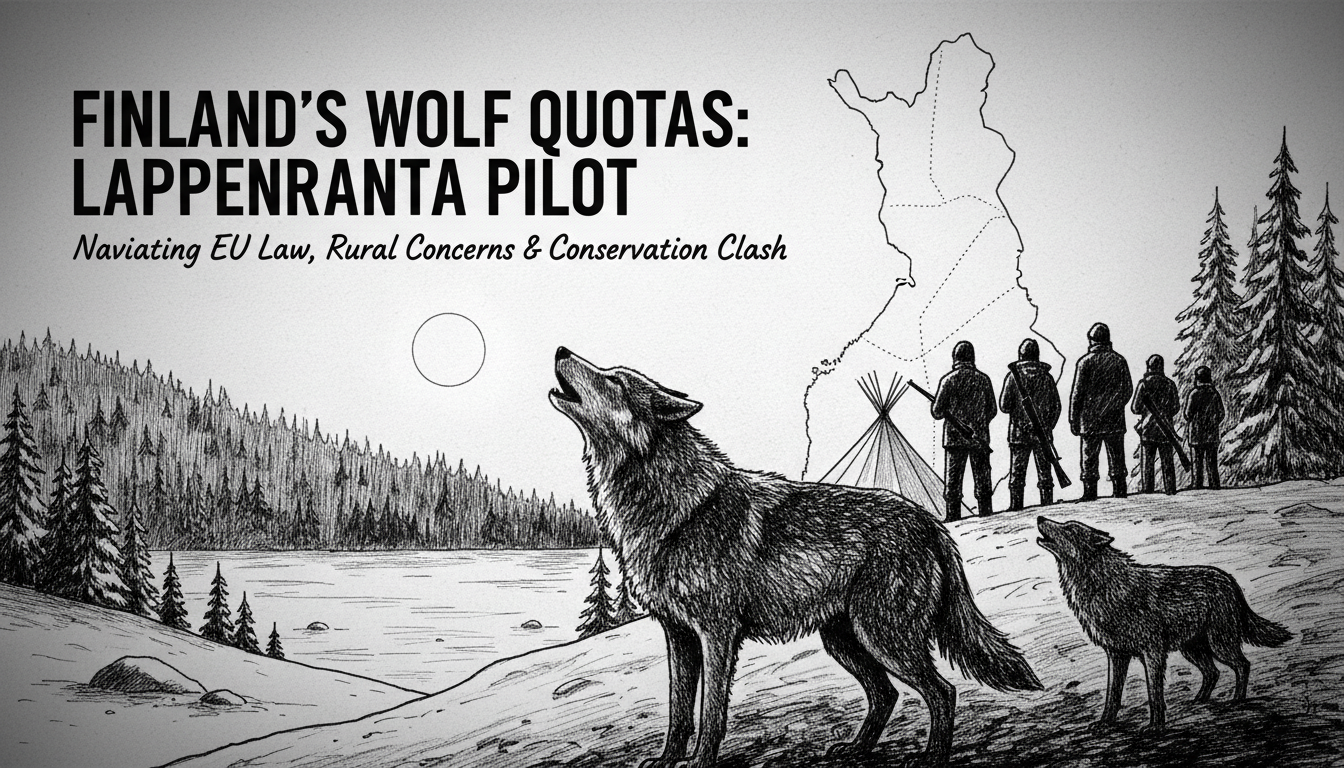
The Finnish Ministry of Agriculture and Forestry has sent a draft decree for consultation that would establish a nationwide quota for the so-called population management hunting of wolves. The proposal would permit the culling of up to 100 wolves outside the reindeer herding area during the upcoming hunting year, with a specific sub-quota of 10 wolves allocated to the Southeast Finland region, which includes the city of Lappeenranta. Local hunters in the Southeast could potentially begin authorized wolf hunts as early as January.
The draft decree divides the country into 16 distinct management areas, each with a specified primary reason for the proposed cull. This regional approach marks a significant shift in Finland's large carnivore policy, moving from case-by-case permits to a structured quota system. The proposal follows intense political pressure from rural constituencies and hunting associations, who argue that growing wolf populations pose a threat to livestock and, in some cases, public safety. The issue has been a persistent point of contention in the Finnish parliament, the Eduskunta, often pitting agrarian and rural parties against urban and green factions.
Ilkka Tiainen, Chairman of the Southeast Finland Game Council, endorsed the quota framework. He said the direction is correct and the system will allow authorities to target the most problematic areas. He also noted that established quotas should reduce the number of administrative appeals that burden the official system. His comments reflect a common bureaucratic perspective seeking to streamline a historically contentious and litigious process.
This policy development sits at the complex intersection of EU environmental law and national wildlife management. The wolf is strictly protected under the EU's Habitats Directive, requiring member states to maintain its population at a 'favorable conservation status'. Any derogation for population management, such as this quota, must be justified on specific grounds and not jeopardize the species' conservation. Finland's proposal will likely be scrutinized by the European Commission to ensure compliance. The government's move can be seen as testing the boundaries of permissible management under EU statutes, a recurring theme in Helsinki's negotiations with Brussels over environmental and agricultural policy.
For international observers, the wolf debate encapsulates a broader Nordic conflict between modern conservation ethics and traditional rural livelihoods. Similar tensions exist in Sweden and Norway. The Finnish model of regional quotas, if implemented, could set a precedent for neighboring countries grappling with identical political pressures. The practical implications are immediate for municipalities like Lappeenranta, where local game management boards will soon be tasked with executing the culls within their strict numerical limits. The success or failure of this quota system will be measured in reduced livestock damages, fewer human-wolf encounters, and its ultimate acceptance or challenge within the EU's legal framework.