
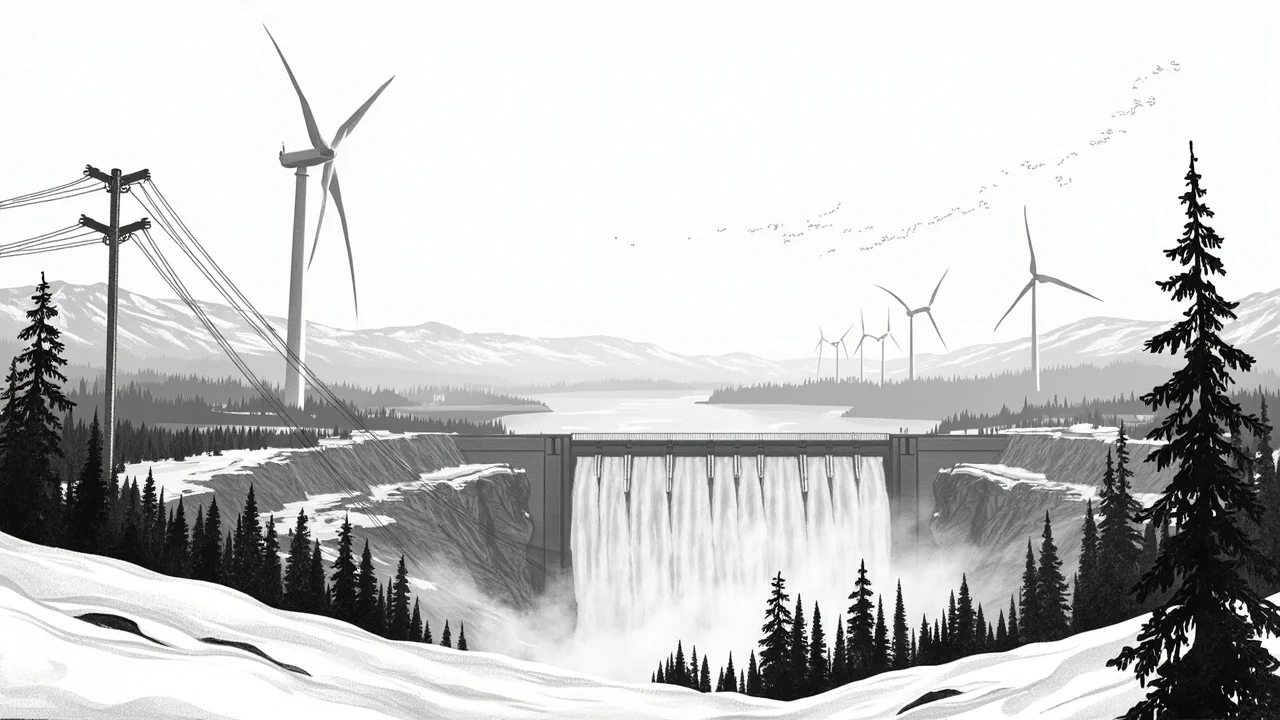
Finland's electricity production has surged to a new national record of 15,438 megawatts, surpassing the previous high by a staggering margin of over 1,000 MW. The record was set on Saturday evening between 6:00 and 6:15 PM, as confirmed by Jukka Leskelä, CEO of the Finnish Energy (Energiateollisuus ry) industry association. This achievement follows a week of unprecedented power consumption, where Finland also broke its all-time electricity usage record not once, but twice within hours.
Leskelä described the situation as a new phenomenon for Finland. "Electricity consumption is high and we are on the export side. A new thing during consumption peaks," he stated. The dual records highlight a critical juncture for the Nordic nation's energy system, where extreme cold driving high demand is being met by robust domestic production, primarily from wind power, allowing the country to export surplus electricity even at peak times.
A Perfect Storm of Cold and Wind
The record-breaking week was driven by a confluence of two powerful natural forces: severe winter cold and strong winds. Sub-zero temperatures across Finland spiked heating demand, pushing total power consumption to a historic high of 15,553 megawatts on Thursday evening, according to the national grid operator Fingrid. This shattered the previous consumption record from 2016. Remarkably, that 2016 record itself was broken just hours earlier on Thursday morning, when usage hit 15,110 MW.
Simultaneously, favorable wind conditions across the Baltic region led to a massive surge in wind power generation. This simultaneous peak in renewable supply during a peak in demand is what enabled the new production record. Fingrid noted that moderately priced electricity during the period also contributed to the high consumption levels, as consumers were less incentivized to curb usage. The system's performance under such strain demonstrates a significant shift in Finland's energy resilience following recent investments and the commissioning of new power plants, most notably the Olkiluoto 3 nuclear reactor.
From Import Dependency to Export Capability
The ability to be a net exporter of electricity during a domestic consumption peak represents a profound transformation for Finland's energy landscape. For decades, the country was often a net importer, particularly during high-demand winter periods. The strategic push for energy self-sufficiency, a policy long championed across successive governments in Helsinki, is now yielding tangible results. The record output of 15,438 MW was not only enough to cover the record domestic demand of 15,553 MW recorded earlier in the week but to generate a surplus for neighboring markets.
This export position during a stress test strengthens Finland's role in the Nordic and Baltic power markets and enhances its energy security. It also provides a real-time case study for other European nations aiming to decarbonize while maintaining grid stability. The data suggests Finland's diversified mix—combining nuclear baseload, growing wind capacity, hydro power, and bioenergy—can handle extreme weather events. However, energy experts caution that this week's success was weather-dependent; long, windless cold spells, known as "dark calms," remain the system's primary vulnerability.
The Political and Policy Implications in Helsinki
The record figures will inevitably resonate within the Finnish Parliament, the Eduskunta, and the government offices in Helsinki's district of Kruununhaka. Energy policy sits at the core of Finland's economic strategy, national security, and climate commitments. The center-right coalition government led by Prime Minister Petteri Orpo has emphasized market-based solutions and continued investment in clean energy technologies. This week's performance offers validation for policies supporting a diverse generation portfolio.
Opposition parties, particularly the Green League and the Left Alliance, are likely to highlight the central role of wind power in meeting the peak. They will argue this underscores the need for even faster permitting and grid investments for renewables. The Social Democrats, a key player in many past governments that laid the groundwork for current projects like Olkiluoto 3, will also point to the importance of long-term, stable energy planning. The debate in Helsinki will now focus on how to replicate this reliability year-round and how to manage the economics of a system with high capital-intensive investments like nuclear and a growing share of intermittent wind.
The European Context and Future Challenges
Finland's experience provides a relevant data point for the wider European Union, which is grappling with similar challenges of decarbonization, security of supply, and affordability. The EU's "Fit for 55" package and the REPowerEU plan aim to accelerate the green transition while cutting dependence on external fossil fuels. Finland's ability to generate record power from low-carbon sources during a crisis aligns perfectly with these Brussels-driven objectives.
However, the path forward is not without obstacles. Integrating ever-higher levels of variable wind power requires massive investments in grid modernization, energy storage, and flexible demand response. The Finnish government and Fingrid are already planning major grid upgrades, but financing and public acceptance for new power lines can be contentious. Furthermore, the economics of the energy market are in flux. While low prices during the peak were cited as a factor in high consumption, they can also threaten the profitability of generation investments needed for the future.
The week of records proves the system's technical capability but also sets a new benchmark. Citizens, politicians, and grid operators will now expect the system to perform at this level consistently. The pressure is on to ensure that the infrastructure, market design, and regulatory framework can support this expectation through the dark Finnish winters ahead. The ultimate test will be a prolonged period of extreme cold without the accompanying strong winds—a scenario that planners are actively preparing for.
A New Era of Finnish Energy Confidence
The shattering of the electricity production record by such a large margin is more than a statistical footnote. It is a symbol of a nation that has successfully navigated a complex energy transition to a point of newfound strength. The fear of winter blackouts, once a genuine concern, has receded significantly. This breeds confidence for industries considering investment in Finland, particularly those with high energy needs like data centers or green steel production.
Yet, Finnish energy experts are characteristically cautious. They warn against complacency. Climate change is altering weather patterns in unpredictable ways, and the total electrification of transport and heating will push demand higher in the coming decades. The record of 15,438 MW will likely stand as a milestone, but it is not a finish line. It marks the beginning of a more challenging phase: optimizing a complex, clean, and interconnected system for reliability, affordability, and sustainability in an uncertain world. The question for policymakers is whether the current market and regulatory framework is agile enough to meet those coming challenges, or if new tools will be required to secure Finland's energy future.