
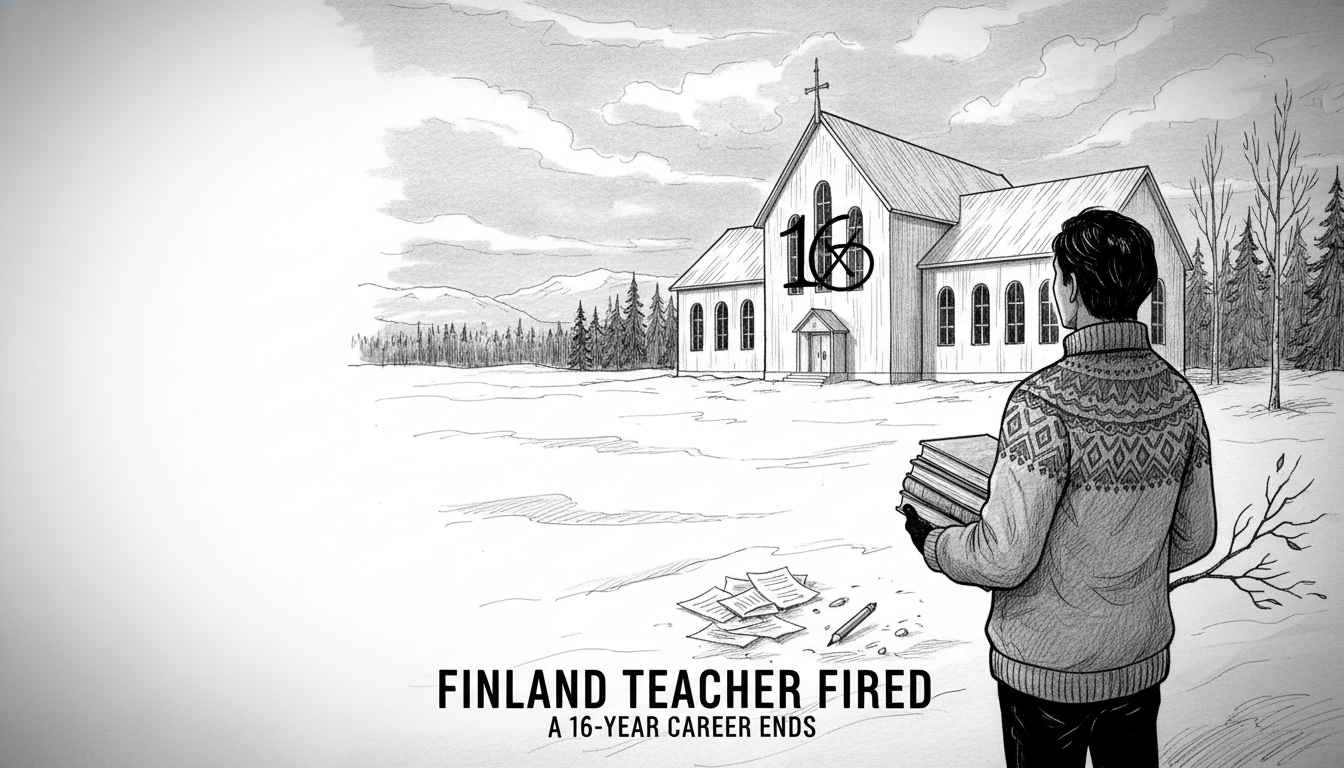
Finland's strong employment protections face a test in the case of Pirkko Pekkala, a vocational teacher with 16 years of service who was abruptly dismissed. She was anticipating a discussed new role as a service manager, a promise she says her supervisor had made. Instead, she found herself without a job, her termination later deemed unlawful due to missing paperwork and a lack of proper justification. Her story highlights the gap between Finland's robust legal framework and on-the-ground workplace realities, resonating with thousands in a nation where over 2.6 million people are employed.
From Promise to Termination
Pirkko Pekkala worked as a vocational subject teacher in a secondary-level professional institution. In her latest assignment at a new branch, she handled both teaching and customer service duties, feeling confident and competent in her dual role. "I felt that I was good at my job, both as a teacher and as a customer service person," Pekkala said. Discussions at her workplace had centered on a perceived shortage of teaching hours for her and two other teachers in the same subject. Her supervisor had actively talked about drawing up a new employment contract for Pekkala, transitioning her to a dedicated service manager position at the new branch. This conversation set her expectation for continued employment, albeit in a modified role. The sudden shift from discussing a new contract to receiving a dismissal came as a profound shock. The manner of the dismissal felt particularly jarring. "The supervisor just asked how I was feeling now," Pekkala recounted, describing a conversation that lacked any formal process or clear explanation.
A Legal Violation and Missing Paperwork
When Pekkala challenged her dismissal, a critical flaw emerged in her employer's actions. Documents related to her termination could not be found. This absence of a proper paper trail proved decisive. Under Finnish law, an employer must have a valid and weighty reason for termination, such as economic or production-related grounds or serious employee misconduct. The process must be documented and justified. In Pekkala's case, the lack of documentation led to a formal finding that her termination was unlawful. This outcome underscores a fundamental principle in the Finnish Employment Contracts Act (Työsopimuslaki): procedure matters as much as substance. An employer cannot simply decide to end an employment relationship; they must follow a legally defined path. Pekkala's experience shows what happens when that path is ignored. Her employer's failure to produce the required paperwork turned a managerial decision into a legal violation, empowering her to seek redress.
Finland's Employment Law Framework
Finland's labor market is built on a foundation of strong worker protections, designed to ensure job security and fair treatment. The Employment Contracts Act is the core legislation, mandating that any termination be based on objective, verifiable grounds. Furthermore, collective bargaining agreements (tes) negotiated by unions and employer organizations often provide even stricter conditions than the baseline law. These agreements cover a vast majority of Finnish workers, including those in the education sector. Labor law experts consistently stress the necessity of due process. "Termination is not a discretionary tool for management in Finland," explains a Helsinki-based labor lawyer familiar with such cases. "It requires concrete grounds, a fair procedure that often includes consultation, and comprehensive documentation. The absence of any one of these elements can render the termination unlawful." The Ministry of Economic Affairs and Employment acknowledges that a significant portion of labor disputes stem from termination cases, indicating that conflicts over dismissals are a persistent feature of the workplace, even in a system designed to prevent them.
The Human and Systemic Impact
Pekkala's case is not just a personal tragedy but a symptom of a broader issue. For every high-profile court case, many more employees may accept questionable dismissals without challenge. The emotional and financial toll of fighting a termination can be daunting, even with strong legal standing. Pekkala's advice to others is clear and born of hard experience: "I urge everyone to clarify their rights in a termination situation." This call to action is crucial in a system where rights are only as strong as an individual's willingness and ability to enforce them. The case also raises questions about management practices within Finland's public and semi-public sectors, including educational institutions. Pressures on budgets and organizational restructuring can sometimes lead to haphazard personnel decisions that collide with legal obligations. The promise of a new role, followed by a summary dismissal, suggests a breakdown in internal communication and human resources protocol that the law ultimately had to correct.
Navigating Recourse and Moving Forward
For an employee like Pekkala, finding a termination unlawful is the first step. The next is seeking compensation. Finnish courts can order employers to pay compensation for unlawful dismissal, which includes covering lost wages and, in some cases, damages for the manner of the dismissal. The process, however, requires the employee to initiate legal proceedings, a step that demands time, resources, and resilience. Pekkala's story serves as a powerful reminder of the tools available. Trade unions in Finland play a critical role in supporting members through such disputes, offering legal advice and representation. For non-unionized workers, the state's legal aid system may provide assistance. The ultimate goal of the law is not just to punish procedural failures but to deter them, encouraging employers to manage workforce changes through dialogue, transparency, and strict adherence to legal standards.
Pirkko Pekkala's journey from a valued employee to an unlawfully dismissed plaintiff reveals the enduring tension between workplace power dynamics and statutory rights. Her experience, from the promise of a new contract to the jarring question about her feelings upon being fired, encapsulates a profound professional betrayal. Yet, it also demonstrates the strength of the Finnish legal safety net designed to catch such falls. As Finland continues to navigate economic uncertainties, the integrity of its celebrated employment model depends on consistent application—where the rights outlined in the Työsopimuslaki are respected not just in theory, but in every office, workshop, and classroom across the country. Her final question lingers: how many others face similar situations without knowing their rights or having the strength to pursue them?