
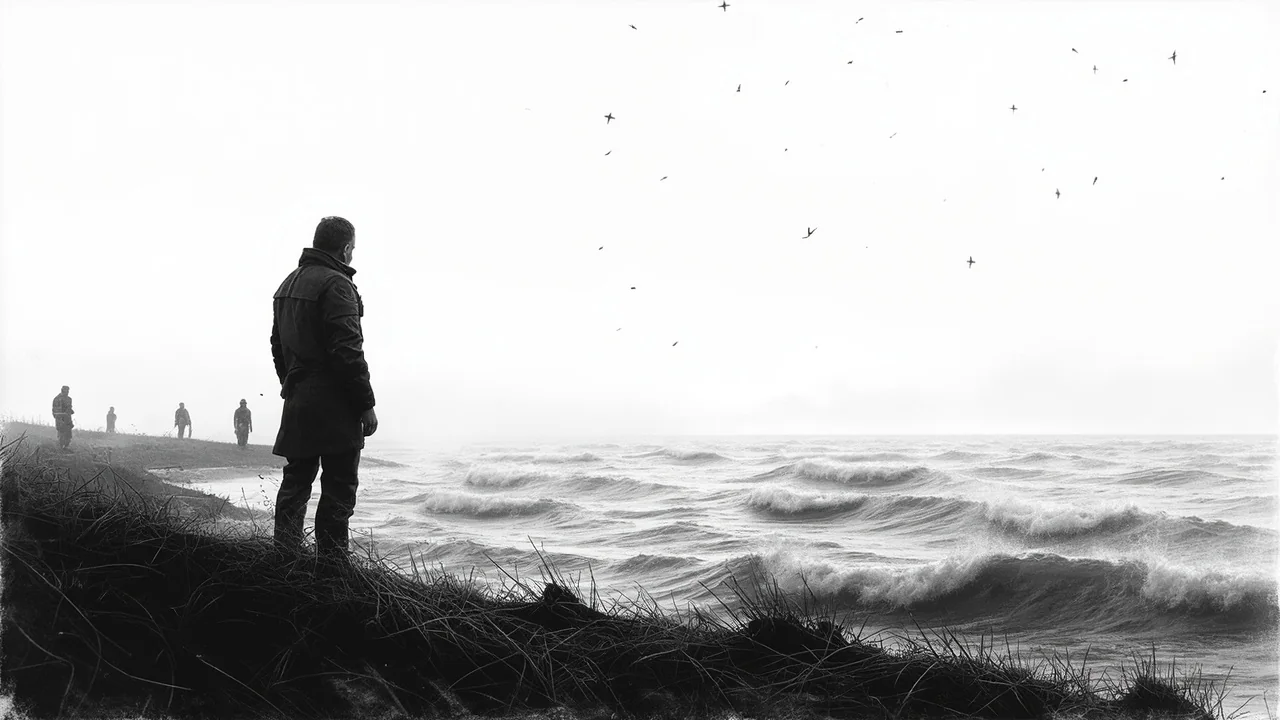
Finland's workplace safety record faced a tragic test on a February morning in 2022 when a routine shift on Hailuoto island ended in a fatality. Harri Minkkinen, a colleague of the deceased man known as Alpo, is now speaking publicly for the first time about the incident that shattered a family and a community. His account reveals a devastating sequence where a small change at the start of a Tuesday morning shift led to irreversible consequences.
"We just waited there. We knew Alpo was gone, but we still waited for the emergency doctor to tell us he was dead," Minkkinen recalls, describing the most traumatic moment of his life. The shift was supposed to be entirely ordinary. Minkkinen could not have guessed that within a few hours, everything would be irrevocably different. A work task transformed into a tragedy that would never be forgotten, dominating newspaper front pages and news broadcasts across the nation.
A Fateful Morning on the Archipelago
The incident occurred in Hailuoto, a municipality on an island in the Gulf of Bothnia, off the coast of Oulu. This region is known for its demanding natural conditions and industries like forestry, agriculture, and fishing. Workplaces here often involve machinery, transportation, and environmental hazards. Minkkinen's decision to speak provides a rare, firsthand look into the human impact of a workplace accident, moving beyond official reports and statistics to the raw emotional aftermath experienced by coworkers and families.
Finnish authorities, including the Occupational Safety and Health Administration (Työsuojeluhallitus), would have launched an immediate investigation. Such probes typically examine equipment, procedures, training records, and supervision to determine the cause and any potential breaches of Finland's extensive workplace safety laws. The findings can lead to fines, criminal charges for gross negligence, or mandatory changes to national safety directives.
The Ripple Effect of a Single Accident
While the specific details of Alpo's death are not fully disclosed in the source material, the pattern is familiar to safety experts. A "small change" at the beginning of a shift often refers to an altered routine, a different piece of equipment, a new task assignment, or a minor deviation from standard procedure. In high-risk environments, these small changes can create unforeseen interactions with hazards, leading to catastrophic failure.
"The most dangerous moment is often when the normal routine is broken," explains a Finnish workplace safety consultant who wished to remain anonymous due to ongoing case sensitivities. "Complacency with a known process is one risk, but an unanalyzed change introduces unknown variables. Finland's safety culture is strong, but it relies on constant vigilance at every level, from the boardroom to the individual worker on a remote island."
The tragedy underscores a central tension in Finnish work life: the country is consistently ranked among the safest in the world, yet fatal accidents still occur, predominantly in sectors like construction, transportation, and agriculture. Each incident prompts national scrutiny, questioning whether economic pressures, subcontracting chains, or training gaps are eroding the safety standards Finland prides itself on.
A Family's Loss and a Colleague's Trauma
The human cost extends far beyond the immediate victim. Alpo is remembered as a beloved family father. His death leaves a permanent void for his spouse, children, and extended family, who must navigate grief compounded by the sudden and violent nature of an industrial accident. The financial and emotional stability of the household is often shattered overnight.
For colleagues like Harri Minkkinen, the psychological trauma is profound. Witnessing a fatal accident, especially involving a friend, can lead to severe post-traumatic stress, guilt, and an inability to return to similar work. Minkkinen's public statement is itself a significant step, indicating a need to process the event and perhaps to ensure Alpo's death is not just a statistic. His testimony serves as a powerful reminder that behind every accident report is a circle of people whose lives are permanently altered.
Finland's Safety Framework Under Examination
Finland's response to workplace accidents is governed by a robust legal framework that aligns with EU directives on health and safety at work. The employer has a primary duty of care, obligated to identify and mitigate risks. When a death occurs, the police typically investigate for possible criminal negligence, while the Occupational Safety and Health Administration conducts its own technical investigation.
The outcomes can influence national policy. Previous high-profile accidents have led to stricter regulations on specific machinery, enhanced training requirements for supervisors, and campaigns targeting high-risk industries. The Hailuoto case likely triggered internal reviews within the involved company and its sector, focusing on the specific hazard that proved fatal.
However, experts note a persistent challenge: ensuring compliance and a strong safety culture in small and medium-sized enterprises, and on remote work sites where oversight may be less frequent. The geographical isolation of a place like Hailuoto can affect emergency response times and access to immediate medical care, factors that can turn a serious accident into a fatal one.
A Call for Persistent Vigilance
Harri Minkkinen's story is not just about one tragic Tuesday. It is a case study in the fragility of safety systems. It highlights how the chain of events leading to disaster can begin with something seemingly insignificant. For Finland, a nation built on a consensus model between employers, unions, and the government, such tragedies test the social contract that promises workers will return home unharmed.
The conversation inevitably turns to prevention. Can technology like better sensors or monitoring equipment help? Are safety protocols too complex or not adequately communicated? Is there enough support for workers to report unsafe conditions without fear? Minkkinen’s decision to speak may empower others to voice concerns before another small change leads to an irreversible outcome.
As the legal and administrative processes following the Hailuoto accident conclude, the lasting legacy will be in its impact on local and national safety practices. The ultimate honor to Alpo's memory would be a concrete change that prevents an identical sequence of events from ever happening again. For Harri Minkkinen and Alpo's family, the tragedy remains a personal, painful chapter. For Finland, it is a sobering reminder that global top rankings in safety require endless, deliberate work—work that literally saves lives on ordinary Tuesday mornings.
Will the lessons from this isolated island lead to systemic changes that protect workers across the country, or will it remain a heartbreaking but isolated statistic? The answer depends on whether the story compels action beyond the headlines.