
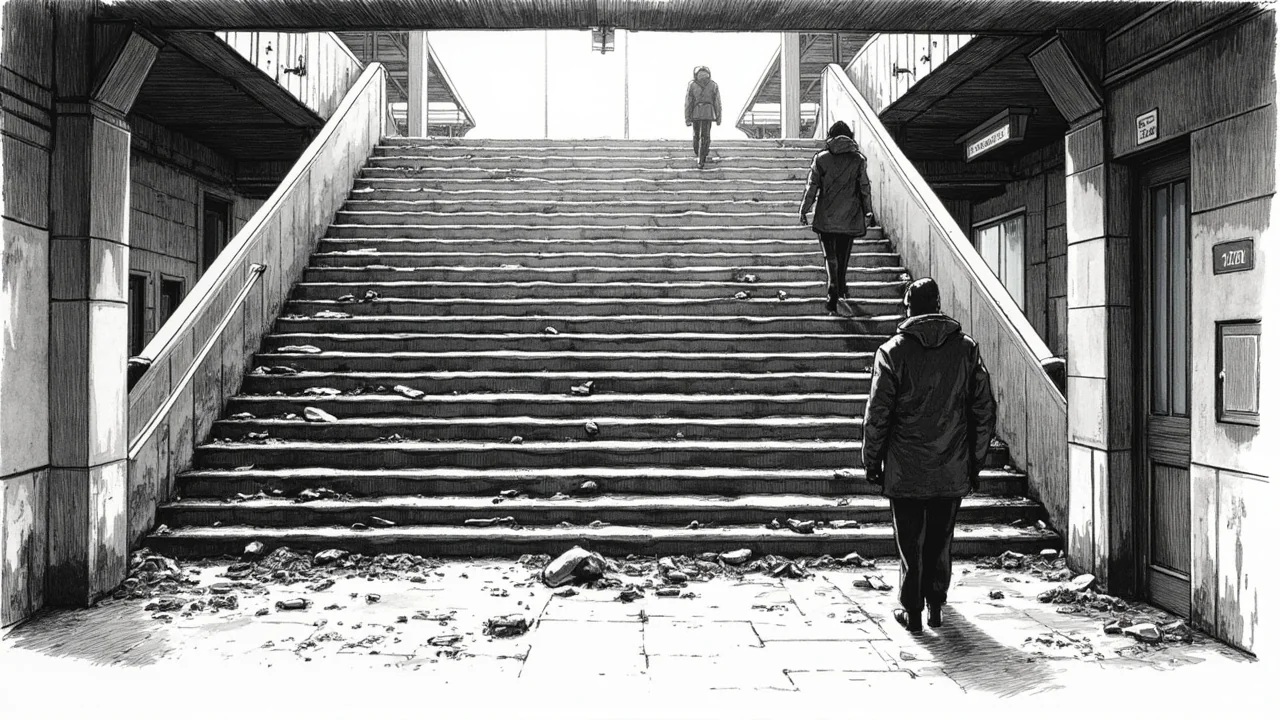
Finland's public transport system faces a persistent cleanliness crisis at Vantaa's Kivistö railway station, where escalators have remained covered in pigeon droppings for years. Maria Tiainen, a local resident and frequent commuter, says the central escalators at the station are in a disgraceful state, with the problem continuing for years and cleaning occurring only sporadically. "The escalators can also be left uncleaned for months. The last time Tiainen remembers seeing the stairs being cleaned was about a year ago. Even then, the cleaning result was not the best, she recalls," Tiainen stated, highlighting a systemic failure in basic maintenance.
This issue at a key suburban rail hub contradicts Finland's global reputation for efficiency and public hygiene, raising questions about municipal responsibility and passenger welfare. The station serves a growing residential area in Vantaa, Finland's fourth-largest city, making the neglect particularly glaring for daily users. Property development officials have pointed to malfunctioning automatic doors as a contributing factor, suggesting the design allows pigeons easy access to the sheltered escalator wells.
A Recurring Stain on Public Infrastructure
For Maria Tiainen and other commuters, the filthy escalators are not an isolated incident but a chronic failure. The problem has persisted for approximately three years, with cleaning intervals stretching to several months. Tiainen's documentation of the condition provides clear evidence of neglect, showing layers of droppings accumulating on the moving stairs. This neglect occurs in a country where public spaces are typically meticulously maintained, even during harsh winter months.
The situation at Kivistö station points to a potential breakdown in the chain of responsibility between different governing bodies. Railway stations often involve complex agreements between national rail operators, municipal authorities, and private contractors for cleaning and maintenance. The apparent passing of blame—from automatic door malfunctions to cleaning schedules—leaves passengers in the lurch. In Helsinki's government district, such a lapse would likely prompt immediate action, yet in this Vantaa suburb, it has become a normalized eyesore.
Municipal Accountability and Passenger Experience
The core of this issue touches on fundamental questions of municipal accountability in Finland's well-regarded welfare state. Residents pay taxes with the expectation of functional, clean public services. When a primary commuting hub remains dirty for years, it erodes public trust. The impact goes beyond aesthetics; pigeon droppings can damage metal and concrete surfaces over time and pose potential health risks, creating slippery surfaces that are a safety hazard for passengers.
From a policy perspective, this is a failure of basic service delivery. The City of Vantaa's growth strategy emphasizes sustainable urban development and high quality of life. The state of Kivistö station directly undermines these official goals. It reflects a gap between strategic planning and on-the-ground execution, a problem that can plague large municipalities. The Finnish Parliament, the Eduskunta, frequently debates national infrastructure funding, but this case shows how local maintenance protocols are equally critical.
The Broader Context of Urban Maintenance
This incident is not merely about dirty stairs but about the sustainability of Finland's urban infrastructure amid growth. Vantaa is experiencing significant population increase, putting pressure on transit hubs like Kivistö. Maintenance budgets and schedules may not have kept pace with usage. The reference to faulty automatic doors indicates a possible design flaw in the station's construction, where initial building choices have led to long-term maintenance headaches.
In contrast, Helsinki's central railway station, a national landmark, is maintained to a much higher standard. This disparity between a major city center and a suburban node raises issues of equitable service distribution. It echoes debates in the Eduskunta about regional equality and whether growing suburbs receive adequate resources for upkeep. The problem may also be tied to contractual issues, where cleaning services are outsourced to the lowest bidder without sufficient performance oversight or penalty clauses for non-compliance.
Seeking Solutions and Restoring Standards
Resolving the Kivistö station mess requires a clear assignment of responsibility and a commitment to regular, audited cleaning. The first step is for Vantaa city officials, in conjunction with rail operators, to publicly acknowledge the failure and establish a transparent cleaning timetable. Fixing the malfunctioning doors is a necessary technical measure to prevent pigeon access, but it does not absolve authorities of the need for routine cleaning.
Long-term, this case should prompt a review of maintenance standards for all suburban stations across the Helsinki metropolitan area. Finland's reputation for functional public spaces is a point of national pride and a practical necessity during long, dark winters. Clean, well-kept stations contribute to public safety, passenger satisfaction, and overall urban livability. For a nation that excels at large-scale infrastructure projects, applying the same rigor to everyday upkeep is essential.
Ultimately, the story of Maria Tiainen and the filthy escalators is a test of Finland's commitment to its own high standards. It asks whether the principles of good governance and societal care, so often discussed in the halls of power in Helsinki, extend to the daily realities of all citizens. The solution is straightforward—consistent cleaning and proper repairs—but achieving it requires overcoming bureaucratic inertia and prioritizing the fundamental dignity of public space. Until then, the escalators at Kivistö station remain a disappointing symbol of neglected duty.