
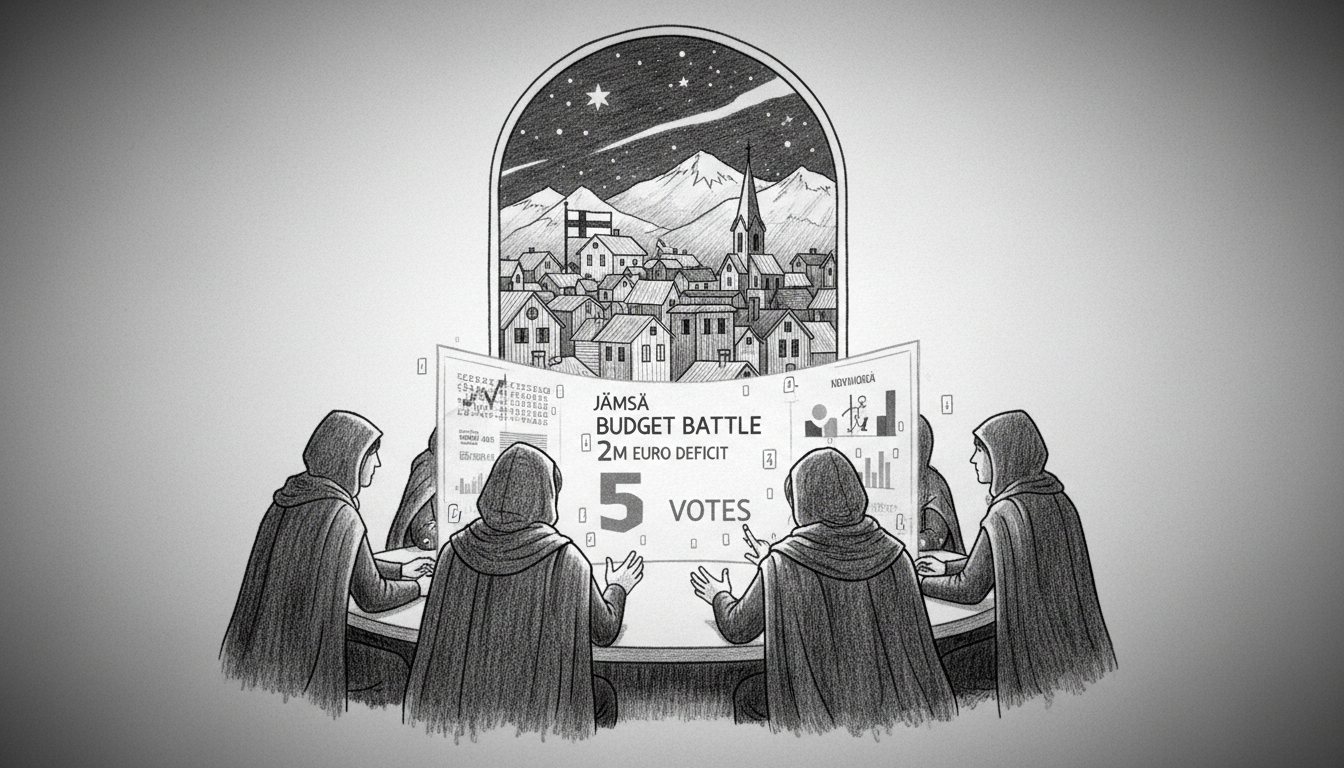
Finland's municipal budget season has produced a classic political struggle in the town of Jämsä, where councilors required five separate votes to pass a budget carrying a two-million-euro deficit. The marathon session on Monday night saw the Jämsä city council finally approve the financial plan for 2026 and the economic framework for 2026-2028, but not before heated debates over service priorities, property management, and major construction projects exposed the tough choices facing local governments across the country.
This budget process highlights a recurring national challenge: Finnish municipalities, which are responsible for providing education, healthcare, and social services, must balance ambitious local development goals with the hard reality of limited finances. The approved deficit, while significant, represents a compromise between competing visions for Jämsä's future, pitting immediate service needs against long-term investment in community infrastructure.
A Marathon Session of Amendments and Votes
The council meeting stretched late into the evening as members proposed multiple amendments to the initial budget draft. Each proposed change triggered a formal vote, leading to the total of five separate roll calls that characterized the contentious process. The need for so many votes is unusual and signals a deeply divided council grappling with fundamental questions about the town's direction.
Key points of contention included a proposal to establish a new service manager position within the municipal administration. Proponents argued the role was necessary for improving efficiency and coordinating public services, while critics questioned the cost during a period of budgetary strain. Another major debate centered on the naming and construction plans for a proposed multi-purpose building and a new sports hall, projects that carry substantial long-term financial implications for the town of approximately 20,000 residents.
"Balancing the economy kept councilors awake," as one local report noted, capturing the tense atmosphere. The discussions repeatedly returned to the core issue of how to maintain and improve public services while managing a structural budget gap. Councilors from different political blocs offered contrasting solutions, ranging from cost-cutting measures to strategic investments aimed at stimulating future growth.
The Property Portfolio Problem and Long-Term Sustainability
A significant portion of the debate focused on Jämsä's extensive portfolio of city-owned properties. Councilors raised pointed questions about the future of these assets, their maintenance costs, and their overall contribution to municipal finances. This line of discussion reflects a broader national conversation in Finland about municipal asset management, where many towns own numerous buildings that may be underutilized or require expensive upkeep.
Experts on Finnish local government finance often point to property portfolios as both an opportunity and a burden. Selling or repurposing assets can generate one-time revenue, but may also reduce long-term flexibility and community assets. The debate in Jämsä suggests councilors are beginning to scrutinize this balance sheet more closely, looking for ways to optimize the town's physical resources to support its financial health.
"The large number of city properties and their future came up in speeches," the source material states, indicating that this is not just a line-item discussion but a strategic one. In regions like Central Finland, where populations are not rapidly growing, maintaining an efficient and relevant portfolio of public buildings is crucial for fiscal sustainability. The decisions made today about these properties will directly affect the town's ability to fund services for decades.
The National Context of Municipal Finance in Finland
The struggle in Jämsä is a microcosm of a nationwide issue. Finnish municipalities enjoy a high degree of autonomy but face strict legal requirements to balance their budgets over a four-year planning cycle. They are the primary providers of welfare state services, funded through a combination of municipal income tax, state subsidies, and fees. When the national economy slows or demographic pressures increase, towns like Jämsä feel the pinch immediately.
Central Finland, where Jämsä is located, has experienced the broader Finnish trends of an aging population and migration towards larger urban centers. These demographic shifts put pressure on service structures, often increasing costs for healthcare and social services while potentially reducing the tax base. Crafting a budget under these conditions requires difficult trade-offs between maintaining service quality, investing for the future, and setting a tolerable level of local taxation.
The approved two-million-euro deficit for 2026 is a clear indicator that Jämsä's council believes the town cannot meet all its obligations and ambitions through revenue alone in the short term. The budget likely includes plans to cover this gap through reserves, debt, or anticipated future savings, all of which will be detailed in the accompanying multi-year financial plan. The very public nature of the five-vote battle, however, shows that there is no political consensus on the best path forward.
Sports Halls, Multi-Purpose Buildings, and Community Identity
The specific projects that sparked votes—the sports hall and multi-purpose building—are more than just budget items; they are symbols of the town's vision for itself. Jämsä, known for its natural beauty and its historic Jämsänkoski industrial area, is like many mid-sized Finnish towns seeking to define its post-industrial identity. Investment in community facilities is often seen as a way to improve quality of life, attract and retain residents, and foster a sense of pride.
However, such projects require major capital expenditure and commit the municipality to ongoing operating and maintenance costs. The debate over their naming and construction plans is, at its heart, a debate about their priority relative to other spending needs. Should a town running a deficit commit to new, expensive facilities, or should it focus resources on core services like education and elderly care? The council's ultimate decision to include them in the plan, albeit after a fight, suggests a belief that strategic investment is necessary even in lean times.
This tension is common across Finland. Municipalities are under constant pressure to provide excellent services today while also building the infrastructure that will make them attractive places to live tomorrow. The political process in Jämsä shows councilors wrestling with this dual mandate, trying to allocate limited funds across a wide spectrum of legitimate and competing demands from their constituents.
Looking Ahead: The Hard Work of Implementation
Passing the budget is only the first step. The real challenge for Jämsä's municipal government and its administration will be implementing the plan and finding the "efficiency improvements" alluded to in the process. The service manager position, if created, will be tasked with part of this solution, seeking ways to deliver equal or better services at a lower cost. The scrutiny of the property portfolio must move from debate to action, with concrete plans for optimization.
The multi-year financial plan for 2026-2028 indicates that councilors are aware the deficit cannot be a permanent fixture. The coming years will likely involve continued difficult discussions about service levels, potential tax increases, and the pace of development projects. The deep divisions revealed by the five votes suggest that building a stable majority for any specific cost-saving or revenue-generating measure will be a complex political task.
For residents of Jämsä, the outcome of this budget means that the town's services will continue, but its leadership has openly acknowledged a financial gap that must be closed. The projects on the drawing board represent hope for the town's future, but their realization is now tied to the success of broader fiscal consolidation. The marathon council session was not the end of a process, but a very public beginning of a multi-year effort to secure the town's economic future while preserving its community character.
Ultimately, the story from Jämsä is a reminder that the Finnish welfare state is built and maintained at the local level, through thousands of detailed decisions in council chambers across the country. The five votes were not merely procedural; they were the mechanism through which a community debated its values, weighed its options, and charted a cautious course forward in uncertain times. The two-million-euro figure is more than a deficit; it is a measure of the gap between current resources and collective aspirations, a gap that Finnish democracy, in all its deliberative complexity, must now work to bridge.