
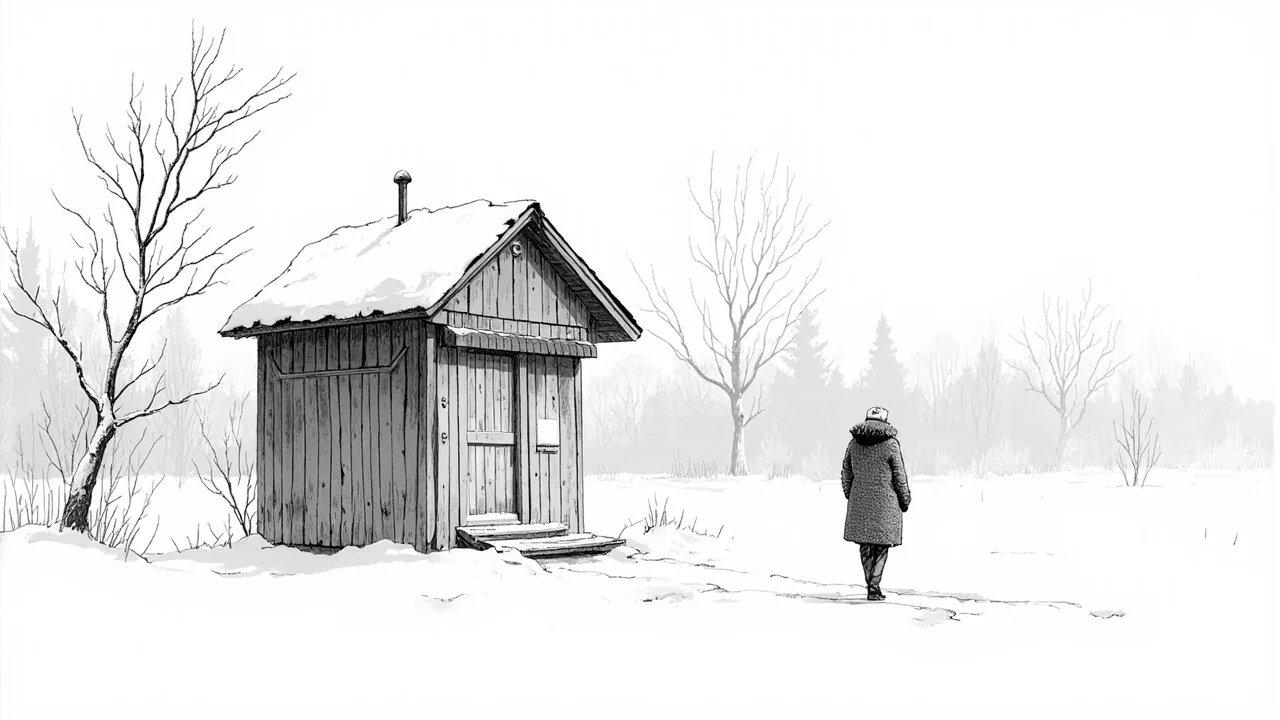
Finland's rural communities are fighting a quiet battle for survival as essential services vanish, leaving a single R-kioski in Joutseno as the last social and commercial hub. The Saimaantie R-kioski buzzes with activity at one in the afternoon, a stark contrast to the shuttered shops and closed post offices in surrounding villages. For local resident Veikko Vilhola, sipping coffee at the window table, the significance is profound. "If this one disappeared too, we'd be more than in trouble," Vilhola says, capturing the precarious state of rural Finland where a kiosk is no longer just a place to buy milk.
The Heartbeat of Joutseno
This specific kiosk, colloquially known as 'Ärrä' from the Finnish pronunciation of 'R', has transformed from a simple convenience store into a vital community nexus. It serves as a de facto town square, post office, parcel pickup point, and news hub. Customers flow through not only for transactions but for human connection, a pattern repeated in dozens of small towns across the country. The closure of similar kiosks in Taavetti and on Vuoksenniska Street in Imatran, both in the South Karelia region, has funneled more pressure and importance onto remaining outlets like Joutseno's. Their business model is under strain from declining foot traffic and rising costs, yet their social role has expanded exponentially.
A National Trend of Service Withdrawal
The situation in Joutseno is a microcosm of a nationwide challenge. Finland's sparsely populated areas have seen a steady retreat of banking services, state-run Alko liquor stores, post offices, and grocery stores over the past decade. This service vacuum forces residents, particularly the elderly and those without cars, to travel increasingly long distances for basic needs. The R-kioski chain, once ubiquitous, has rationalized its network, closing unprofitable locations and leaving gaps in the social fabric. Each closure creates a ripple effect, diminishing the viability of the entire community. The kiosk often becomes the final commercial entity standing, a lone pillar holding up a fragile local ecosystem.
More Than a Shop: The Social Infrastructure
Analysts point out that in villages like Joutseno, the kiosk provides what policymakers term 'social infrastructure.' It is an informal meeting place that combats loneliness and provides a point of casual surveillance and community care. Regulars notice if an elderly neighbor hasn't come in for their morning paper. The staff often know customers by name and can assist with basic bureaucratic tasks, like helping to print documents or explaining official forms. This function is rarely quantified in balance sheets but is critical for community wellbeing and cohesion. The loss of such a space accelerates demographic decline, making the area less attractive for young families and deepening the cycle of depopulation.
Policy Gaps and Local Resilience
The Finnish government and municipal authorities struggle with sustainable models for maintaining services in low-density areas. Subsidies for rural commerce exist but are often fragmented and insufficient. The burden frequently falls on local entrepreneurs and chains willing to operate on thin margins. The resilience shown by kiosks like Joutseno's highlights a bottom-up survival strategy. It adapts by stocking a wider range of goods, offering parcel services for online shopping, and providing seating to encourage lingering. This adaptability is its strength, but also a sign of a system failing to provide formal support. The question for policymakers is whether to directly support these private lifelines or attempt to reinvent public service delivery in the digital age.
The EU Context and Regional Development
Finland's rural service challenge sits within a broader European Union framework of regional development and cohesion policy. The EU's Rural Development Programme provides funds, but the effectiveness in halting service withdrawal is debated. Comparisons are often drawn with other Nordic nations; Sweden faces similar issues, while Norway's more aggressive use of state subsidies has preserved some services. The Finnish model has traditionally relied on a strong municipal sector, but municipal mergers and financial pressures have eroded this capacity. The survival of the Joutseno kiosk, therefore, is not just a local business story but a test case for the Nordic welfare state's ability to function outside urban centers.
An Uncertain Future for Village Cores
The future of Joutseno's Ärrä, and others like it, hinges on a complex mix of profitability, community patronage, and potential public intervention. Its closure would represent more than a business failure; it would be a severe blow to the community's identity and practical functioning. As Veikko Vilhola's comment underscores, the margin for error is now gone. The kiosk stands as a symbol of both resilience and vulnerability. Its daily operation is a quiet act of resistance against the centralizing forces of the modern economy. The ultimate fate of these last-standing kiosks will tell us much about what kind of Finland exists beyond the Helsinki capital region and other major cities. Will it be a country of thriving, connected communities, or a landscape of service deserts where the car is a mandatory passport for participation? The answer may well be found in the simple act of buying a coffee at a window table in Joutseno.