
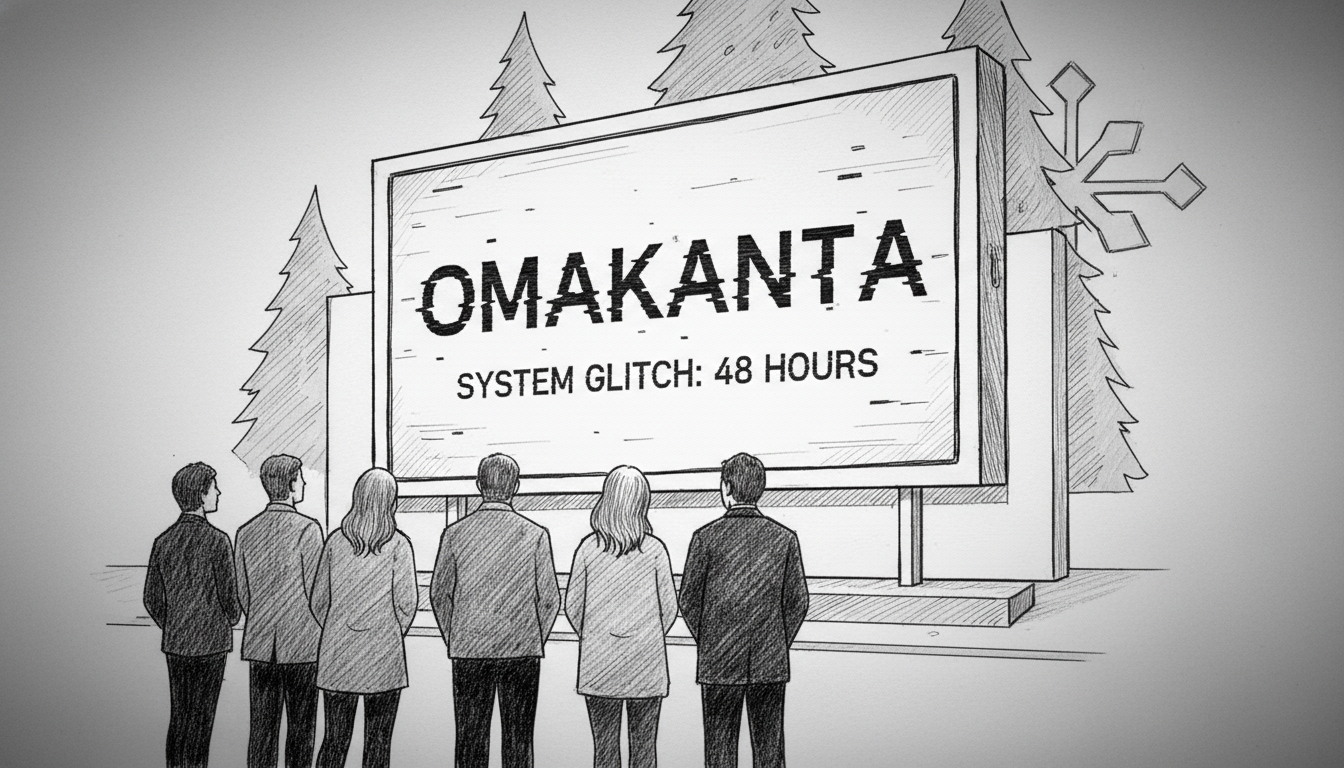
Finland's Omakanta national health data portal was paralyzed for over two days by a significant service disruption. The technical failure prevented citizens from updating critical medical directives, exposing vulnerabilities in the Nordic nation's much-admired digital health infrastructure. The incident has sparked questions about the resilience of systems that millions now depend on for daily healthcare management.
The disruption began on December 6th at 8:06 AM. It was not fully resolved until 9:18 AM on December 8th. During this 48-hour window, users found they could not save or modify several vital documents within the secure portal.
These included organ donation consents or refusals, advance directives outlining care preferences, and living wills. The system also failed to allow users to confirm they had read new 'Kanta information' sent by healthcare providers. While the core function of viewing medical records and prescriptions remained operational, the inability to update key preferences represented a serious fault line.
A Targeted Glitch in a Vital System
Authorities later clarified the problem's scope. Initially described as a 'widespread disruption,' officials from the Finnish Institute for Health and Welfare (THL) corrected this characterization. They stated the glitch affected only a limited set of Omakanta's services.
It impacted just a small fraction of the platform's total user base. This technical correction, however, does little to assuage concerns for those who needed to access the blocked functions during the outage. For a citizen trying to register as an organ donor, the system was fully broken.
Omakanta is not a standalone service. It is the public-facing portal within the national Kanta Services architecture. This digital backbone allows the secure electronic exchange of prescription and patient data across Finland's healthcare ecosystem.
Over 4.5 million Finns—a vast majority of the adult population—actively use Omakanta. They rely on it to view laboratory results, access their vaccination records, and manage prescriptions. More than 98% of prescriptions are issued electronically in Finland, funneling through this system.
The High Stakes of Digital Dependence
The disruption highlights a modern paradox. Finland has successfully built one of the world's most integrated digital health societies. This efficiency creates a profound dependence on systems that must function perfectly.
“When a service like Omakanta experiences downtime, it doesn't just inconvenience people,” explains Dr. Markus Kallio, a health policy researcher at the University of Helsinki. “It potentially blocks access to legally significant personal decisions about one's own body and care. The integrity and availability of this platform are foundational to public trust.”
The affected functions are not trivial administrative tasks. An advance directive, or 'hoitotahto,' is a legally binding document in Finland. It guides medical professionals when a patient cannot communicate their wishes.
Similarly, the organ donor registry is a clear expression of citizen choice. A failure to record this choice can have real-world consequences for transplant logistics and family distress. The glitch temporarily severed this digital link between citizen intent and the official record.
Investigating the Cause and Response
The THL, which administers Kanta Services, has not publicly detailed the specific technical root cause. In a brief online statement, they confirmed the issue was identified and repaired. They noted that all services were restored by the morning of December 8th.
Standard protocol for such incidents involves an internal review. This review will likely examine server stability, software update conflicts, or database errors. The extended 48-hour resolution time suggests the problem was complex to diagnose and fix without causing wider data corruption.
Finland's Ministry of Social Affairs and Health oversees the broader Kanta framework. The Ministry has long championed the system as a model of efficiency and patient empowerment. Setbacks like this recent outage test that narrative.
They also come at a sensitive time for EU digital health policy. The European Health Data Space (EHDS) initiative aims to create a continent-wide framework for health data exchange. Finland's Kanta is often cited as a pioneering example. Its operational hiccups are studied as cautionary lessons in scalability and resilience.
Balancing Innovation with Ironclad Reliability
For daily users, the incident is a reminder of the fragility of digital conveniences. “I went to update my living will after a hospital consultation and the button just didn’t work,” said Helsinki resident Elina Saari. “You don't realize how much you trust the system until it quietly fails. I assumed it was my mistake at first.”
This public trust is the most valuable asset for any national digital service. Experts argue that investment must now pivot from mere functionality to guaranteed stability. This involves more sophisticated backup systems, clearer public communication during outages, and possibly even analog fallback procedures for the most critical registrations.
“The goalposts have moved,” Dr. Kallio argues. “A decade ago, simply creating Omakanta was the achievement. Today, the public expects it to be as reliable as electricity or water. A two-day outage for any essential utility is considered a major event. Digital health services are now in that same category.”
The Finnish Parliament's Social Affairs and Health Committee may call for a report on the incident. They will want assurances that contingency plans are strong enough for a system serving the entire nation. With healthcare data digitization advancing across Europe, all eyes are on how pioneer nations like Finland navigate these growing pains.
Can a system designed for seamless convenience also be engineered for absolute, fail-safe reliability? The silent failure of a 'save' button in Omakanta has made that technical question a matter of urgent public policy.