
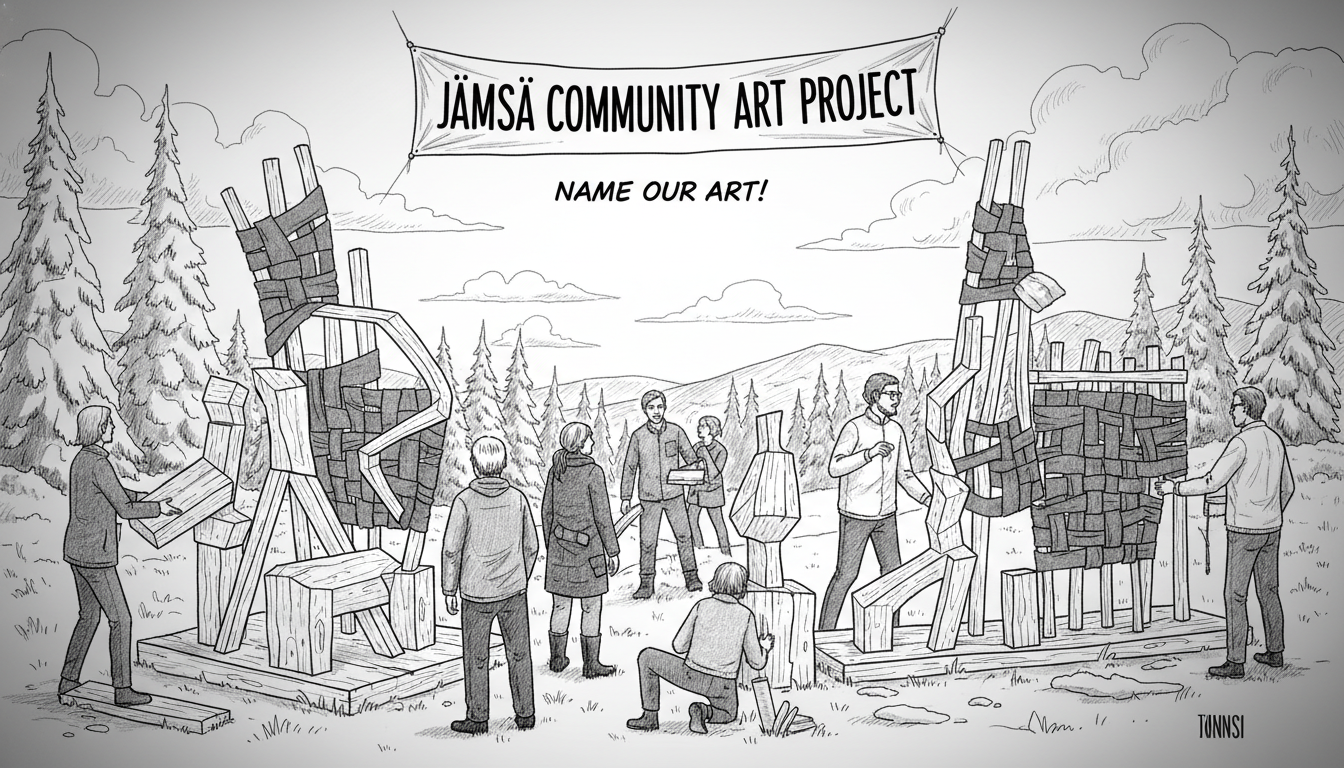
A surprising collaboration between entrepreneurs and artists in the Finnish town of Jämsä has transformed industrial surplus into public art. The project began when visual artists Sirpa Suominen and Tarja Jakunaho challenged local business owners to join a creative partnership. The call was answered by Toni Saha of Kokkapuu, a woodworking and boat-building firm, and Markku Vehkala of the clothing retailer Vehkala Jeans Dealer. The resulting, yet-to-be-named artwork is now on display in a shop window on Joulukatu, or Christmas Street, until the Epiphany holiday in early January. The piece was unveiled during the street's official opening festivities last Saturday. The public can suggest names for the work either in person or through social media channels.
The collaboration centered on a circular economy model. The entrepreneurs donated leftover materials that would otherwise have been waste. Toni Saha provided the hull and stern of an old, irreparable boat carcass that had been lying idle. Markku Vehkala contributed a selection of surplus denim jeans, specifically choosing pairs with the most varied textures and washes. The artists used very few additional materials, allowing the dialogue between wood and denim to stand out. Vehkala noted the particular harmony of the materials within the traditional wooden building housing his store, observing that the conversation between denim and wood works exceptionally well in that setting.
This initiative reflects a broader trend in Finnish regional development, where cultural and commercial sectors are increasingly intertwined to foster community identity and sustainable practices. Finland has a strong tradition of supporting both its design heritage and modern entrepreneurial spirit, often through municipal and national arts funding. Projects like this serve a dual purpose. They provide artists with materials and exposure while allowing businesses to engage with the community and demonstrate corporate social responsibility in a tangible way. The use of surplus materials directly aligns with national and European Union goals for waste reduction and promoting a circular economy, a policy area where Finnish innovation is often showcased.
For international observers, this story offers a window into the Finnish societal model that values practicality, craftsmanship, and communal problem-solving. It is a grassroots example of how environmental policy and cultural policy can merge outside of major urban centers like Helsinki. The success of such projects often depends on the dense network of local associations and the willingness of small business owners to invest in their community's cultural capital. The next step for the artists and entrepreneurs will be to select a permanent name for the piece, a process that further engages the local public. The project's legacy may inspire similar cross-sector collaborations in other Finnish municipalities seeking to enliven their town centers and reduce material waste through creative reuse.