
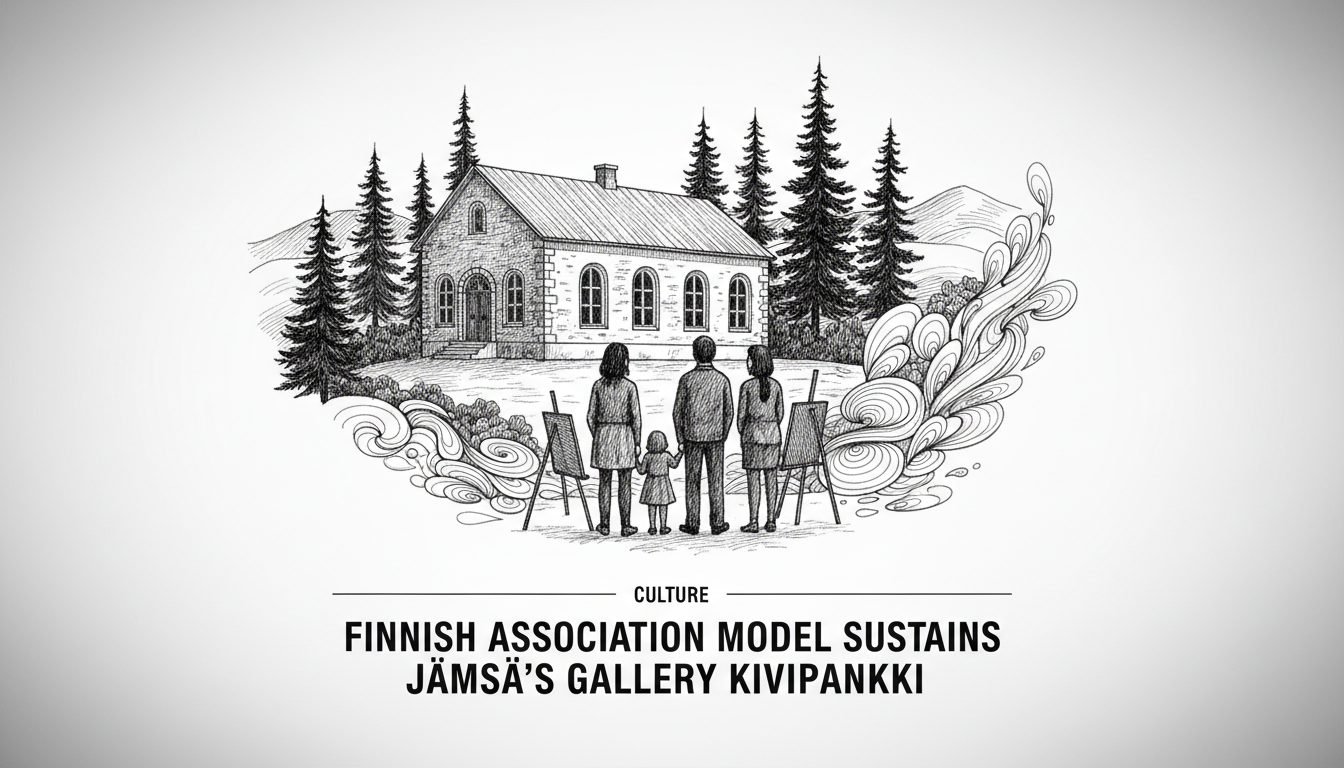
Gallery Kivipankki in Jämsä, Finland, concluded its exhibition year with a focus on local artistic talent, a direct result of its sustainable association-based operational model. The gallery's final installations for the quarter feature two distinct family collaborations, showcasing the deep connection between Finnish art and the natural landscape that consistently inspires it. The lower floor presents a joint mother-and-son exhibition titled 'Metsä humisee ja rokki raikaa' (The Forest Rustles and Rock Echoes), featuring paintings and photographs by Ilona and Harri Jahkola. This thematic exploration of nature and sound reflects a common thread in regional Finnish art, where personal expression is often filtered through the country's vast forests and cultural identity.
The upper floor hosts a sister-brother exhibition named 'Luonnosta' (From Nature), displaying works by Jaana Nikkinen-Kalini and Janne Nikkinen. Due to accessibility constraints in the upper space, their paintings and photographs are also available for viewing on a television screen in the accessible lower gallery. This practical adaptation demonstrates a community-focused approach to cultural access, a hallmark of many Finnish civic associations. The gallery's ability to program consecutive exhibitions and support local artists like the Jahkolas and Nikkisens is underpinned by its legal and financial structure as an association, or 'yhdistys'.
This model is prevalent across Finnish civil society, from sports clubs to cultural institutions like Kivipankki. It allows for member-driven governance, volunteer support, and funding avenues distinct from direct municipal or state grants. For international observers, this highlights a key difference in Nordic cultural policy, where grassroots, member-based organizations often share responsibility for local cultural life with state institutions. The association model provides resilience, as seen in Kivipankki's ongoing operations, but it also places the onus of sustainability on local membership and activity levels. The gallery's current success with local artists shows a healthy level of community engagement in Central Finland's cultural scene.
The focus on familial artistic collaborations is noteworthy. It points to art as a traded skill and shared language within families, a phenomenon seen in other Finnish artistic dynasties. This quarter's programming avoids large, imported exhibitions, instead investing in the community's own creative capital. Such a strategy strengthens local cultural identity but also raises questions about reach and diversity of artistic influence. The direct translation of the exhibition titles, which poetically blend nature and human experience, offers a clear window into the thematic preoccupations of artists in the Jämsä region. The gallery's role, therefore, extends beyond display to being an archive of local aesthetic sentiment.
Looking ahead, the challenge for institutions like Gallery Kivipankki will be balancing this vital local mission with the need for innovation and external dialogue. The association model provides a stable foundation, but continued relevance depends on attracting new members and audiences. The decision to digitally replicate the upper-floor exhibition is a small but significant step toward inclusive design. For the Finnish cultural sector broadly, Kivipankki represents a classic, community-anchored approach that continues to define artistic life outside major urban centers like Helsinki. Its current exhibitions serve as a quiet testament to the enduring power of localism in Finnish culture.