
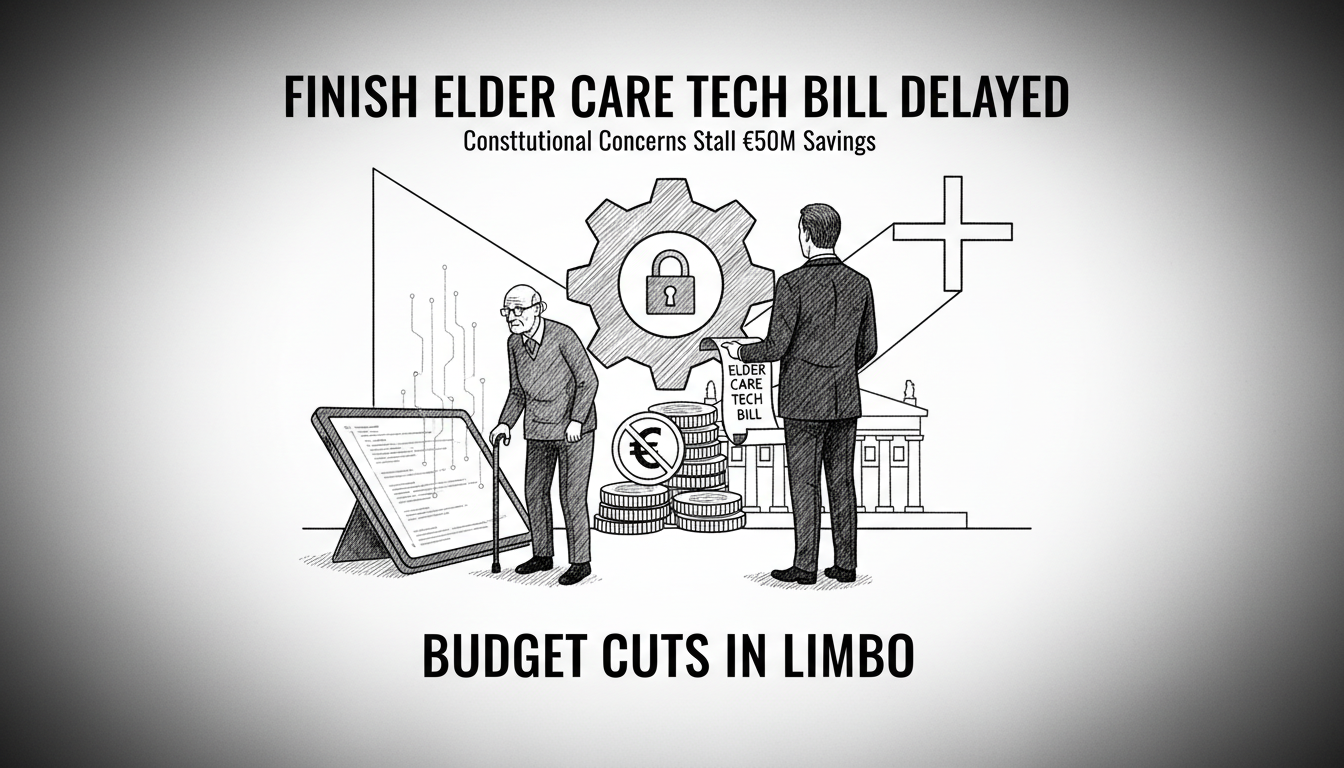
A major legislative push to increase technology use in Finnish elder care has stalled. The bill will miss the deadline for inclusion in next year's state budget. This delay puts over 50 million euros in planned budget cuts for welfare regions on hold. The cuts were intended to follow efficiency gains from new monitoring and assistive technologies.
The Parliament's Social Affairs and Health Committee could not finalize its report on the law by the Monday deadline. Committee chair Krista Kiuru cited constitutional problems as the core issue. The main concern involves the self-determination rights of elderly people. The law must clarify who decides if a person is monitored by technology when they cannot consent themselves.
Committee vice-chair Mia Laiho stated the budget gap caused by the delay must be covered by other means. She noted the financial adjustments would not disappear entirely. The bill is now scheduled for review in the spring, with potential effects later next year. The political clash highlights recurring tensions in Finland's budget process.
Social Affairs and Health Minister Kaisa Juuso criticized the committee's handling. She suggested this pattern of last-minute delays happens every autumn. Kiuru fired back, arguing the government itself proposed legislation with clear constitutional flaws. She urged ministers to bring forward budget laws that are legally sound from the start.
This legislative delay has direct implications for Finland's technology sector. Companies like Nokia, which has a growing focus on network infrastructure for IoT and remote monitoring, could be affected. Helsinki-based health tech startups developing solutions for remote care also face uncertainty. The planned 50 million euro efficiency target was a key driver for public sector adoption of new tools.
The Finnish tech industry, a cornerstone of the national economy, often relies on clear public procurement signals. Delays in legislation create a 'stop-and-go' environment for innovation. Firms in Espoo's innovation hubs and Helsinki's startup districts need predictable regulation to invest. This pause may slow pilot projects and the scaling of digital care platforms.
Finland faces a rapidly aging population, making elder care technology a critical long-term issue. The country is a global leader in mobile gaming and telecommunications, but applying that expertise to its own social challenges proves complex. The constitutional debate shows the difficulty of balancing efficiency, cost-cutting, and fundamental rights. The outcome will set a precedent for how technology integrates into the Nordic welfare model.
For international observers, this is a classic case of Nordic consensus politics hitting a snag. The goal of using technology to maintain quality care while controlling costs is shared. The path to get there involves meticulous legal scrutiny, sometimes at the expense of speed. The next steps will be closely watched by other countries grappling with similar demographic and budgetary pressures.