
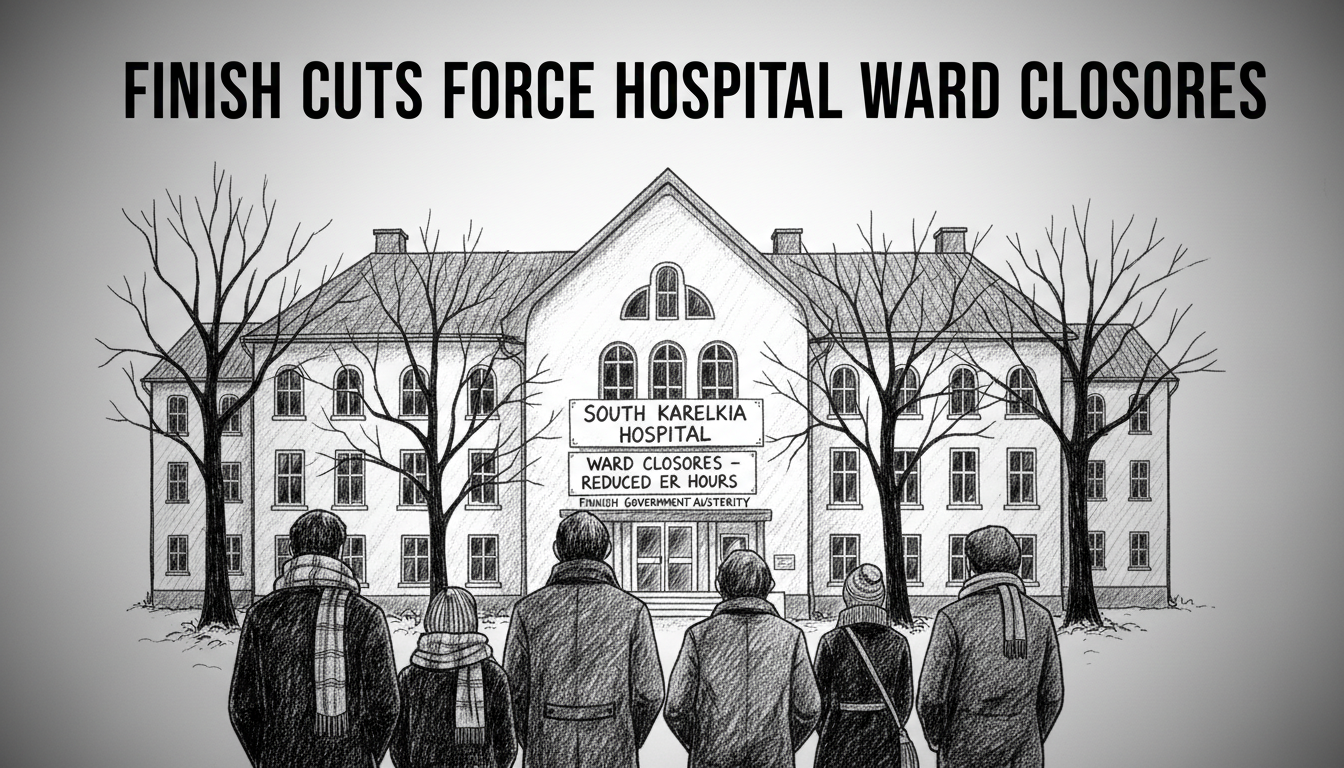
The South Karelia wellbeing services county, known as Ekhva, has approved a sweeping austerity budget that will lead to significant healthcare service reductions. The regional board gave its final approval on Monday, setting the financial framework for the coming year and a long-term plan stretching to the early 2030s. These decisions directly impact the Honkaharju welfare station, where two inpatient wards face permanent closure. Patient care from these wards will transfer to the central hospital in Lappeenranta. The Honkaharju emergency reception unit will also see its operating hours substantially reduced. Officials project savings of over half a million euros from cutting the emergency service hours alone. The regional council is scheduled to make a definitive decision on all specific savings measures on December 9.
This move represents a concrete example of Finland's ongoing struggle to reform its public healthcare and social services. The SOTE reform, which transferred responsibility from municipalities to 21 new wellbeing services counties, aimed to curb rising costs and standardize care. Critics argue the restructuring has created administrative bloat without solving core funding issues. The South Karelia county, like many others, now faces the difficult task of balancing its books under strict fiscal constraints set by the central government in Helsinki. The Finnish Parliament, or Eduskunta, has backed this broader austerity drive, which aligns with the coalition government's goal of stabilizing public debt.
The closure of local wards often triggers strong community opposition. Residents in smaller towns and rural areas fear reduced access to essential services. They worry about longer travel times to central hospitals, especially for elderly populations and those without reliable transportation. This pattern is not unique to South Karelia. Similar ward closures and service consolidations are occurring across Finland, from Ostrobothnia to North Karelia. The political debate in Helsinki centers on whether these cuts represent necessary efficiency or a dangerous erosion of the welfare state's promise of equitable care. Ministers from the governing coalition defend the measures as fiscally responsible, while opposition parties condemn them as short-sighted.
From an EU perspective, Finland's domestic austerity measures intersect with broader European fiscal rules. The European Commission monitors member states' debt-to-GDP ratios and structural deficits. Finland's government argues that controlling public spending is essential to meet these EU stability parameters and maintain investor confidence. However, the human impact of these policies is felt acutely at the local level. The reduction in emergency reception hours at Honkaharju, for instance, means non-critical cases may need to travel farther or wait longer for treatment. This creates a tangible tension between macroeconomic policy made in Helsinki and Brussels and the daily reality of healthcare delivery in regions like South Karelia.
The coming weeks will be crucial. The December 9 regional council vote will finalize the implementation timeline. Healthcare unions have already signaled potential disputes over staffing reassignments and workload increases at the receiving central hospital. The true test will be whether the consolidated services can maintain quality and accessibility. If wait times increase or patient outcomes suffer, political pressure on the government will intensify. These local cuts in South Karelia are a microcosm of a national challenge, testing the resilience of Finland's renowned social model in an era of tight budgets and demographic pressure.