
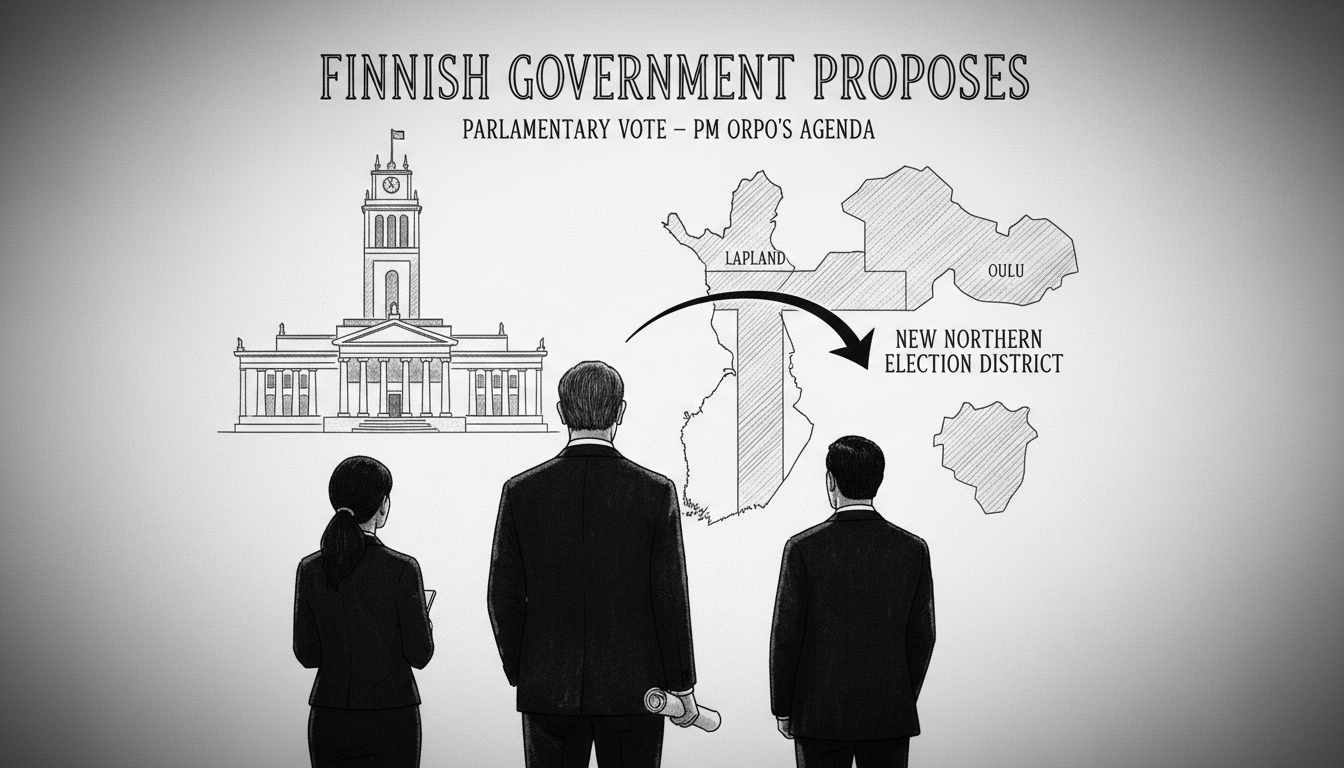
The Finnish government is moving forward with a plan to merge two northern electoral districts into a single, larger election region. This reform, part of Prime Minister Petteri Orpo's government program, would see the Lapland and Oulu constituencies form a combined electoral area for future parliamentary elections. The proposal is set for a decision by the government's internal security and justice ministerial working group in a written procedure on Thursday. The Ministry of Justice is responsible for preparing the legislation.
Under the proposed model, candidates would still be nominated within their traditional constituencies. Voters would continue to cast ballots for candidates from their own local district. However, the allocation of parliamentary seats to political parties or electoral associations would be calculated based on the total vote across the entire new northern region. The number of representatives elected from each constituent area within the district would continue to be determined by the size of its Finnish citizen population.
This structural change represents a significant shift in Finland's electoral geography, which has remained largely stable for decades. The current system of 13 electoral districts is designed to balance national proportionality with regional representation, ensuring the vast and sparsely populated north maintains a political voice in Helsinki. The merger aims to streamline administration and could potentially alter campaign strategies for parties competing in the north, where the political landscape differs markedly from the southern urban centers.
Political analysts note the reform could have subtle implications for party dynamics. The Finnish Parliament, the Eduskunta, has 200 members. The combined population of Lapland and Oulu constituencies would create one of the larger electoral districts. This could benefit larger parties with broad regional appeal while posing challenges for smaller parties that rely on concentrated support in specific areas. The change requires parliamentary approval, and the timeline suggests implementation for the electoral cycle after next.
From an EU perspective, Finland's electoral system adjustments are watched closely as part of broader democratic governance trends within the bloc. While EU directives do not mandate specific electoral structures for national parliaments, principles of equal suffrage and regional representation are consistent themes. The reform also touches on the perennial Nordic challenge of providing effective public services and political engagement across large, low-density regions, a topic of shared interest in other northern EU member states like Sweden.
The proposal is now entering a critical phase of political scrutiny. It will be debated in parliamentary committees, where opposition parties are expected to question the need and timing of the change. The government, led by Orpo's National Coalition Party (Kokoomus) in coalition with the Finns Party (Perussuomalaiset) and the Swedish People's Party (RKP), will need to secure a majority in the Eduskunta. The outcome will signal the government's ability to deliver on its programmatic promises and could influence political cohesion in the run-up to the next national election.