
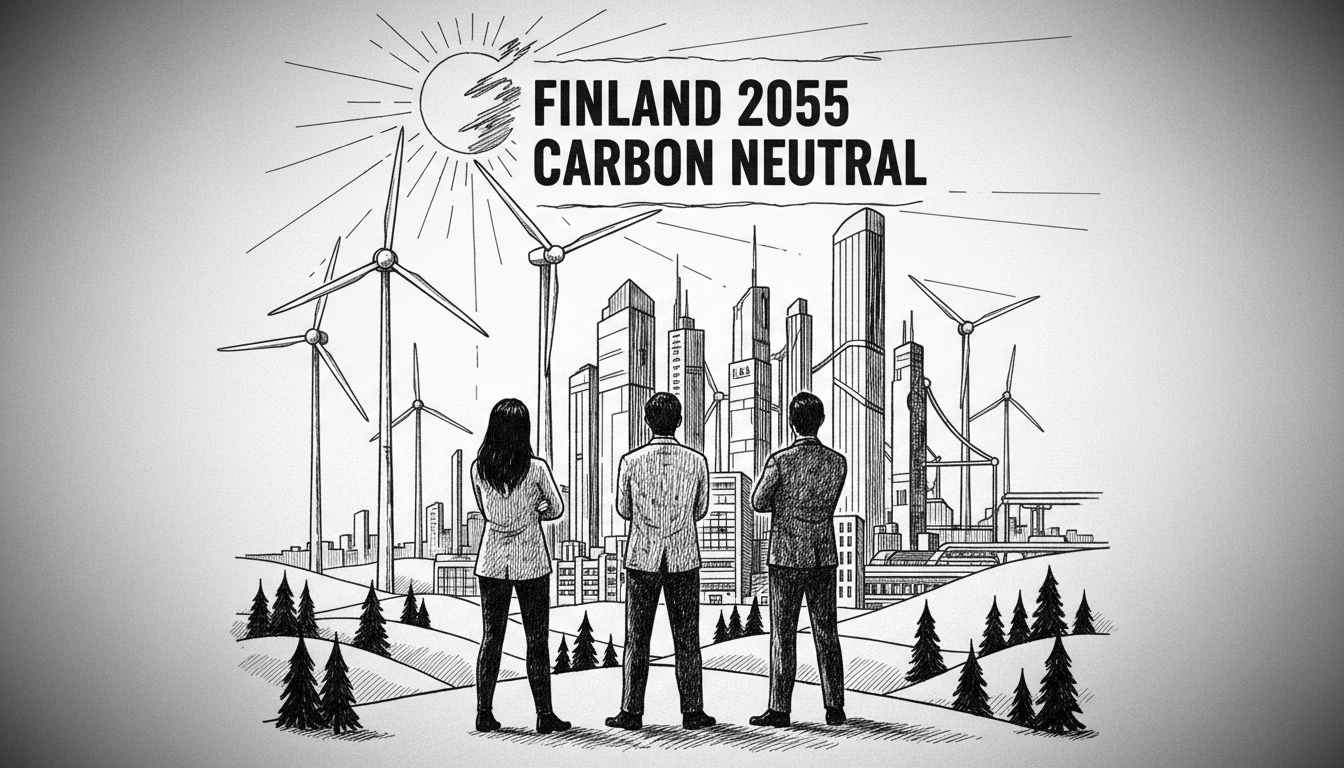
The Finnish government has resolved an internal dispute over its climate strategy, with Environment and Climate Minister Sari Multala confirming the state will not abandon its legally binding goal of achieving carbon neutrality by 2035. The announcement follows intense negotiations within the governing coalition, which includes the nationalist Finns Party. The party had pushed to scrap the target, a move that threatened to destabilize the government's agenda in Helsinki.
Minister Multala, a member of the center-right National Coalition Party, outlined the government's updated energy and climate strategy following a cabinet session. The strategy is a central tool for accelerating the clean transition, reducing greenhouse gas emissions, and strengthening carbon sinks as outlined in the government program. Multala stated the plan secures Finland's position as a European frontrunner in clean energy.
The detailed policy lines aim to ensure a reliable supply of affordable clean energy for industry, businesses, and households. The goal is to create a predictable operating environment that attracts investment and supports the growth of Finland's clean economy. A key component is Finland's ambition to capture a 10 percent share of the European Union's hydrogen production and refining. National funding of 90 million euros has been allocated for technical carbon sinks.
The government also approved its medium-term climate plan for the effort-sharing sector. Minister Multala identified carbon sinks as Finland's greatest challenge in meeting its climate objectives, noting a need for more reliable data. The government has committed 8 million euros to strengthen this knowledge base. The plans will now be submitted to the Finnish Parliament, the Eduskunta, for information.
This resolution is significant. It demonstrates the continued political weight of the 2035 carbon neutrality target, which is enshrined in Finnish law. The Finns Party's challenge was a test of the coalition's cohesion on a core EU-aligned policy. The outcome signals that mainstream parties in the coalition are unwilling to unravel Finland's climate legislation, a move that would have damaged its international reputation. The focus now shifts to implementation, where the real test of meeting the ambitious 2035 deadline will begin. The strategy's success hinges on tangible investments and concrete emission reductions across all sectors of the economy.