
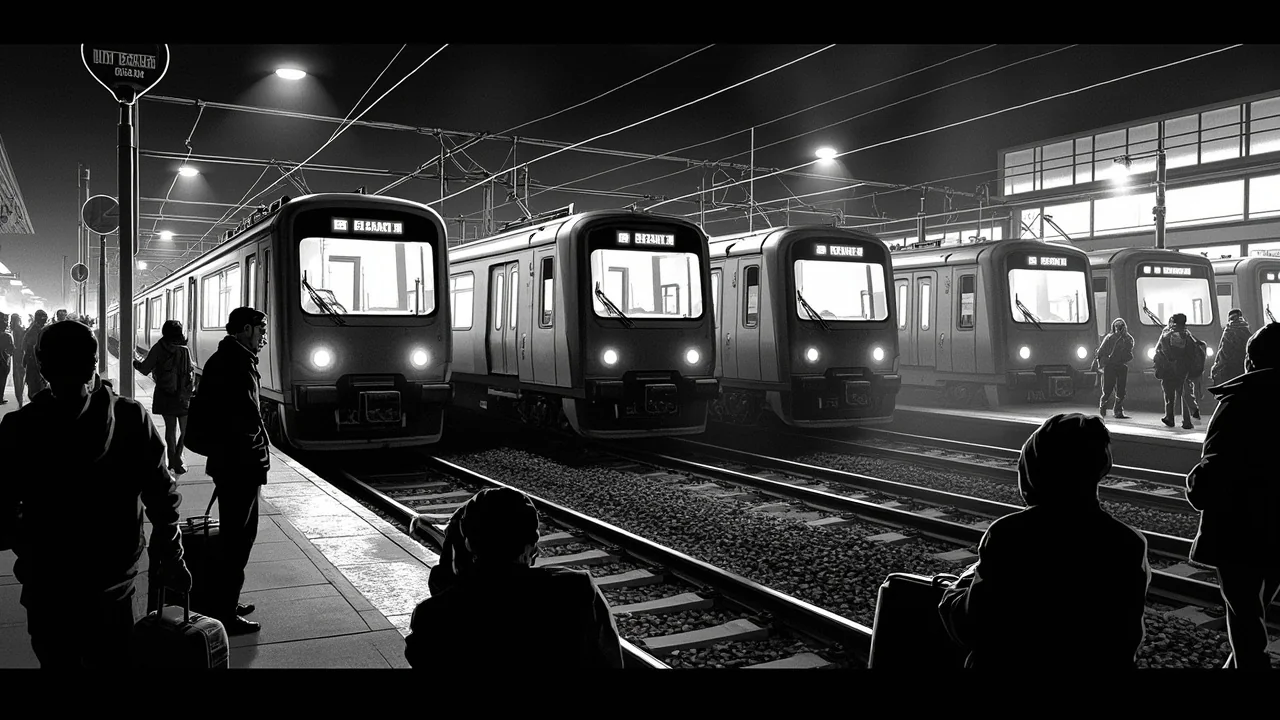
Four Finnish night trains faced massive delays of up to four hours over the weekend due to a cascading series of technical failures. The disruptions on key routes linking Helsinki with Lapland stranded hundreds of passengers and exposed vulnerabilities in a service critical for long-distance travel in the sprawling Nordic nation.
VR Group, the state-owned rail operator, confirmed the extensive problems began with a technical fault on overnight train 265 from Helsinki to Kemijärvi. Its scheduled 7:29 PM Saturday departure was delayed by nearly four hours, requiring a carriage swap. This initial failure created a domino effect, crippling the tightly scheduled night network.
A Domino Effect of Disruption
The delay to train 265 directly impacted two subsequent services from Helsinki. Night train 269 to Kolari, slated to depart at 8:24 PM, and night train 273 to Rovaniemi, scheduled for 11:13 PM, were both held back for approximately four hours. By 1:00 AM Sunday, the Rovaniemi service had still not departed Helsinki Central Station. Meanwhile, a northbound issue spilled over to a southbound service, with train 266 from Rovaniemi to Helsinki also running two hours late due to a separate technical fault that required a locomotive change.
VR's communications coordinator, Ella Riikonen, acknowledged the severity of the situation. "Such long delays are always unpleasant. We apologize for the situation and hope that the trains will be able to make up time during the trip," Riikonen said. She assured that the knock-on effects were not expected to disrupt other Sunday services, but the damage for Saturday night travelers was already done.
Passengers Bear the Brunt
For passengers, the delays meant disrupted sleep, missed connections, and ruined plans. Night trains are a vital lifeline in Finland, offering a practical and comfortable way to traverse the long distances between the southern capital and northern communities. They are particularly popular with tourists heading to Lapland and residents visiting family. A four-hour delay can mean arriving in the middle of the morning instead of the early hours, throwing entire days into chaos.
The incident highlights passengers' dependence on the reliability of a single operator on these routes. With no alternative rail operators for long-distance travel, when VR experiences technical issues, there are few immediate alternatives for stranded travelers, especially in the middle of the night.
Systemic Strains on an Aging Fleet
While VR attributed the delays to specific technical faults, the scale of the disruption points to broader systemic challenges. Finland's rail fleet, particularly for long-distance services, has faced criticism regarding aging rolling stock and reliability. The need for a carriage swap on one train and a locomotive change on another suggests pre-existing vulnerabilities in the available equipment.
These operational failures occur amid a national and EU-wide push to shift travel from carbon-intensive air and road transport to greener railways. Finland's government has set ambitious climate goals where rail plays a central role. Repeated technical failures undermine public confidence in choosing the train, especially for essential overnight travel across the country.
Investment in new rolling stock has been underway, but the transition is slow. The recent disruptions will likely intensify debate in the Eduskunta, Finland's parliament, about the pace of renewal for the state-owned company's assets. MPs from northern constituencies are particularly vocal about reliable transport links for their regions.
VR's Response and Accountability
VR's public response followed a standard protocol: acknowledgment, apology, and a hope to recover time. While Riikonen stated the delays should not affect Sunday traffic, the operator's primary remedy for affected passengers is typically compensation as per EU passenger rights regulations. For delays over three hours, travelers are entitled to a 50% refund of their ticket price.
However, financial compensation is cold comfort for lost time and sleepless nights. The incident raises questions about contingency planning for multiple simultaneous failures. The domino effect seen Saturday suggests the night train schedule lacks robustness when a single key service encounters problems. Analysts suggest VR may need to review its operational buffer times and standby vehicle availability, especially for its flagship night services.
Looking Down the Line
The weekend's major disruption is a setback for Finnish rail. It comes at a time when VR is trying to attract more passengers to sustainable transport. Consistent reliability is the cornerstone of that effort. For the Finnish government, which ultimately owns VR, the event is a reminder that meeting climate targets requires not just policy but also flawless execution and modern infrastructure.
The tracks between Helsinki and Lapland are more than just metal and wood; they are an economic and social artery for the nation. This breakdown, while technical in origin, cuts to the heart of Finland's geographic challenges and its green ambitions. The question now is whether this event will be a catalyst for accelerated investment or merely another footnote in the long narrative of Nordic travel. The patience of passengers, and the credibility of rail as a reliable alternative, may hinge on the answer.