
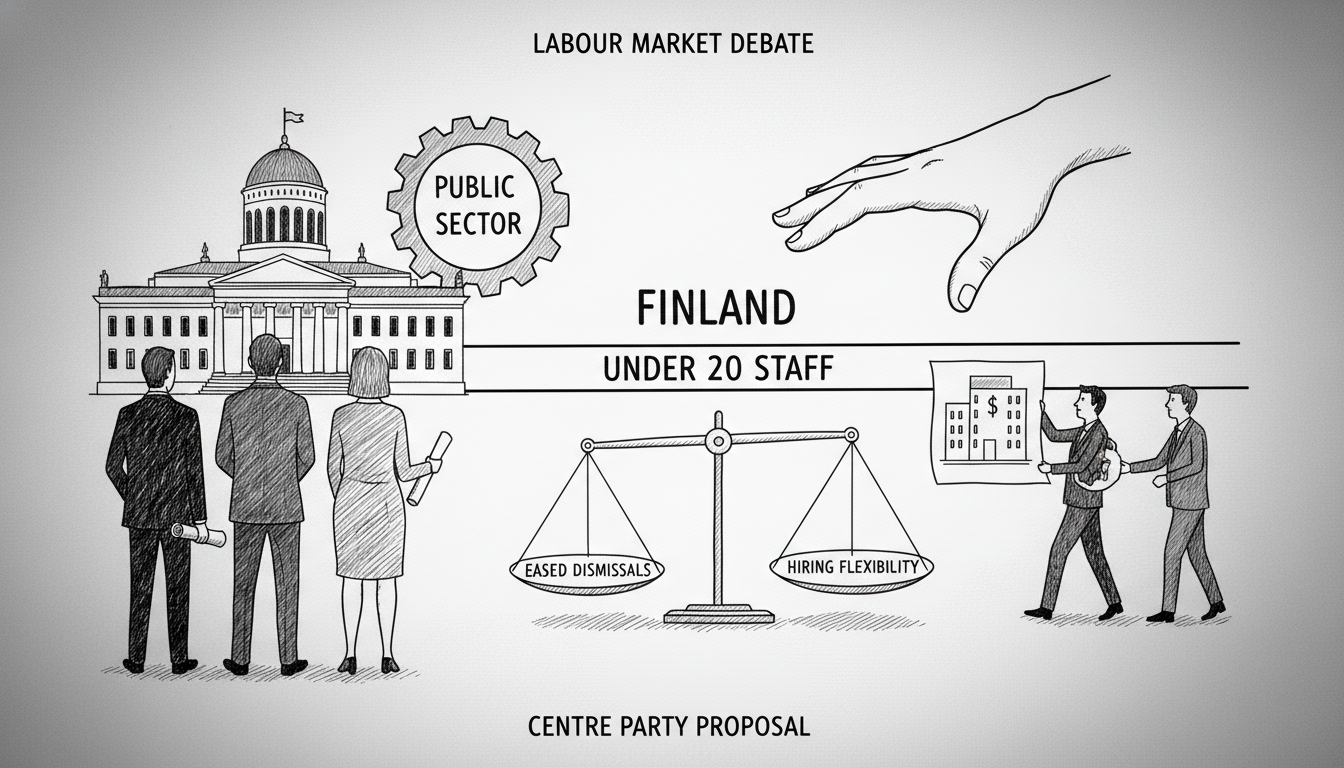
The Finnish opposition party, the Centre Party, has introduced a counter-proposal to the government's plan to make it easier for employers to dismiss workers. The Centre Party wants to limit the eased dismissal rules to companies with fewer than 20 employees, a move they argue would protect public sector workers like nurses from the change. The government's original proposal would lower the threshold for dismissal from requiring a 'substantial and weighty reason' to just an 'acceptable reason'.
Centre Party Member of Parliament Olga Oinas-Panuma presented the alternative model in the Eduskunta's Labour Market and Equality Committee. She stated that the party's goal is to differentiate itself from both the government coalition and the left-wing opposition parties. The Centre Party's plan aims to reduce hiring risks specifically for small and medium-sized enterprises, which they say are the primary creators of new jobs in Finland.
This is not a new concept in Finnish politics. The previous government led by Centre Party's Juha Sipilä considered a similar threshold of 20 employees for easing dismissal rules. That government ultimately abandoned a strict numerical limit, opting instead for a provision stating that the size of the employer should be considered in the overall assessment of a dismissal's justification. Officials at the time cited potential legal interpretation difficulties in distinguishing between a lowered and a normal dismissal threshold.
Oinas-Panuma directly addressed the political strategy behind the move. She said the Centre Party always aims to provide its own, centrist alternative. The proposal comes amid intense debate in Helsinki's government district. Trade unions, the Social Democratic Party, and the Left Alliance have labeled the government's original plan a 'kick law'. The government coalition argues that reducing dismissal-related risks will encourage companies to hire more staff.
The debate touches on a core tension in Nordic labour market policy: balancing flexibility for employers with strong job security for employees. Finland's system has traditionally emphasized security, but successive governments have sought reforms to boost competitiveness. The Centre Party's counter-proposal attempts to navigate this by targeting regulatory relief at the smallest firms, which often argue that strict employment protection laws deter hiring.
What happens next depends on committee negotiations. The government holds a majority, but the Centre Party's model could attract support from other MPs concerned about the impact on larger workplaces. The outcome will signal the direction of Finnish labour market policy and its alignment with broader EU trends favoring economic adaptability. For international observers, this is a classic example of the Nordic model's ongoing evolution, where consensus is tested but policy changes are often incremental and negotiated.