
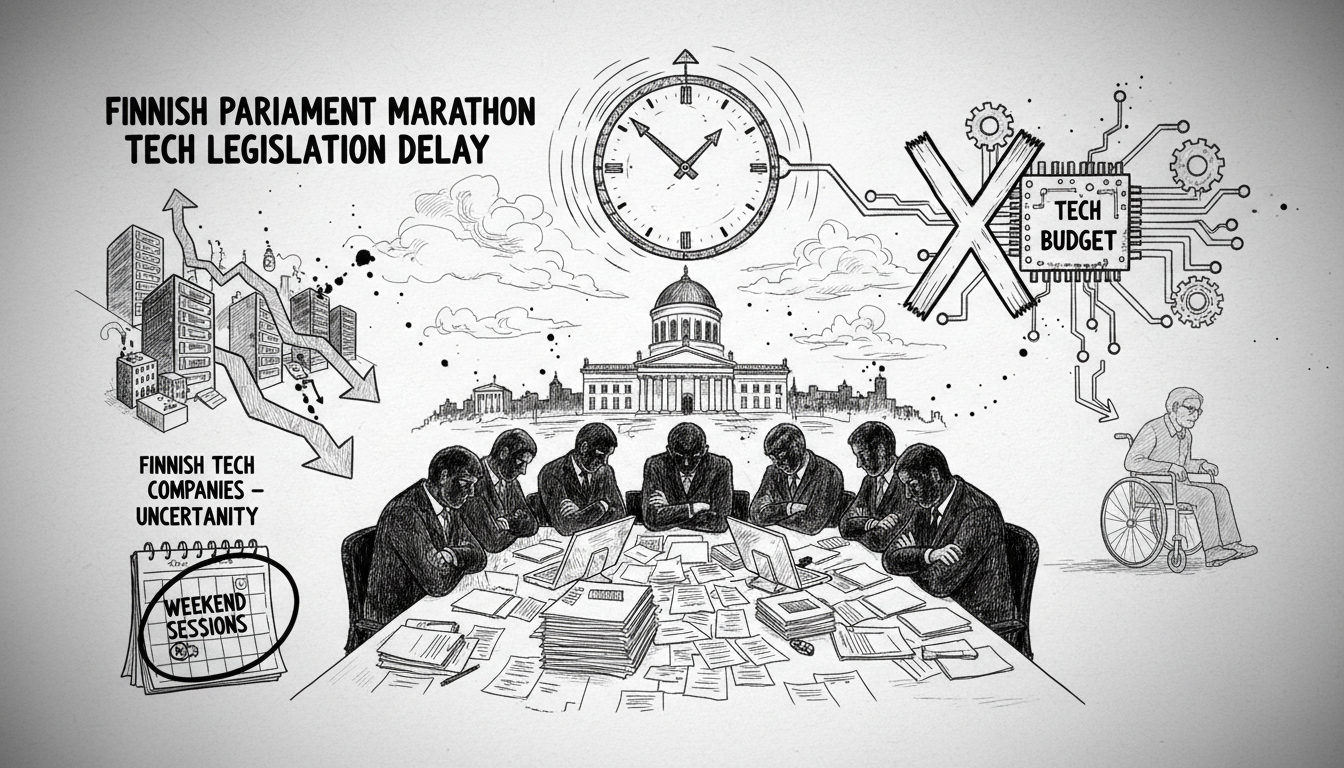
A key Finnish parliamentary committee is holding extraordinary weekend and evening sessions to push through a backlog of urgent legislation. The Social Affairs and Health Committee, chaired by Krista Kiuru, is working from early morning until late at night. The committee plans to meet on Friday, Sunday, and Monday. It may even work through the night if needed, according to Deputy Chair Mia Laiho. The intense schedule highlights legislative pressure before the holiday break.
Several critical bills are on the table. These include a major pharmacy reform law and changes to the multi-provider model in social services. A law concerning special pregnancy allowance is also pending. All three measures are slated to take effect at the start of January. The committee just finished preparatory debate on a subsistence support law. That report is due on Sunday.
One notable casualty of the time crunch is a budget proposal related to technology in elderly care. The committee confirmed it cannot prepare the report on this item by the Tuesday deadline. This failure sparked a public disagreement between Minister of Social Affairs and Health Kaisa Juuso and Committee Chair Kiuru. The delay stalls a policy directly touching the Finnish tech sector's role in healthcare innovation.
This legislative logjam has direct implications for Finland's technology sector. The stalled elderly care technology proposal affects companies developing monitoring systems, telehealth platforms, and assistive devices. Helsinki and Espoo are hubs for such health-tech startups. Delays in the multi-provider model law also create uncertainty for private service providers, including many tech-enabled care companies. This regulatory uncertainty can impact investment and planning for firms in this growing niche.
Finnish tech news often focuses on startups and Nokia's latest news, but government policy sets the stage. The current parliamentary rush shows how political timelines can bottleneck sector growth. The pharmacy law reform, for instance, could change the distribution landscape for health-related products, including digital health tools. The committee's workload reflects a broader trend of complex social and technological issues converging in legislation.
Deputy Chair Laiho acknowledged the fatigue among committee members. She said everyone is a bit tired but working hard to move things forward. She described the atmosphere as good despite the pressure. Last year, the work environment in the same committee became extremely tense during a similar rush. Officials say the current mood is better, with breaks for necessary stretching as recommended by occupational health.
The situation underscores the often-overlooked link between parliamentary processes and the business environment. For the Finnish gaming industry and broader technology sector, stable and timely regulation is crucial. Delays in laws governing social services and healthcare technology can slow pilot projects and market entry. This committee's race against the clock is more than political news. It is a real-time factor in the planning cycles of companies across the Finnish technology sector.
What happens next? The committee aims to finalize the pharmacy law next. It will then tackle the two other urgent proposals. The missed deadline for the elderly care tech bill means it will return to the agenda later, potentially in a different form. For observers of Finnish tech news, this episode is a reminder. Legislative calendars in Helsinki can be as decisive for innovation as breakthroughs in Espoo's research labs.