
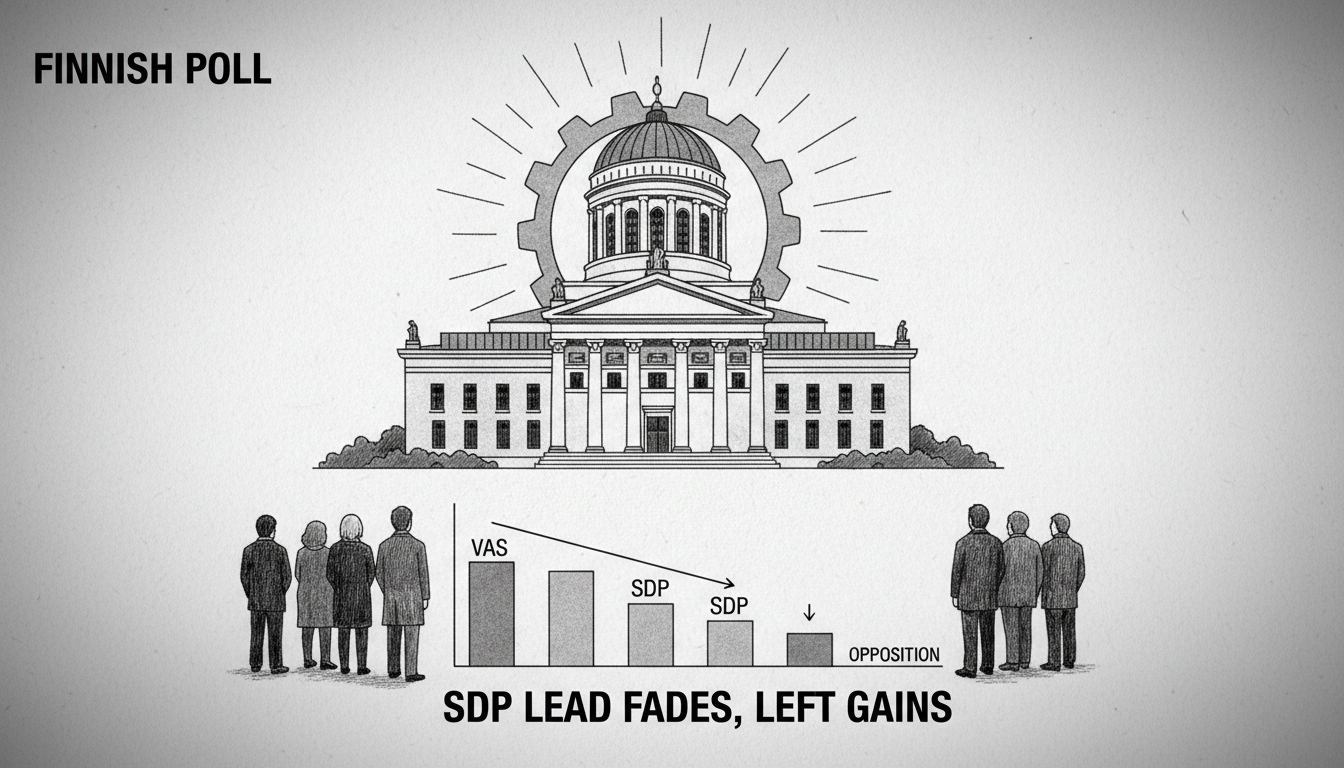
A fresh political poll in Finland reveals a stable yet shifting landscape in Helsinki's government district. The Social Democratic Party (SDP) maintains a clear lead with 24.7 percent support. The National Coalition Party (Kokoomus) follows in second place at 18.7 percent, with the Finns Party (Perussuomalaiset) third at 14.2 percent. All three leading parties, however, saw their support decline compared to the previous month. The SDP experienced the most substantial drop, falling by 0.7 percentage points. The Center Party (Keskusta) ranked fourth in the survey, with the Left Alliance (Vasemmistoliitto) fifth and the Green League (Vihreät) sixth.
The most notable movement came from the smaller opposition parties, which collectively gained ground. The Left Alliance recorded the largest increase, rising by 0.7 percentage points. A research director from the polling firm Taloustutkimus commented on the shift, suggesting that the Left Alliance appears to be the primary beneficiary of the SDP's slight decline. The analyst said it seems some SDP voters have now moved to support the Left Alliance. This dynamic highlights the fluid nature of the Finnish left-wing bloc and poses questions for SDP strategists ahead of the next Eduskunta session.
This poll data arrives during a critical period for the governing coalition's legislative agenda. Policy details on social security reform and climate targets are under intense parliamentary scrutiny. The SDP's slight dip, coupled with opposition gains, could influence upcoming votes on the government's budget proposal. A stronger Left Alliance in the polls may embolden its MPs to push for more progressive amendments to government bills, particularly those related to labor and welfare. The opposition's rising numbers also reflect broader public sentiment on economic pressures, a key factor in Finnish politics today.
The results carry implications for Finland's stance within the European Union. A more fragmented domestic political scene can complicate the formation of a unified national position on EU directives, especially concerning fiscal rules and defense cooperation. Historical context is important here. Finnish coalition governments often navigate delicate balances, and even small shifts in party support can alter the political calculus in Helsinki. The current government, led by Prime Minister Petteri Orpo of the National Coalition Party, must now consider these polling trends while managing its multi-party alliance. The data suggests voters are closely watching policy implementation, and dissatisfaction with the largest parties is currently flowing toward their smaller rivals. This is a classic feature of the Nordic proportional system, where voter loyalty is often conditional on perceived performance.
For international observers, this poll update is a key indicator of stability within a crucial EU and NATO member state. The modest changes do not signal an immediate government crisis, but they do reveal underlying currents. The gains by the Left Alliance and other opposition parties could translate into more assertive parliamentary opposition, potentially slowing the legislative pace. The next set of polls will be crucial to determine if this is a momentary fluctuation or the beginning of a more sustained trend. The government's ability to communicate its policy successes and manage economic concerns will likely be the deciding factor.