
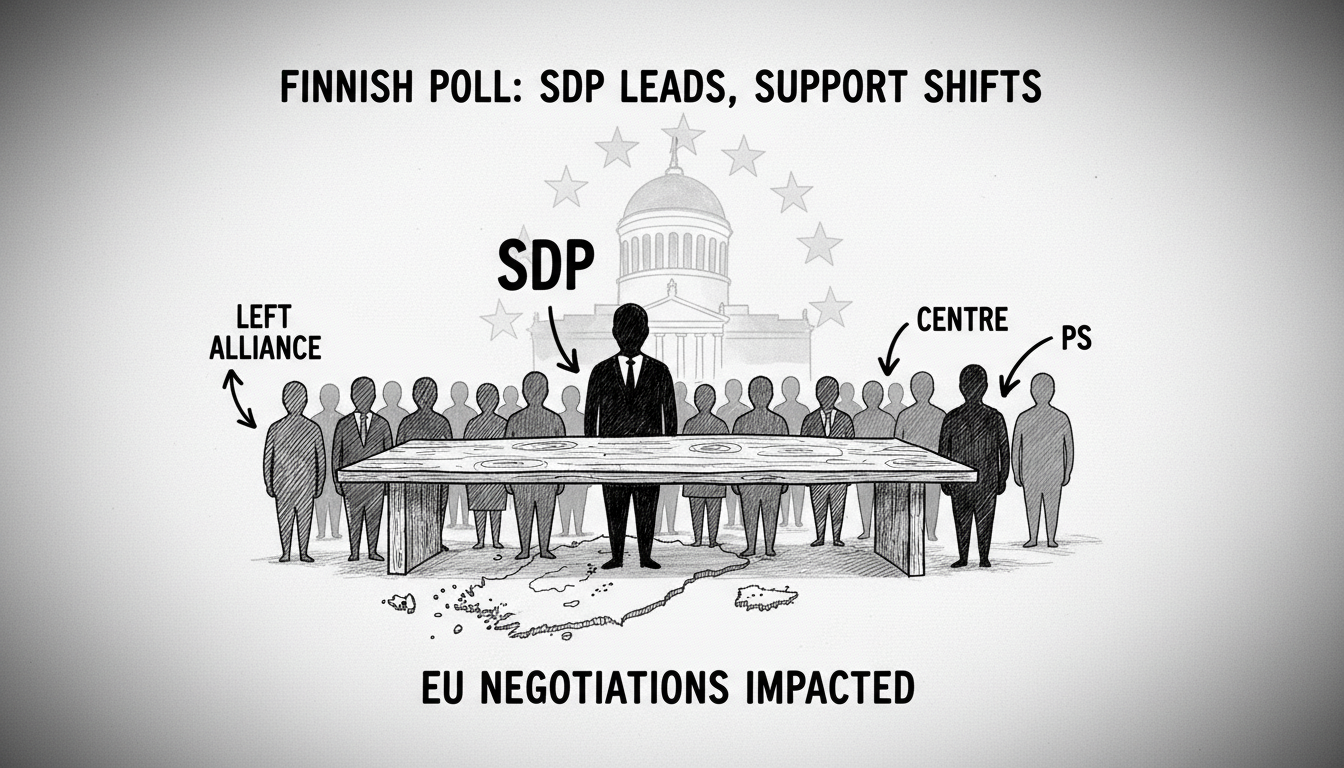
The Social Democratic Party (SDP) remains Finland's most popular political party, according to the latest national poll. The survey shows the SDP holding 24.7 percent of voter support. The National Coalition Party (Kokoomus) follows in second place with 18.7 percent, while the Finns Party (Perussuomalaiset) holds third with 14.2 percent. All three leading parties have experienced a slight decline in support compared to the previous month. The SDP saw the most notable drop, falling 0.7 percentage points from its recent peak of 25.8 percent recorded earlier in the year. This shift in the political landscape around Helsinki's government district indicates a potential recalibration of support as the parliamentary term progresses.
Smaller opposition parties across the spectrum gained ground in the same poll. The Left Alliance (Vasemmistoliitto) registered the most significant increase, rising 0.7 percentage points to reach 10.2 percent support. Research director Tuomo Turja, whose firm conducted the survey, provided analysis on the shift. He said the Left Alliance appears to be the primary beneficiary of the SDP's minor decline, suggesting a transfer of voters between the two left-leaning parties. The poll sampled just over 1,800 individuals and carries a maximum margin of error of 2 percentage points in either direction.
This poll data arrives as the Eduskunta, Finland's parliament, navigates a complex legislative agenda. The results suggest a consolidation of support for the opposition bloc, which could influence upcoming policy debates. The SDP, led by Prime Minister Antti Rinne until his recent resignation and now by Sanna Marin, has anchored Finland's government for several years. Its platform has focused on strong welfare policies and maintaining Finland's robust role within the European Union. The slight dip, while within the margin of error, may reflect voter assessment of recent economic measures or social policies emanating from the government quarter.
For international observers, these figures highlight the stability and multi-party nature of Finnish politics. Unlike many European nations, Finland's political scene avoids domination by a single party, requiring coalition-building and consensus. The rise of the Left Alliance points to active debate within the Finnish left on issues like climate policy, economic equality, and Finland's NATO membership. These domestic preferences directly shape Finland's negotiating stance in Brussels, affecting EU directives on everything from the green transition to defense cooperation. The government's ability to maintain its coalition discipline will be tested as it balances these internal political currents with external European commitments.
The next several months will be critical. The poll suggests no immediate threat to the governing coalition's majority, but the trends warrant attention. If support continues to drift from the largest parties to smaller ones, it could empower opposition voices in parliamentary committees and during budget negotiations. This is a normal feature of the political cycle, where mid-term polls often show softening support for incumbents. The true test will come during the next electoral campaign, when these monthly fluctuations crystallize into concrete voting intentions. For now, the government's legislative program, particularly concerning the economy and Finland's ambitious carbon neutrality goals, continues to move forward.