
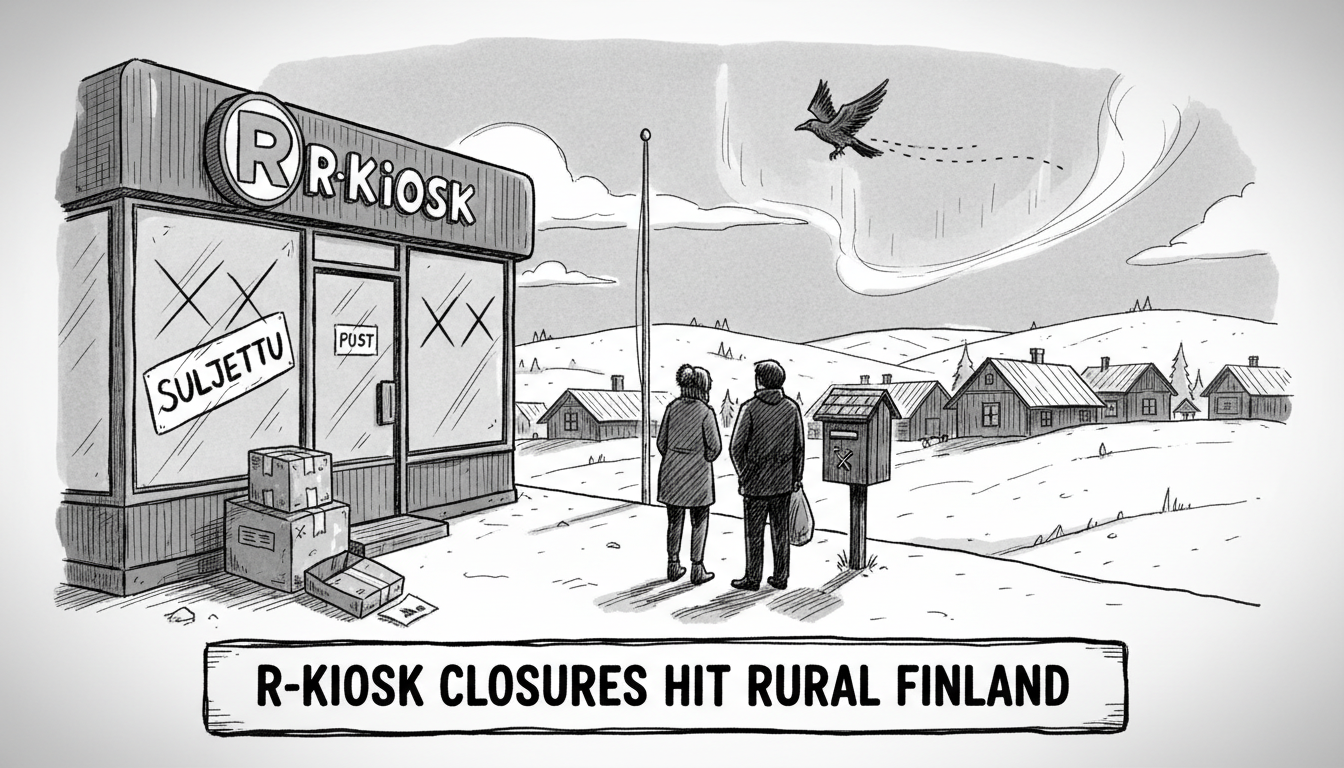
A wave of closures is sweeping through the R-Kiosk convenience store chain in Central Finland, threatening essential services in smaller towns. At least four of the region's twelve outlets will shut their doors in the coming weeks, including locations in Äänekoski and Jämsä. This reflects a national trend where approximately 70 stores are disappearing from Finnish streets. The closures raise immediate questions about access to postal services, parcel delivery, and daily necessities, particularly for elderly residents and those without cars in less populated areas.
The Jämsä store, despite reportedly having consistent customer queues, will close its doors in January. The situation in Keuruu remains unclear, while outlets in Saarijärvi and Laukaa are confirmed to continue operating. These kiosks often serve as critical community hubs, providing more than just retail goods. They host Posti and Matkahuolto service points, handling mail, packages, and bus tickets. Their removal creates a tangible service vacuum, forcing residents to travel longer distances for basic errands. This trend directly impacts the Finnish government's stated goals of maintaining vibrant rural communities and ensuring equitable service access across the country.
From a policy perspective, the closures intersect with several government priorities. The Ministry of Economic Affairs and Employment monitors retail market concentration and its effects on regional development. The widespread shuttering of these franchises suggests deeper economic pressures, possibly linked to rising operational costs, changing consumer habits, and increased digitalization of services. Members of Parliament from Central Finland, particularly from the Centre Party which traditionally champions rural interests, are likely to face constituent pressure to address the deteriorating service network. The issue may prompt questions in the Eduskunta about state support for essential commercial services in regions with declining profitability.
The situation also has a clear EU dimension. Finland's regional development policies operate within the framework of the European Union's Cohesion Policy, which aims to reduce disparities between regions. The loss of basic service points in Central Finland could be seen as a setback for these cohesion goals. Furthermore, EU competition rules and single market regulations influence the retail sector's structure. While the closures are a commercial decision by the franchise operator, their societal impact invites scrutiny of whether existing EU and national frameworks adequately protect citizens in less economically dense areas. The government in Helsinki must now balance respect for market forces with its responsibility to guarantee a basic standard of living for all citizens, a core principle of the Nordic welfare model.
Historically, Finland has grappled with maintaining services in its vast and sparsely populated regions. The closure of local banks, schools, and now convenience stores represents an ongoing challenge. This latest development is not just about shuttered shops. It is a test of Finland's ability to adapt its social contract to 21st-century economic realities. The coming months will show if local municipalities, the central government, or private innovators can develop sustainable models to fill the gap left by these iconic green-and-yellow kiosks. The real question is what new form of community hub, if any, will emerge to serve the daily needs of Finns outside major urban centers.