
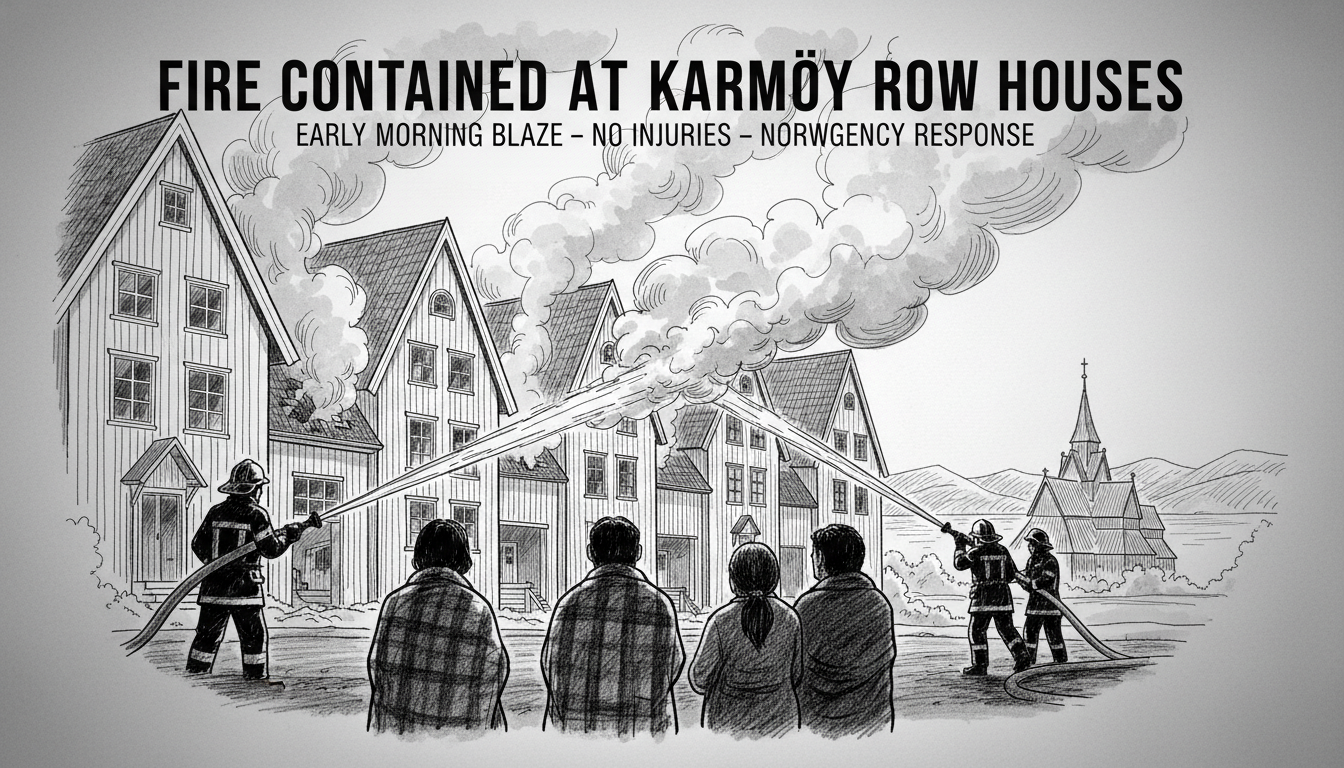
Fire crews contained a serious blaze at a row house complex in Åkra on Karmøy island this morning. The fire service arrived on scene shortly after 7:30 AM and immediately began extinguishing operations. Crews from both Raglamyr and Kopervik fire stations responded to the emergency.
Operations leader Stein Arild Egeland confirmed authorities gained control of the situation quickly. He stated the fire no longer threatens nearby structures. Police operations leader Victor Fenne-Jensen noted extinguishment work will continue for some time. While flames are subdued, significant smoke remains in the area.
No residents were inside the building during the incident. Neighbors received evacuation orders as a precautionary measure. The swift response prevented potential disaster in the densely populated residential area.
This incident highlights Norway's robust emergency response infrastructure. The country maintains one of Europe's most comprehensive fire safety systems. Norwegian building codes mandate strict fire prevention measures for residential structures. These regulations proved effective today in limiting damage.
Karmøy's location presents unique challenges for emergency services. The island community requires specialized response protocols. Today's coordinated effort between multiple fire stations demonstrates this system's effectiveness. The incident also raises questions about aging infrastructure in Norway's coastal communities.
International readers should understand Norway's decentralized emergency response model. Municipalities maintain primary responsibility for fire services. This structure enables rapid local response while allowing regional coordination when needed. Today's multi-station response exemplifies this system's strengths.
Row house fires present particular dangers in Nordic climates. Cold weather often increases fire risks due to heating systems and electrical loads. The timing of this blaze during early morning hours compounds these risks. Fortunately, Norway's proactive evacuation protocols prevented injuries.
What comes next for affected residents? Insurance assessments will begin immediately. Norwegian property insurance typically covers such incidents comprehensively. Temporary housing arrangements will likely be coordinated through municipal services. The community's strong social support networks will play a crucial role in recovery.
The Karmøy incident serves as a reminder of fire safety importance in residential areas. Norway continues investing in emergency response capabilities despite its generally excellent safety record. This commitment to public safety remains a hallmark of the Norwegian welfare state.