
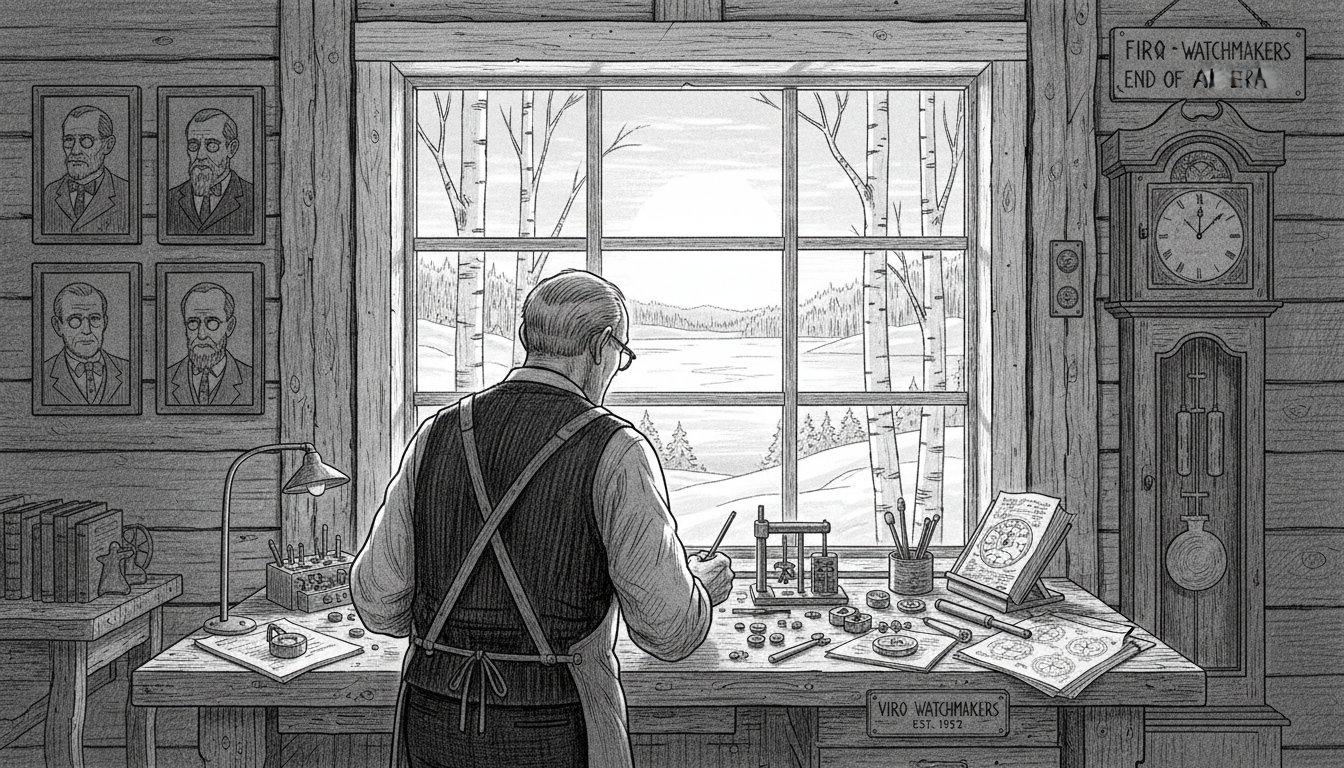
Matti Viro retired two years ago but cannot stay idle. The master watchmaker still repairs timepieces at his own pace in his Laihia home. His workshop holds four generations of family history. Matti and his father Kalevi both completed 50-year careers in this same room.
The craft passed directly through the family. It began with great-grandfather Elias Viro in the 1850s. Then it moved to grandfather Augusti, followed by father Kalevi. Matti represents the fourth generation. No younger family members will continue the tradition.
Elias Viro was born in Lapua in 1855. He died from tuberculosis at just 45. His son Augusti learned watchmaking from older brothers after his father's early death. Augusti later lived with his family on the same street where Matti works today.
Matti started as his father's apprentice at age 14. They began safely with wall clocks. Five years passed before he moved to smaller timepieces. The smaller the clock, the more difficult the repair work becomes. His skills eventually expanded to cuckoo clocks, pocket watches, and wristwatches.
He worked for about ten years at Granlund watch shop in Vaasa. Then he returned to Laihia to take over the family business when his father retired. Some tools on his workbench originally belonged to his grandfather.
Old clock repair principles remain unchanged. The most common issue involves dirt accumulation over years. Watch oils thicken with age. Missing or broken parts must be replaced. Matti makes these components himself or orders them online.
He rarely repairs new, inexpensive wristwatches. But he does replace their batteries every few weeks. Customers come mainly from nearby Ostrobothnia municipalities. Some travel from farther locations like Åland Islands.
People express concern about their heirloom timepieces. They wonder who will repair their family watches after Matti retires. His family's tools will eventually move to a local museum. This marks the end of a continuous 170-year family tradition.
The disappearance of such specialized crafts represents a broader cultural shift. Traditional skills that sustained families for generations now face extinction without new apprentices.