
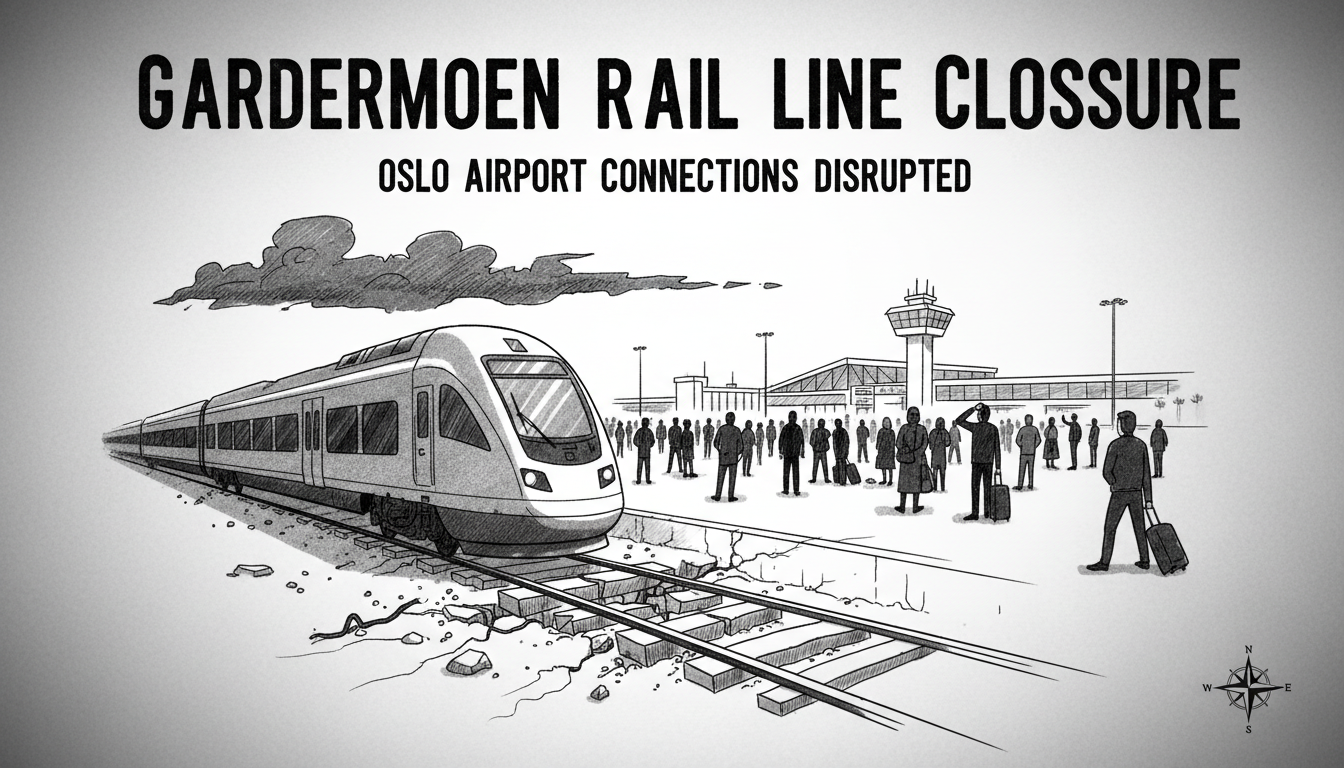
The critical Gardermoen rail line has suspended all train traffic between Lillestrøm and Oslo Airport following an incident along the tracks. Railway operator Vy confirmed the complete closure of both Gardermoen-Lillestrøm and Lindeberg-Kløfta sections in a traffic announcement. Commuters should prepare for substantial delays and potential train cancellations throughout the day.
This disruption affects Norway's busiest airport connection route during peak travel season. The Gardermoen Line typically carries thousands of passengers daily between Oslo's city center and Scandinavia's second-busiest airport. The closure creates immediate transportation challenges for both domestic and international travelers relying on Norway's renowned public transit system.
Norwegian transport infrastructure faces increasing strain from aging rail networks and extreme weather patterns. The Gardermoen Line represents a vital economic artery connecting Norway's capital to global destinations. Previous incidents on this route have demonstrated how quickly transportation bottlenecks can develop in the densely populated Oslo region.
Transport authorities have not specified the nature of the track incident but confirmed emergency response teams are on site. The closure comes as Norway invests heavily in rail modernization projects nationwide. Parliament recently approved substantial infrastructure funding through the National Transport Plan, though implementation timelines remain uncertain.
Travelers should monitor official transport channels for updates and consider alternative routes via the E6 highway or bus services. The Norwegian National Rail Administration typically resolves such incidents within several hours, though complex repairs can extend closures significantly. This incident highlights the vulnerability of centralized transportation systems that serve critical national infrastructure.
Oslo Airport handles over 28 million passengers annually, with rail transport accounting for approximately 40% of airport access. The current disruption demonstrates how single points of failure can impact Norway's reputation for efficient transportation. Similar incidents in recent years have prompted calls for redundant systems and improved contingency planning.
International visitors and business travelers face particular challenges during such disruptions. Norway's tourism industry depends heavily on reliable airport connections, especially during the summer high season. The country's remote geography makes alternative transportation options limited compared to more densely populated European nations.
Transport officials face mounting pressure to resolve the situation quickly while maintaining safety standards. Norway's challenging terrain and climate conditions often complicate rail infrastructure maintenance. The incident serves as a reminder that even highly developed nations struggle with infrastructure resilience in an era of increasing travel demand.