
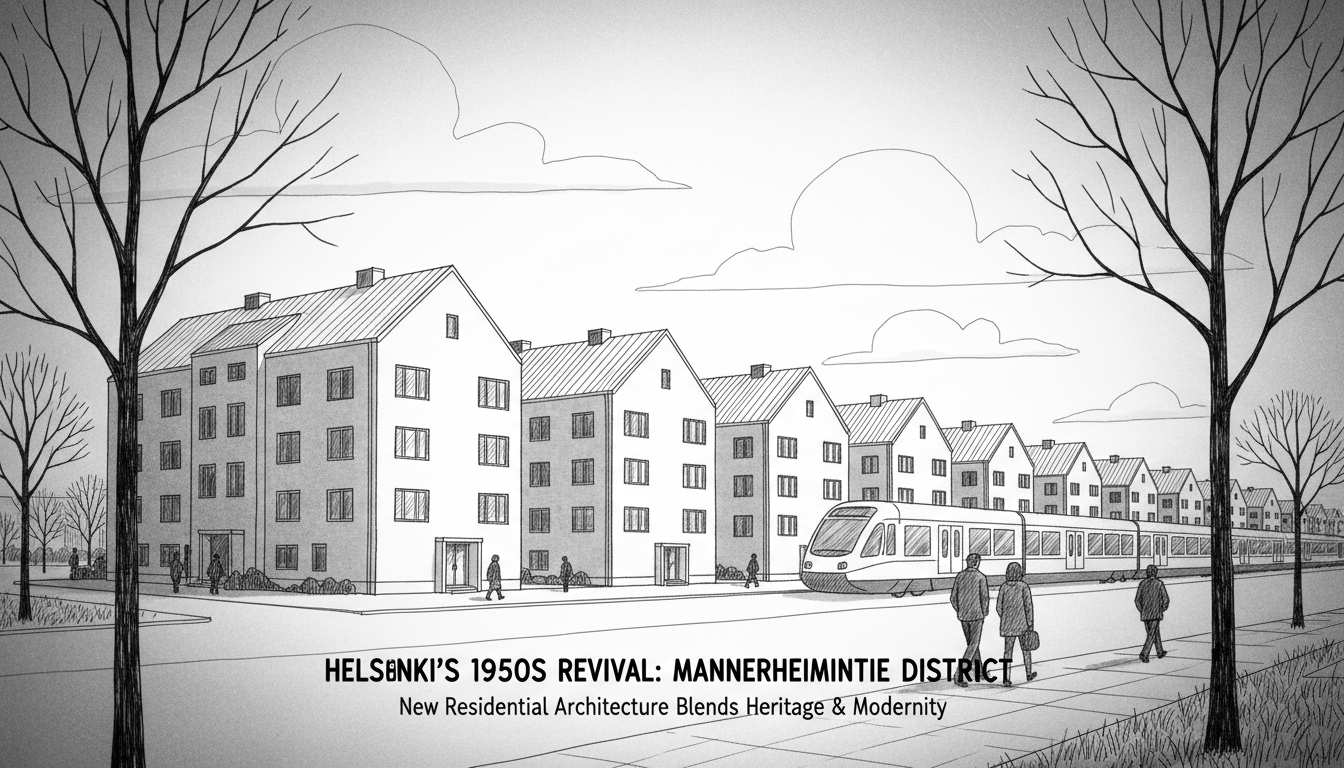
Helsinki city planners are designing seven new residential buildings with distinctive 1950s architectural character for the Ruskeasuo neighborhood. The proposed structures will rise at the intersection of Mannerheimintie and Koroistentie streets, adjacent to Tilkanmäki Park. These gable-roof apartment buildings represent Helsinki's latest urban infill development strategy.
The architectural designs deliberately evoke mid-century Finnish modernism with clean lines and traditional pitched roofs. This approach marks a departure from contemporary glass-and-steel construction trends dominating many European capitals. The city's planning department emphasizes contextual integration with existing neighborhood character rather than imposing radically new architectural statements.
Finland maintains strict urban planning regulations that balance preservation with development needs. Helsinki's current administration continues implementing its sustainable growth policy through targeted infill projects. These seven buildings will add residential capacity without expanding the city's urban footprint into green spaces. The Ruskeasuo location sits within Helsinki's rapidly developing western corridor.
Architectural traditionalism has gained renewed interest across Nordic capitals recently. Stockholm and Copenhagen have both seen successful reinterpretations of historical styles in new developments. Helsinki's choice of 1950s-inspired design reflects Finland's particular pride in its post-war architectural golden age. This period produced many iconic buildings that defined Finnish modern identity.
Urban development experts note the practical advantages of pitched roof designs in Helsinki's climate. The steep angles effectively manage heavy snow loads during harsh Finnish winters. The planned buildings will incorporate modern energy efficiency standards within their traditional exterior appearances. This combination addresses both aesthetic preferences and contemporary environmental requirements.
The project requires final approval from Helsinki's urban planning committee before construction can begin. Local residents will have opportunity to review and comment on the detailed plans during the standard municipal consultation process. The development timeline anticipates site preparation beginning next spring if all approvals proceed smoothly.
These buildings represent Helsinki's ongoing effort to preserve architectural heritage while meeting housing demand. The city faces constant pressure to accommodate population growth without sacrificing its distinctive visual character. This Ruskeasuo project demonstrates how Finnish urban planning balances modernization with cultural continuity.
International observers often praise Helsinki's thoughtful approach to urban development. The city consistently ranks highly in global livability surveys, partly due to its careful architectural stewardship. This new project continues Finland's tradition of quality design that serves both practical needs and aesthetic values.