
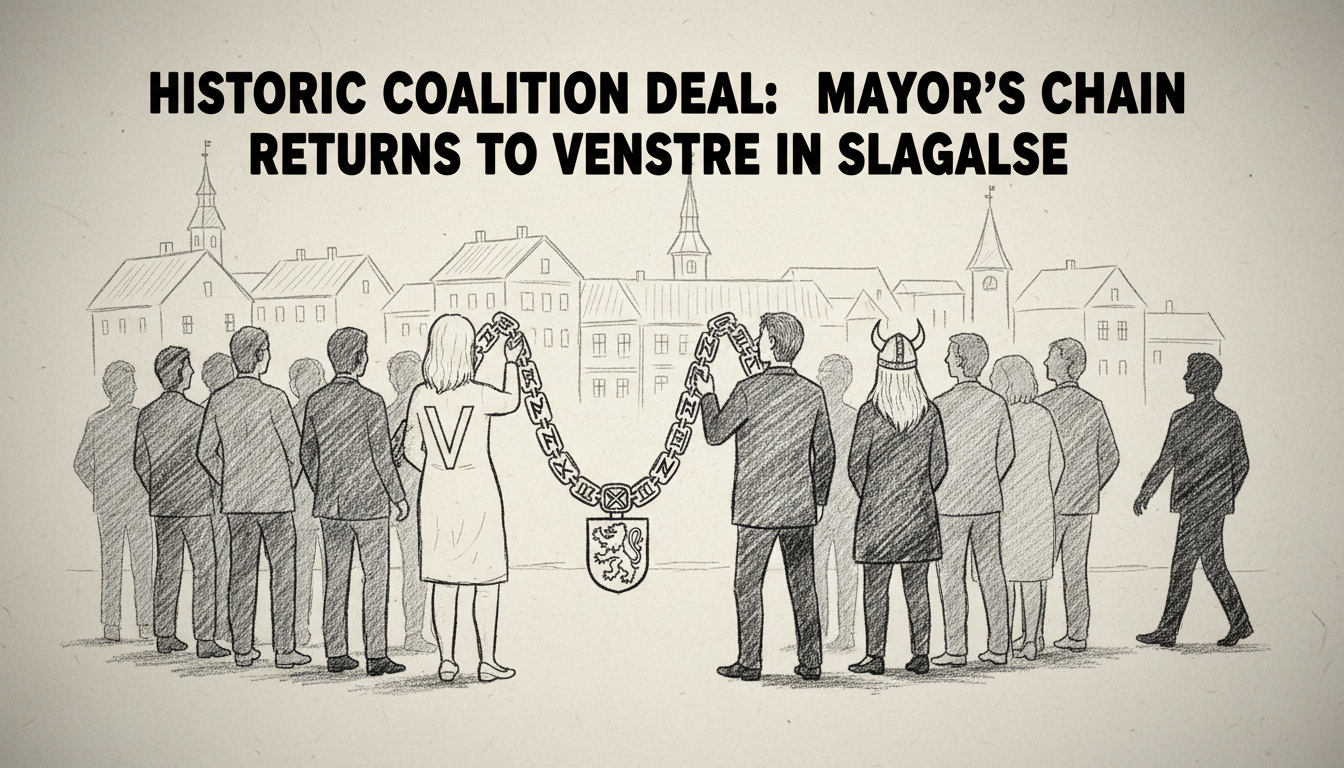
A dramatic political shift has unfolded in the Danish municipality of Slagelse, where a broad coalition has formed to return the mayor's office to the center-right Venstre party. This move strips the Danish People's Party of its only mayoral post in the country, marking a significant realignment in local Danish politics. The new majority, described by participants as historic, includes an unlikely alliance of Venstre, the Social Democrats, the Conservatives, the Liberal Alliance, the Socialist People's Party, and a local list. Together they command 24 of the 31 seats in the upcoming city council.
Knud Vincents of Venstre, who has served as mayor since the last election, will reclaim the title. He acknowledged the personal cost of the political maneuvering. I must of course apologize, Vincents said in a statement. I have also called Henrik Brodersen today. But this is simply how politics is. The deal collapsed an earlier agreement that would have seen the Danish People's Party's Henrik Brodersen take the role, after Venstre spotted a new opportunity to govern with the Social Democrats for the first time in this context.
This late-breaking agreement highlights the notoriously fragmented and contentious political climate in Slagelse. The city council has been plagued by a poor collaborative environment for years, with labels like Denmark's most inflamed council and nursery following it since the chaotic 2017 election. That year saw an unconventional power-sharing deal between two parties that ultimately failed. The new coalition's primary stated goal is to finally address this dysfunctional culture. It tells us a little about the climate we have all had to take responsibility for, Vincents noted about the prolonged negotiations.
From an integration and social policy perspective, such local political instability has tangible human impacts. Stable municipal leadership is crucial for implementing long-term integration programs, managing social centers, and distributing welfare services effectively. Frequent power shifts can disrupt community initiatives and policy continuity, affecting vulnerable residents the most. For international observers, this episode is a microcosm of Danish coalition politics, where pragmatism often overrides traditional left-right divides to secure governance.
The question now is whether this fragile, wide-ranging coalition will hold. We are at least approaching a deadline, which is tomorrow at 2:15 PM, so I certainly believe it will, Vincents asserted. Social Democrat Britta Huntley expressed a pragmatic view of the new reality. I naturally had a hope that we could lead, Huntley said. But this is the art of the possible, and so my foremost task is to get as much Social Democratic policy through as possible. The success of this historic deal will be measured not by its novelty, but by its ability to deliver stable governance and functional politics to Slagelse's citizens.