
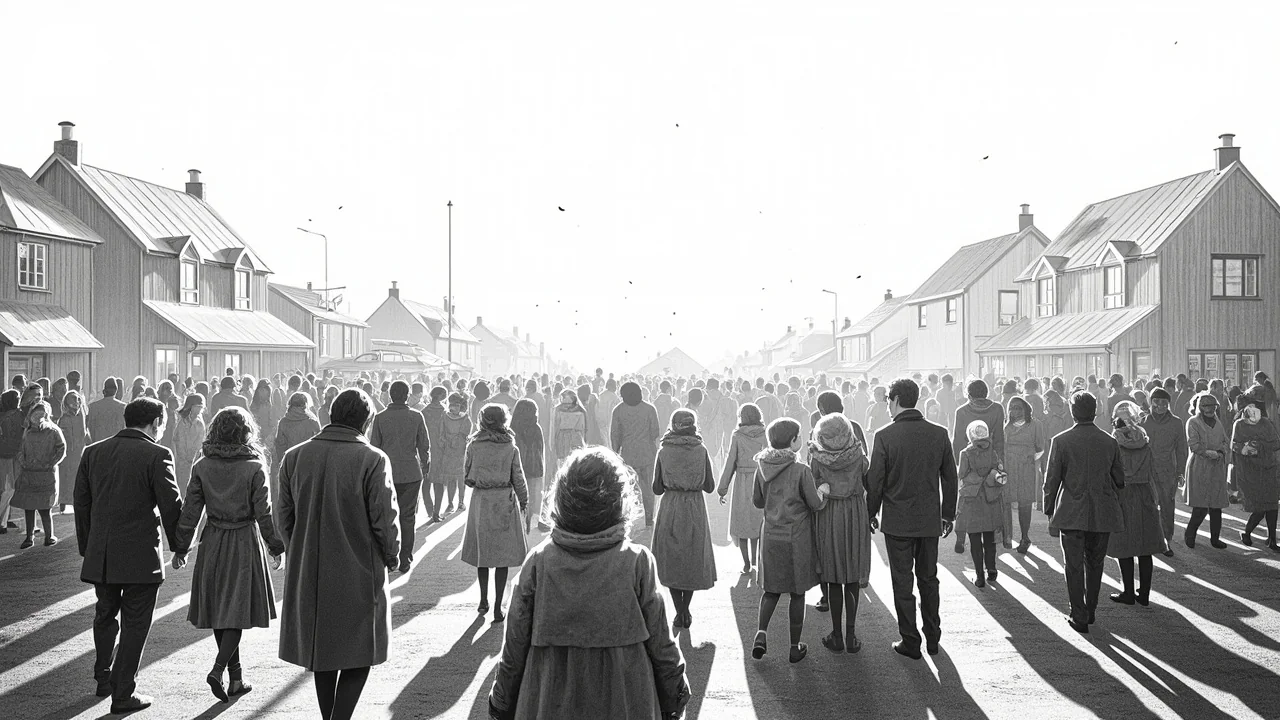
Iceland's evacuated town of Grindavík is holding its first major public gathering in fifteen months tonight. The traditional Þorrablót feast will take place at the local sports hall, marking a cautious but emotional return to community life for residents displaced by severe volcanic activity on the Reykjanes peninsula since November 2023.
Sigurður Þyrill Ingvason, one of the event organizers, described overwhelming anticipation among locals. He expects around a thousand guests and welcomes the sight of the town humming with life again. The event has been sold out for some time.
"There is tremendous excitement," Sigurður said. "People have been waiting for many days to get to the feast in Grindavík. All the chairs in the house are full. It's completely sold out. There will be a huge atmosphere in this glorious weather we're getting."
A Community's Long Wait
The Þorrablót is a midwinter festival rooted in Norse tradition, typically featuring traditional foods. For Grindavík's residents, this year's event carries far greater significance than just a seasonal celebration. It represents a tangible step toward normalcy after a prolonged period of uncertainty and displacement. The town was abruptly evacuated on November 10, 2023, following thousands of earthquakes and the formation of new magma intrusions that threatened the community.
Many residents have been living in temporary accommodations in nearby towns like Kópavogur, returning only for brief, authorized visits to check on properties. The decision to host the feast in Grindavík itself, rather than in the temporary host community, is a powerful symbolic act. It is a deliberate effort to reclaim their town's social fabric.
"We Grindvíkingar have used every single opportunity we can to meet and have a joyful time together, in connection with sports competitions for example," Sigurður explained. "We held two feasts in Smáran in Kópavogur last year. Now we're going home and meeting there. Will this not just be tears, smiles, and shoes of thanks? Is that not in line with the times?"
The Geological Context of Return
The return is happening against a backdrop of continued, albeit currently diminished, geological unrest. The Reykjanes peninsula has entered a new volcanic cycle, with multiple eruptions occurring since 2021. The activity in late 2023 was uniquely threatening as it occurred directly beneath the town and the nearby Svartsengi geothermal power plant, which provides heat and electricity to the entire region.
Defensive walls have been constructed around key infrastructure and the northern part of Grindavík to divert potential lava flows. Seismic activity and ground deformation are constantly monitored by the Icelandic Met Office. The authorities have maintained a strict access policy, with the town's residential zones remaining in a state of evacuation. Allowing a large-scale event like the Þorrablót indicates a calculated assessment of reduced immediate risk, at least for a short-term gathering.
This gathering serves as an unofficial stress test for community logistics and morale. It demonstrates the residents' enduring connection to their home, a fishing town of about 3,700 people that is a cornerstone of Iceland's seafood industry. The sight of cars filling the streets and lights on in the sports hall is a visual and psychological boost, contrasting sharply with the haunting imagery of an empty, hazard-zoned town that has circulated globally for months.
Economic and Social Implications
The temporary loss of Grindavík has had ripple effects beyond displaced families. The fishing industry, which operates from one of Iceland's most important harbors, has faced operational challenges. While the harbor itself has remained accessible with restrictions, the absence of the full workforce and supporting community has strained the sector. A functioning community is essential for the industry's long-term viability.
Events like this feast are critical for maintaining the social networks that underpin the local economy. They provide a space for fishermen, processing plant workers, and business owners to reconnect and discuss the future. The collective conversation inevitably turns to timelines for permanent return, property assessments, and the long-term coexistence with an active volcanic zone.
The government and municipal authorities face complex decisions about zoning, rebuilding, and future hazard mitigation. The residents' demonstrated willingness to return, even temporarily for a celebration, sends a clear message about their resilience and desire to rebuild their lives in Grindavík. It pressures officials to find safe, sustainable solutions for repopulation.
A Nordic Model of Resilience
This event also fits into a broader Nordic narrative of resilience in the face of environmental challenges. Icelanders have a long history of adapting to the formidable forces of their landscape. The response to the Reykjanes crisis—combining rapid scientific assessment, civil defense engineering, and community support programs—reflects a societal approach to disaster management that other volcanic regions study closely.
The Grindavík Þorrablót is more than a party. It is an act of cultural defiance and a statement of intent. It shows that community spirit, a resource as vital as geothermal heat, has not been extinguished by magma. The path forward remains fraught with scientific uncertainty, but for one night, the focus is on reunion, not risk.
As the feast begins, the real work continues. Geologists monitor sensors, engineers assess infrastructure, and officials draft recovery plans. The success of this gathering, measured simply in shared smiles and collective strength, may well become a key reference point for the next phase: not just visiting, but living in Grindavík again.