
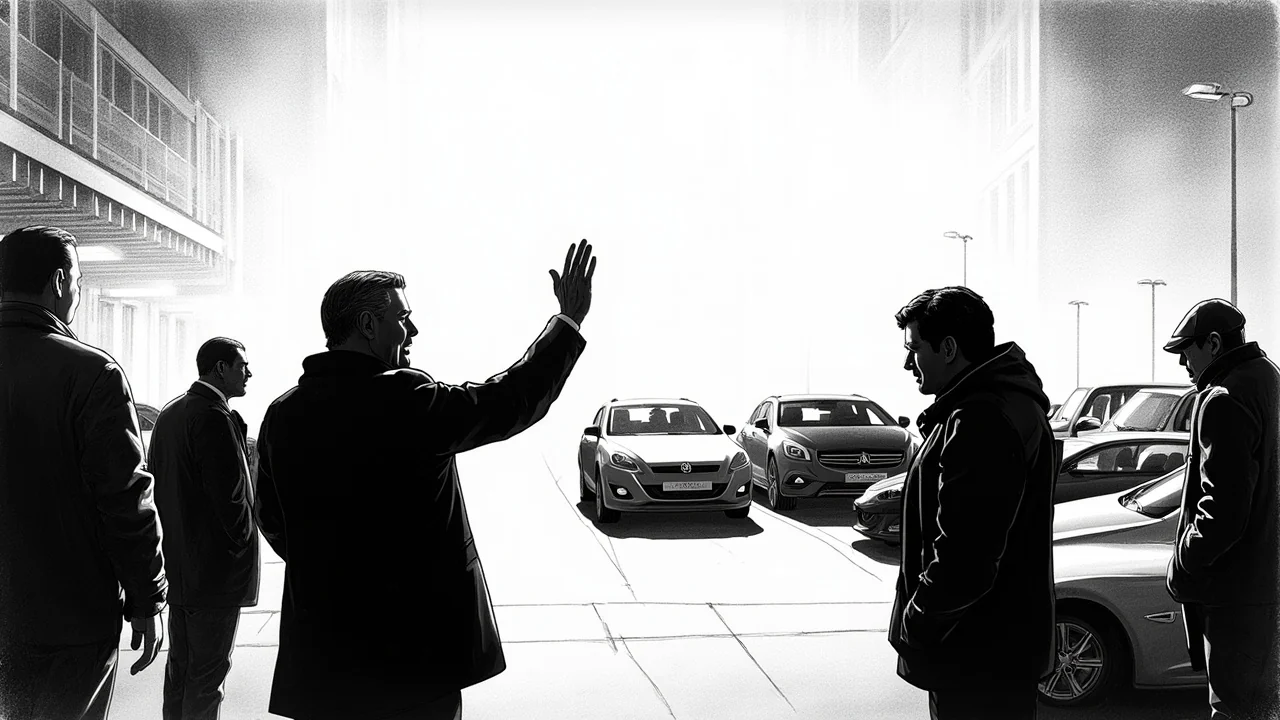
Icelandic residents in a Reykjavik suburb face violent threats over a critical shortage of public parking spaces. The conflict in Breiðholt, a densely populated district east of the capital, has escalated from inconvenience to intimidation, with one man reporting he was threatened with being taken to a 'carphouse' – local slang for a violent confrontation.
Árni Kjartansson, a resident of the Austurberg apartment blocks opposite the Breiðholt Comprehensive College, says the situation has now spun completely out of control. "It's getting worse all the time," he states, describing constant new activity in the area that eats up parking. He points to a new wing built at the college a few years ago. "That should have had an underground parking garage built under it."
A Neighborhood Bursting at the Seams
Breiðholt is a classic post-war Icelandic suburb, designed with vehicular access in mind but now straining under modern density. The single street serves a sports club, a gym, a swimming pool, a secondary school, and an elementary school. Parking in the area was already scarce, and residents of the multi-story buildings at Austurberg have borne the brunt. Árni describes a relentless flow of traffic. "Then there's this racing we hear here now, it's such a lot of driving here."
The core issue is a classic urban planning mismatch. Infrastructure has not kept pace with development and increased use of public facilities. What was once a nuisance—circling the block to find a spot—has evolved into a tense social conflict over a shared, dwindling resource.
From Inconvenience to Intimidation
The story turns from one of poor planning to one of public safety when residents attempt to reclaim the spots in front of their own homes. Árni says people have been threatened when they objected to others using the parking spaces. He states that residents no longer feel secure. "This has become very serious if you can't ask people to leave without being threatened with violence."
He recounts a specific incident that underscores the severity. "One time there were two girls in a car here, they just went across the street and came back with two guys. It was said they were going to take me to the 'carphouse'." The term is a direct and threatening escalation, moving the dispute from words to the promise of physical violence.
The Roots of Reykjavik's Suburban Strain
This conflict in Breiðholt is not an isolated case but a symptom of broader pressures on Reykjavik's suburban framework. Built during Iceland's rapid 20th-century urbanization, these districts relied on ample space. Today, with higher car ownership and intensified use of community centers, the original plans show their limits. The situation is particularly acute in areas like Austurberg, where residential blocks directly face major community institutions, creating a daily clash between home life and public activity.
There is a palpable frustration that planned expansions, like the new college wing, did not include mandated parking solutions, pushing the problem onto the public street. The municipal planning permissions and building codes come into question, as each new facility adds demand without a corresponding infrastructure increase.
A Question of Community Safety
Beyond the parking itself, the emergence of threats marks a dangerous turning point. When residents feel they cannot peacefully defend their legitimate right to access their homes without fear of retaliation, the social contract in the neighborhood frays. The incident described by Árni, involving individuals fetching reinforcements to confront him, points to a localized culture of intimidation replacing civil discourse.
This environment affects the most vulnerable residents the most—the elderly, families with young children, and those who simply wish to avoid confrontation. The public space, meant to be shared, becomes a territory contested through aggression.