
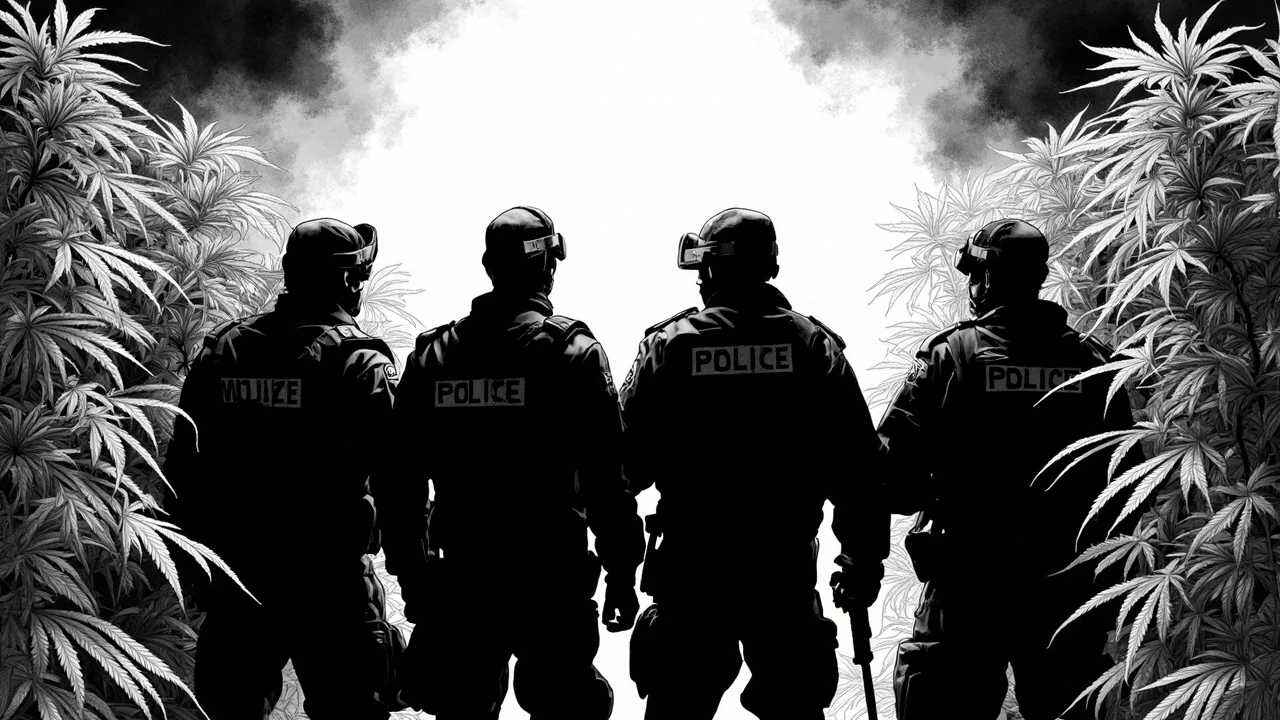
Icelandic police have uncovered nearly 300 cannabis plants in an industrial building in the town of Þorlákshöfn. Two individuals were arrested at the scene during the raid yesterday, according to a statement from South Iceland police.
Garðar Már Garðarsson, chief inspector with South Iceland police, confirmed the arrests and the scale of the discovery. The operation followed a police tip-off regarding cannabis cultivation within the industrial property.
Details of the Þorlákshöfn Operation
Police officers executed the raid after receiving specific intelligence. "Upon closer inspection, it was revealed that there were nearly 300 cannabis plants on the premises," the police statement read. "Two individuals were arrested at the scene and are suspected of the cultivation."
The suspects remain in custody for questioning. Authorities have not released their identities or detailed the precise setup found inside the industrial unit. The seizure represents one of the larger domestic cannabis cultivation operations discovered in Iceland in recent years.
The Location and Local Context
Þorlákshöfn is a fishing town of around 1,800 inhabitants on Iceland's southern coast. Its economy is heavily tied to the fishing industry and associated harbour activities. The use of an industrial building for this alleged operation highlights a potential shift from smaller, residential grows to more commercial setups in non-residential zones.
The town lies within the South Iceland police jurisdiction, which covers a large geographical area beyond the capital region. This bust demonstrates police focus on drug enforcement outside of Reykjavik, where most national media attention often concentrates.
Iceland's Legal Framework on Drugs
Iceland maintains some of the strictest drug laws in the Nordic region. Possession, sale, and cultivation of cannabis are illegal. Penalties can be severe, even for personal use, though sentencing often considers the quantity and intent.
The country's approach has long focused on prevention and abstinence, particularly among youth. This stance exists within a broader Nordic cooperation model on justice and home affairs, where member states frequently share intelligence and strategies on combating drug crime.
Despite the strict laws, cannabis consumption among adults has been a topic of periodic public debate, often comparing Iceland's zero-tolerance policy to the evolving approaches in other European nations. These debates, however, have not led to legislative change regarding cultivation or possession.
Comparative Nordic Drug Enforcement
This bust occurs within a mixed Nordic landscape of drug policy. While all Nordic countries prohibit large-scale cultivation, approaches to minor possession vary. Denmark, for instance, has adopted a more lenient policy in the Freetown of Christiania in Copenhagen, though this is an exception.
Sweden maintains a strict, prohibitionist stance similar to Iceland's. Norway has moved toward a system where drug use is treated primarily as a health issue, not a criminal one, but selling and cultivating remains illegal. Finland's policy is also relatively strict. The Þorlákshöfn case shows Iceland's police actively enforcing the prohibitionist model shared with its closest allies.
Energy Consumption and Environmental Angle
A significant operational detail of such a large-scale indoor grow is its substantial energy footprint. Cultivating nearly 300 plants requires powerful lighting, climate control, and ventilation systems running constantly.
This draws a stark contrast with Iceland's national identity as a green energy leader. The country generates nearly 100% of its electricity from renewable geothermal and hydroelectric sources. An illegal operation of this scale consumes that clean energy for criminal activity, a point often raised by authorities when discussing the broader societal costs of drug production.
Industrial buildings, like the one used in Þorlákshöfn, can mask the high electricity draw more easily than a residential home, potentially avoiding early detection from power companies.
Next Steps in the Investigation
The police investigation is now focused on determining the scope of the operation. Key questions include how long the cultivation was active, whether the cannabis was intended for local distribution or export, and if the suspects have links to broader networks.
Forensic officers will process the scene, and the seized plants will be destroyed. The two suspects face formal questioning, and the police, in consultation with the District Prosecutor, will decide on formal charges. The process from arrest to potential indictment can take several weeks under Icelandic judicial procedure.
A Look at Broader Trends
While this is a significant single bust, it fits into a ongoing pattern of police interdiction. Icelandic authorities routinely intercept drugs at the border via Keflavik International Airport and through postal and freight services. Domestic cultivation attempts are discovered less frequently, making this case notable for its scale and location.
The Althing, Iceland's parliament, has shown no appetite for legalization or decriminalization debates seen elsewhere. Committee discussions on drug policy consistently reinforce the prevention-focused model. Law enforcement actions, like the one in Þorlákshöfn, are publicly presented as necessary defenses of that societal consensus.
What does the discovery of a 300-plant operation in a small industrial port say about the domestic drug market? It suggests persistent demand and a willingness to risk severe penalties to meet it. As the police continue their investigation, the case will also test the efficiency of the judicial system in handling significant drug production charges outside the capital region. The outcome will be watched closely by communities and law enforcement across Iceland's often-overlooked rural districts.