
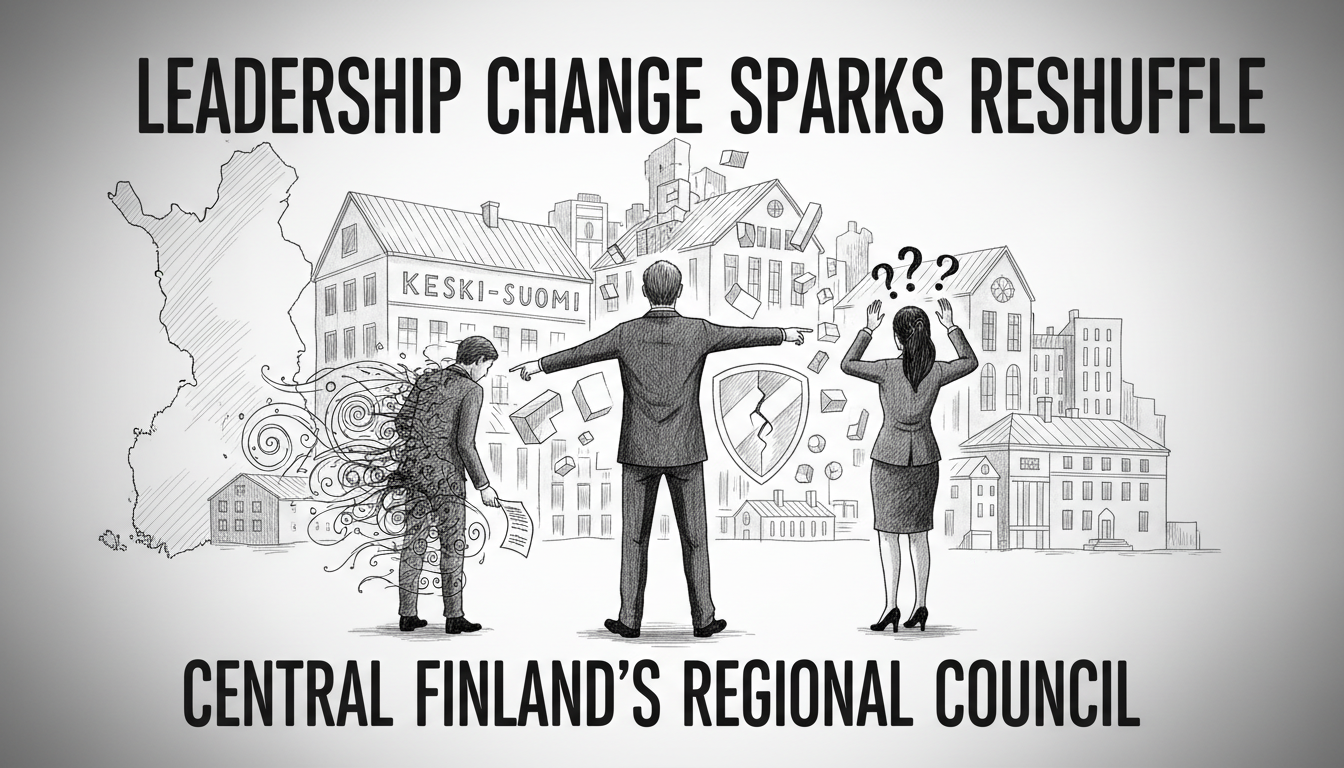
A major leadership change in Central Finland's welfare region has triggered a significant reshuffle of key positions. Professor Mauno Vanhala, a 76-year-old emeritus professor of general medicine, has resigned from the regional board. He cited the redistribution of trust-based positions following the appointment of a new chairperson as his reason for stepping down. This development highlights the intricate power dynamics within Finland's decentralized welfare system.
The reshuffle began when Maria Kaisa Aula was replaced as board chair by Jani Ylälehto. Both politicians represent the Centre Party. This change created a board composition where all Centre Party representatives are now male. The other members from the party are Jouko Nykänen and Tapani Kiminkinen. The shift raises immediate questions about gender representation in regional leadership roles.
Finland's welfare regions are a relatively new administrative layer. They were established to manage healthcare and social services. These regions operate with significant autonomy from the central government in Helsinki. Their boards are political bodies, with seats allocated based on local election results. This means internal party politics often dictate appointments and resignations, just as in the national Eduskunta.
Professor Vanhala's departure is not just a personnel change. It reflects a broader pattern in Finnish regional politics. When leadership changes, it often sets off a chain reaction of reassignments. This is sometimes called a 'trust position carousel'. Senior figures may step aside to allow for new alignments. The system aims to balance experience with fresh perspectives, but it can also lead to instability.
The gender imbalance now present on the Centre Party's side of the board is a notable outcome. Finland prides itself on gender equality in politics. The national parliament often sets a strong example. Regional bodies, however, can sometimes tell a different story. Party internal nominations and local political deals sometimes override broader equality goals. This incident in Central Finland serves as a case study in that tension.
What does this mean for healthcare services in the region? Board members oversee substantial budgets and strategic direction. A period of reshuffling can slow decision-making. Major investments or policy reforms might be delayed. For residents, the immediate impact may be minimal, but long-term planning requires stable governance. The new chair, Jani Ylälehto, will need to consolidate the board quickly to ensure continuity.
This local event connects to a national conversation about the welfare region model. Some critics argue the system adds bureaucratic complexity. Proponents say it brings decision-making closer to the people. The success of these regions depends heavily on effective, stable local boards. When experienced figures like Professor Vanhala leave, it tests the model's resilience. The coming months will show how the Central Finland board manages this transition.
The situation also has a subtle EU dimension. Finland's regional governance models are sometimes reviewed for cohesion with European structural fund management and regional development goals. Efficient local administration is key for implementing EU-funded projects. While not a direct Brussels issue, stable regional boards are part of the infrastructure that makes EU cooperation work on the ground.
In summary, a single resignation in Central Finland reveals much about Finnish political mechanics. It shows how local power shifts work, highlights ongoing challenges with gender balance, and tests a major national administrative reform. The welfare region's ability to navigate this change will be watched closely by other regions and by policymakers in Helsinki.