
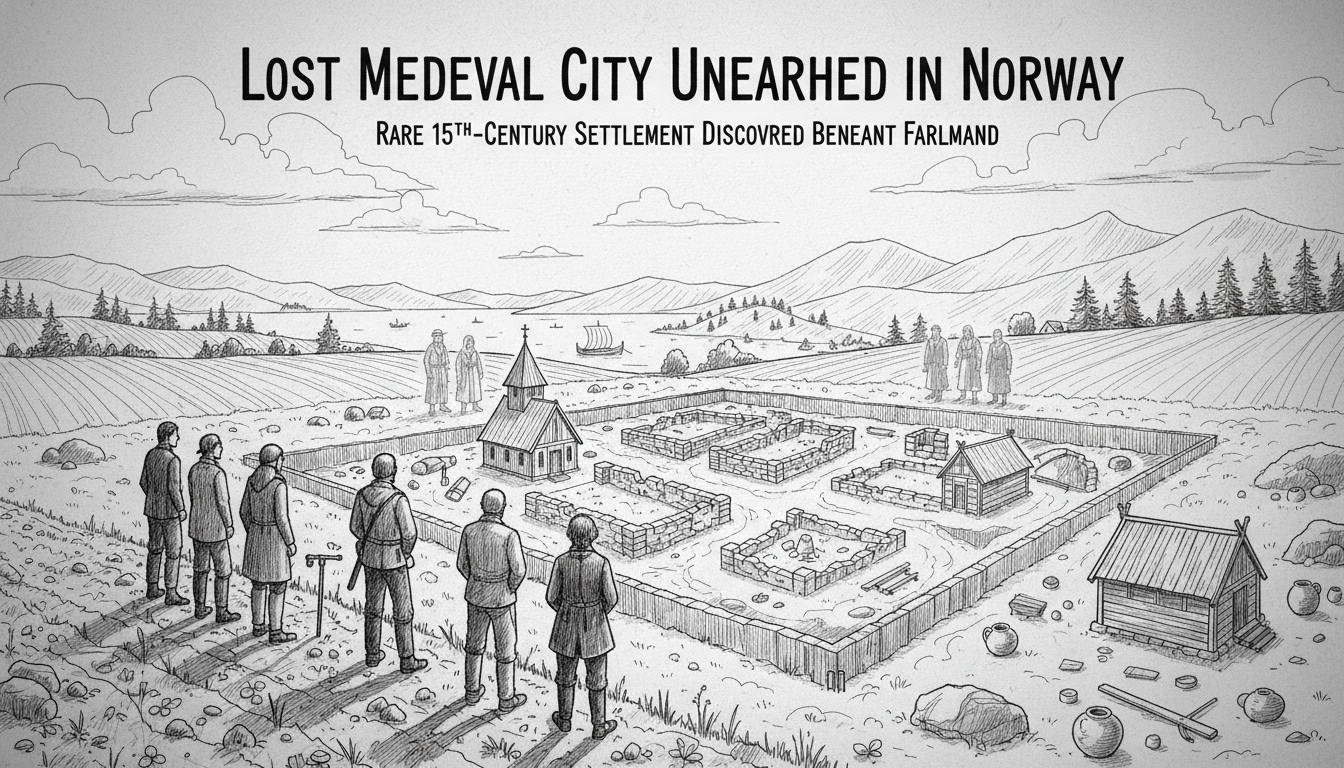
Archaeologists have uncovered a lost medieval city beneath farmland near Hamar, Norway. The discovery reveals Hamarkaupangen, Norway's only inland medieval town that was never built over in modern times.
Researchers used ground-penetrating radar to identify street patterns and building foundations. The technology clearly showed urban structures exactly matching what experts expect from medieval settlements.
"This is the start of a major project," said Kristian Reinfjord, section leader at Anno Museum Domkirkeodden. "We can now confirm the city's location with houses, streets and evidence of permanent habitation."
The breakthrough came during summer excavations when archaeologists opened just four square meters of earth. They found remains of log buildings, drainage ditches, and artifacts including a 15th-century coin and a small dice.
These findings confirm Hamarkaupangen was more than just a seasonal marketplace. The settlement pattern matches other Norwegian medieval cities like Oslo, Bergen and Trondheim.
What makes this discovery particularly valuable is its pristine condition. Unlike other medieval sites buried under modern cities, Hamarkaupangen remained undisturbed beneath agricultural land.
Reinfjord calls it "Norway's Pompeii" due to the untapped knowledge potential lying underground. The site promises new insights about medieval life in inland Norway.
Hamar became a bishop's seat in 1152/53, growing around the bishop's residence into a religious and administrative center. Most medieval Norwegians lived in rural areas, making urban settlements relatively rare.
Why did the city disappear? The Reformation in 1537 eliminated its economic foundation when the bishop's seat was abolished. The settlement gradually declined until the last known farming activity in 1716.
Next summer's excavations will continue alongside Hamar's medieval festival, allowing public access to the dig site. The timing aligns with the opening of Domkirkeodden's new museum building next May.
For local archaeologists like Reinfjord, this represents more than professional achievement. "It's very meaningful for us locals to help write local history that has national and international interest," he noted.
The discovery fills a gap in understanding Norway's medieval urban development, particularly for inland settlements that differed from coastal trading centers.