
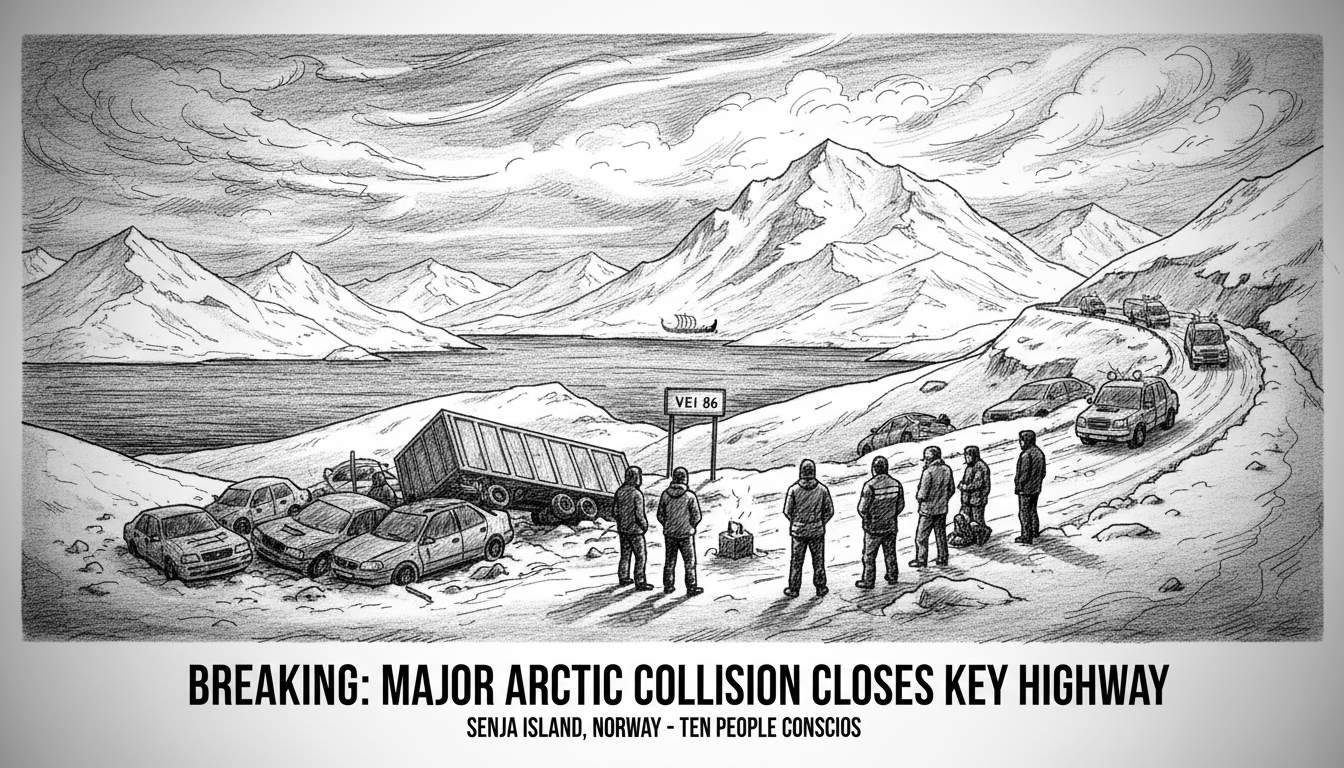
A serious head-on collision has closed a vital northern highway on Senja island. Ten people were involved in the accident on County Road 86. Emergency services responded to the scene. Police report all individuals were conscious and not trapped. The road closure disrupts a key transport link in Troms county.
One driver told police he lost control and veered into the oncoming lane. Officers are conducting routine sobriety tests on both drivers. Authorities are considering license seizures. Recovery operations are now underway. The full extent of injuries remains unknown.
This incident highlights the persistent challenges of Arctic road safety. Senja's dramatic coastal landscape features steep mountains and deep fjords. Roads like Fylkesvei 86 are engineering marvels but demand extreme caution. Weather conditions can change rapidly in this region. Narrow routes with limited visibility are common.
Norway invests heavily in its northern transport infrastructure. The government's National Transport Plan prioritizes road safety and avalanche protection. This is especially critical for remote communities. Reliable road links are lifelines for residents, tourism, and industry. Any closure has immediate economic and social consequences.
Accidents on these routes often trigger reviews of safety measures. The Norwegian Public Roads Administration constantly evaluates road design. They install new barriers and improve signage. Winter tire regulations are strictly enforced from November. This crash will likely prompt a local safety assessment.
For international readers, this underscores Norway's geographic reality. The country manages a vast and rugged terrain. Maintaining all-weather roads in the Arctic is a constant battle. It requires significant public investment. The state's role in infrastructure is a cornerstone of Norwegian policy. This ensures even remote areas remain connected.
The immediate focus is on the well-being of those involved. The long-term focus will be on preventing a repeat. Norway's low traffic fatality rate is a point of national pride. Each serious accident is examined for systemic lessons. This process reflects a broader societal commitment to safety and preparedness in harsh environments.