
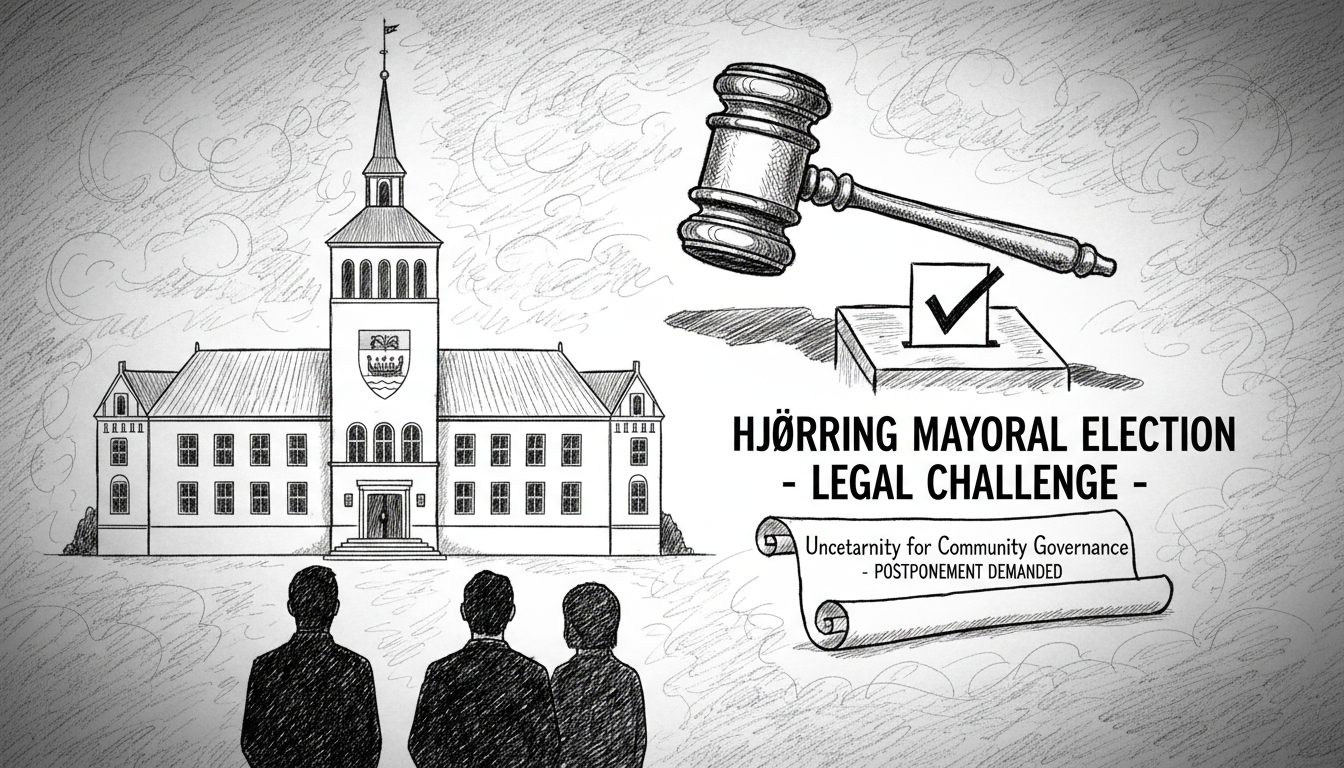
A political drama is unfolding in northern Denmark as a mayoral election faces a sudden legal challenge. Opposition parties in Hjørring Municipality want to postpone the scheduled council constitution. They question whether the sitting mayor, Søren Smalbro of the Liberal Party, committed a legal breach. This challenge throws his expected re-election for another term into serious doubt. The situation highlights the intricate and sometimes contentious nature of local Danish democracy. It also shows how integration into political systems can face unexpected hurdles.
Mayor Smalbro was poised to secure four more years leading Hjørring's local government. The last-minute opposition move creates significant uncertainty. Local political observers note this is not the first time procedural questions have arisen in Danish municipal elections. Such disputes often center on campaign conduct or administrative procedures. They test the robustness of Denmark's decentralized governance model. This model grants substantial power to its 98 municipalities over key integration and welfare tasks.
Hjørring, a municipality in North Jutland, manages critical social services. These include schools, job centers, and elder care. The mayor's role is pivotal in setting policy direction for these areas. For international residents, stable local leadership is crucial for consistent application of integration programs. A protracted political dispute could delay decisions on community initiatives and funding for social centers. These centers are often the first point of contact for new citizens navigating the Danish welfare system.
Danish municipal elections operate on a strict legal framework. Allegations of a breach are taken very seriously. They typically trigger reviews by the municipal council's legal advisor or even the national ombudsman. The opposition's call for a delay suggests they believe they have substantive grounds for their claim. This kind of scrutiny, while disruptive, is a core feature of the system's checks and balances. It ensures that those elected to manage public resources and social policy do so by the book.
What does this mean for Copenhagen integration policies or national social policy? While Hjørring is far from the capital, its operations are guided by the same national laws. Instability at the municipal level can create local variations in how national policies on immigration and integration are implemented. For instance, language education programs or job training schemes might see leadership changes or paused initiatives. This case serves as a reminder that Danish society news is often made in these local council chambers, not just in the national parliament.
The immediate next step is a council meeting where the opposition's request will be debated. If a majority supports a delay, the election will be postponed pending an investigation. If not, the vote may proceed under a cloud of controversy. The outcome will signal the political cohesion, or lack thereof, in Hjørring's new council. For residents, the hope is for a swift and transparent resolution. Effective local governance depends on clear legitimacy, especially when managing the complex demands of modern Danish society.