
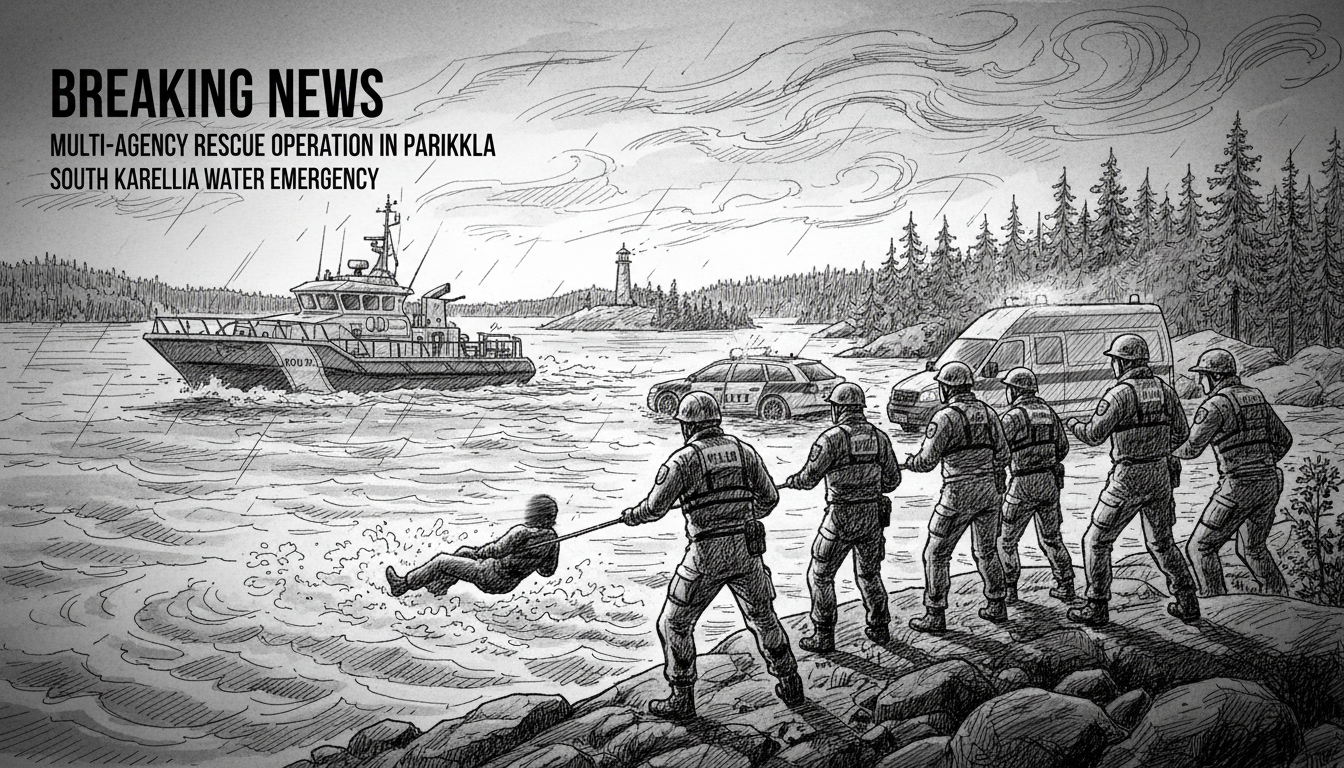
Emergency services launched a major rescue operation in Parikkala, South Karelia on Tuesday evening to save an adult from waters near Suvikontie road. Rescue authorities received the emergency alert around 7:30 PM local time, immediately deploying multiple response teams to the scene. The coordinated effort involves rescue services, police, border guard authorities, and emergency medical personnel working together in challenging conditions.
Parikkala's location in Finland's Lake District presents unique challenges for water rescue operations. The municipality borders Russia and contains numerous lakes and waterways that attract both residents and tourists throughout the year. This geographical context makes efficient emergency response coordination particularly crucial for public safety in the region.
Finland's emergency response system demonstrates its effectiveness through such multi-agency operations. The country maintains one of Europe's most comprehensive rescue service networks, with response times averaging under eight minutes in urban areas. This incident showcases how different authorities seamlessly integrate their expertise during critical situations.
Water safety remains a priority concern in Finland, where thousands of lakes and extensive coastline create both recreational opportunities and potential hazards. The nation has invested heavily in rescue equipment and training, particularly for summer months when water activities increase dramatically. This operational response reflects Finland's commitment to protecting both citizens and visitors.
International readers should understand that Finnish emergency services maintain exceptionally high standards compared to global averages. The country's sparse population distribution requires sophisticated coordination between municipal rescue departments, border guards, and police forces. This incident near the Russian border demonstrates how effectively these systems function even in remote locations.
What makes this operation noteworthy is the involvement of border guard authorities alongside traditional emergency services. Their participation suggests the incident's proximity to Finland's eastern border required additional security considerations. Such coordination reflects Finland's comprehensive approach to emergency management and border security.
The response timeline indicates efficient alert systems and rapid deployment capabilities. Receiving the emergency call at 7:30 PM and immediately activating multiple agencies shows well-established protocols for water emergencies. This efficiency contributes to Finland's reputation for exceptional public safety infrastructure.
Local residents can take comfort in knowing their emergency services maintain readiness for such critical situations. The multi-agency approach ensures all necessary resources and expertise deploy quickly when lives are at risk. This operational model has proven effective across Finland's diverse geographical challenges.
As the operation continues, authorities will likely provide updates on the individual's condition and the rescue outcome. Such incidents serve as important reminders about water safety precautions, especially during evening hours when visibility decreases and temperatures drop rapidly in Nordic regions.