
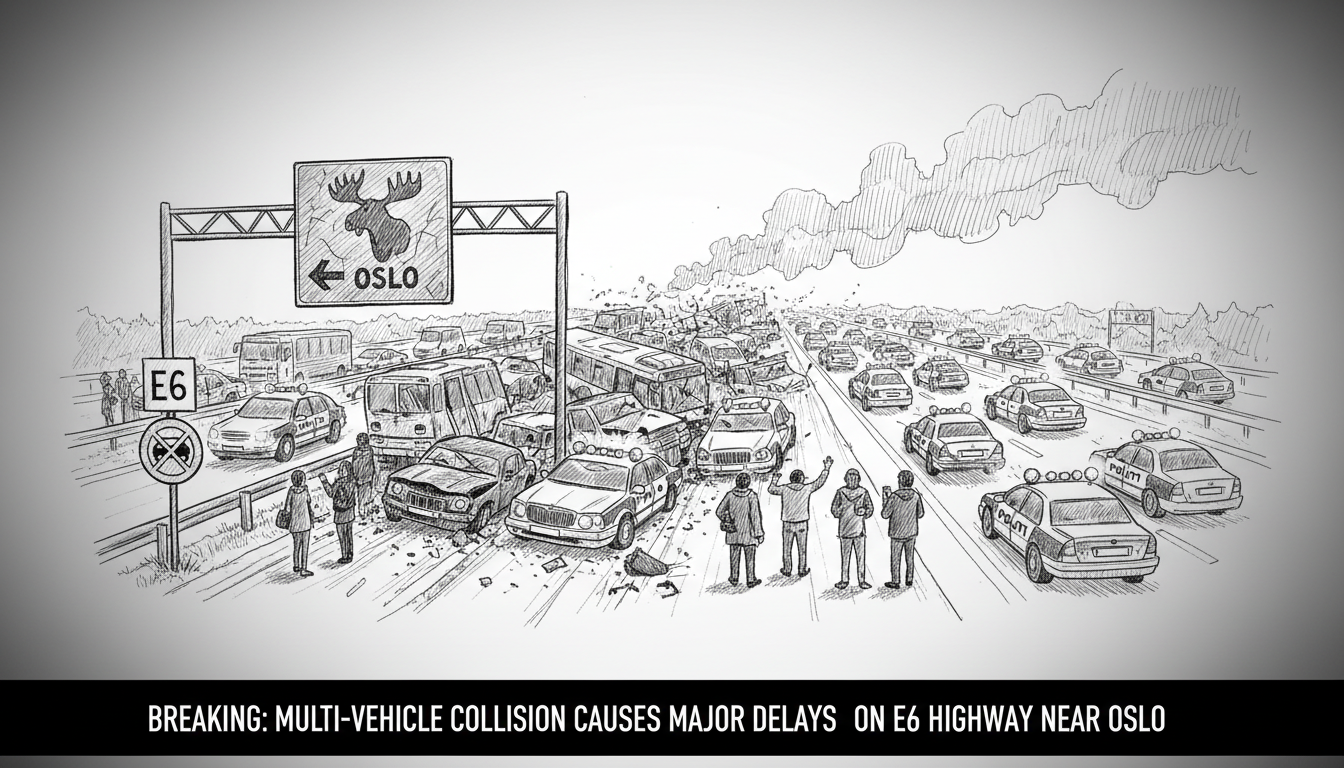
A chain-reaction collision on Norway's vital E6 motorway south of Kløfta caused significant traffic disruptions during the morning commute. Police received the first report at 6:25 AM. The multi-vehicle incident occurred in the southbound lanes just past the Kløfta exit. Officials confirmed no injuries were reported, but the involved vehicles blocked the left lane. Police advised drivers to expect long queues and delays in the area.
This disruption on the E6, a critical national artery, highlights the vulnerability of Norway's transport infrastructure. The E6 is the main road connecting Oslo to cities in the north and is a key route for both commuter and freight traffic. Any incident can create ripple effects across the region's road network. The timing during the morning rush hour amplified the impact, stranding thousands of commuters. Traffic management centers likely diverted vehicles onto alternative routes, increasing congestion on parallel roads.
For international readers, it is important to understand Norway's heavy reliance on its limited highway system. Mountainous terrain and deep fjords constrain road construction, making major routes like the E6 irreplaceable lifelines. There are often few viable detours. This geographic reality means a single accident can paralyze regional mobility for hours. The Norwegian Public Roads Administration faces constant challenges in maintaining flow, especially during winter when conditions are most hazardous.
This event also connects to broader discussions in Norwegian politics about infrastructure investment and regional development. The current government has pledged to improve road safety and capacity, but projects face scrutiny over costs and environmental impact. The Storting frequently debates the balance between new construction and maintenance of existing networks. Incidents like this one provide concrete examples for policymakers arguing for upgraded roads and better incident response protocols.
What happens next? Cleanup and investigation typically take several hours. Norwegian police will work to clear the scene and restore normal traffic flow as swiftly as possible. Drivers are advised to check real-time traffic apps for updates. For the affected commuters and businesses, the economic cost of such delays is tangible, measured in lost productivity and logistical complications. It is a stark reminder of the thin margin for error on Norway's essential transport corridors.