
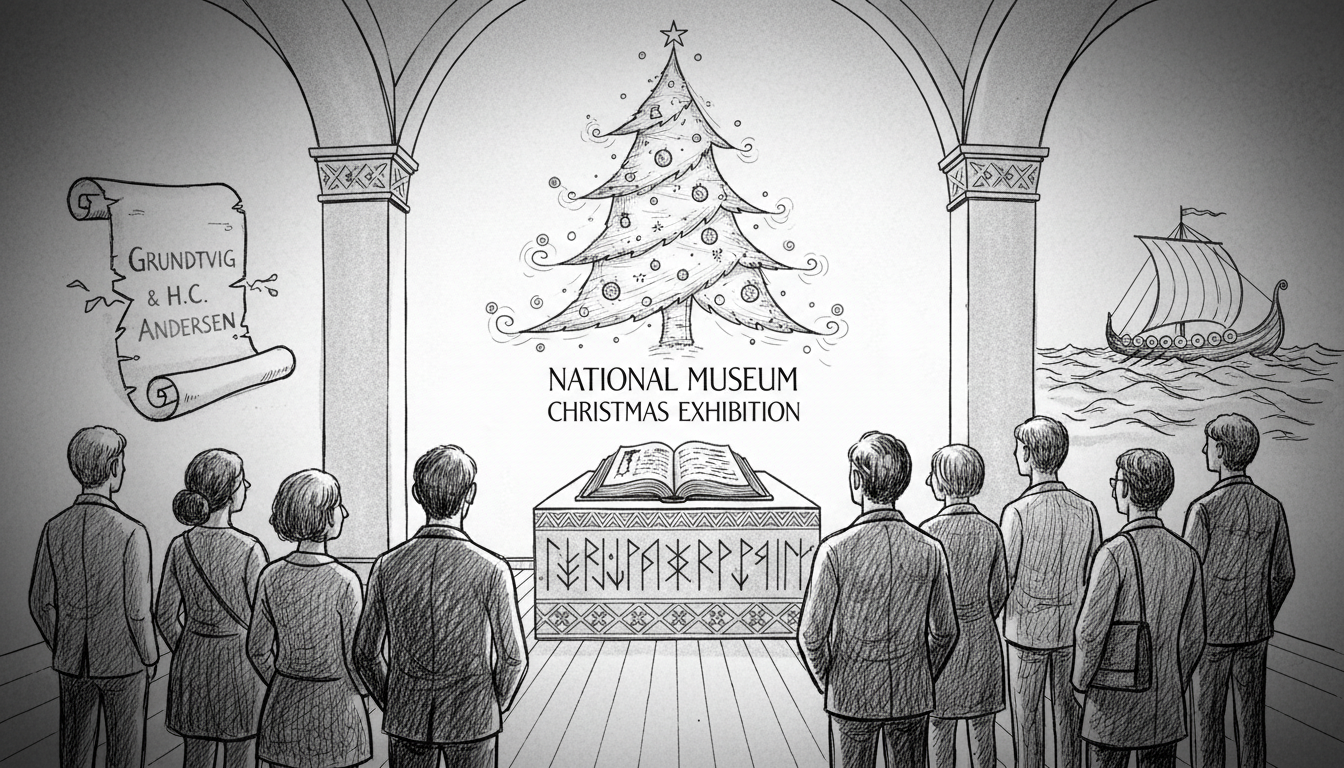
Can anyone imagine a Danish Christmas without the hymns of Grundtvig, the stories of H.C. Andersen, or the texts of Ingemann? The National Museum of Denmark apparently can. Its current exhibition on Christmas traditions has sparked a quiet debate by overlooking this foundational cultural layer. The omission feels particularly striking in a season defined by communal singing and shared heritage. This decision invites a deeper look at how cultural institutions curate national identity for modern audiences.
For generations, these works have been the soundtrack to Danish December. N.F.S. Grundtvig's hymns, like 'Dejlig er den himmel blå', are sung in churches and homes. Hans Christian Andersen's fairy tales shape the festive imagination. Bernhard Severin Ingemann's morning songs echo through schools. Their absence from a major national exhibition is not a minor editorial choice. It reflects a conscious curatorial perspective on what constitutes relevant cultural heritage today.
This story connects to broader questions in Danish society news about integration and cultural preservation. How does a nation honor its traditions while making space for new ones? Copenhagen integration efforts often grapple with similar tensions between established customs and evolving community identities. The museum's approach could be seen as an attempt to present a more universal, or perhaps secular, holiday narrative. Yet it risks flattening the very specificity that gives Danish Christmas its distinctive character.
Community leaders in cultural sectors have expressed mixed views. One curator from a Copenhagen social center noted that museums must sometimes break narratives to start conversations. A church historian in a statement questioned if this edit made the exhibition more accessible or simply less Danish. The debate touches the core of the Danish welfare system model, which historically supported a shared cultural canon as part of social cohesion. When public institutions reframe that canon, it signals a shift in policy priorities.
Statistics on cultural participation show Danes highly value traditional holidays, but their expressions evolve. The museum may be responding to a more diverse demographic landscape. Denmark immigration policy changes over recent decades have transformed urban communities. National institutions now serve audiences with varied holiday memories and expectations. This exhibition could be an attempt to create a broader tent, though the execution has raised eyebrows.
The move has practical implications for Danish municipalities and cultural planners. Many local holiday events rely on this shared hymnody to foster community feeling. If the national museum sidelines it, does that empower local variations or simply create confusion? The decision also impacts education, as schools often partner with museums for cultural curriculum. Teachers may now need to bridge the gap between the national narrative presented and the one sung in classrooms.
Honest analysis suggests this is more than a simple oversight. It is a deliberate choice with cultural political dimensions. The museum is steering the Christmas story away from its Lutheran literary roots toward a more generic winter celebration. This mirrors trends in some Copenhagen districts where public holiday events increasingly emphasize seasonal lights over specific carols. The policy context here is a quiet negotiation over Danish identity in an internationalized world. The museum may be trying to say Christmas belongs to everyone now, but in doing so, it must be careful not to erase the voices that built the tradition in the first place.