
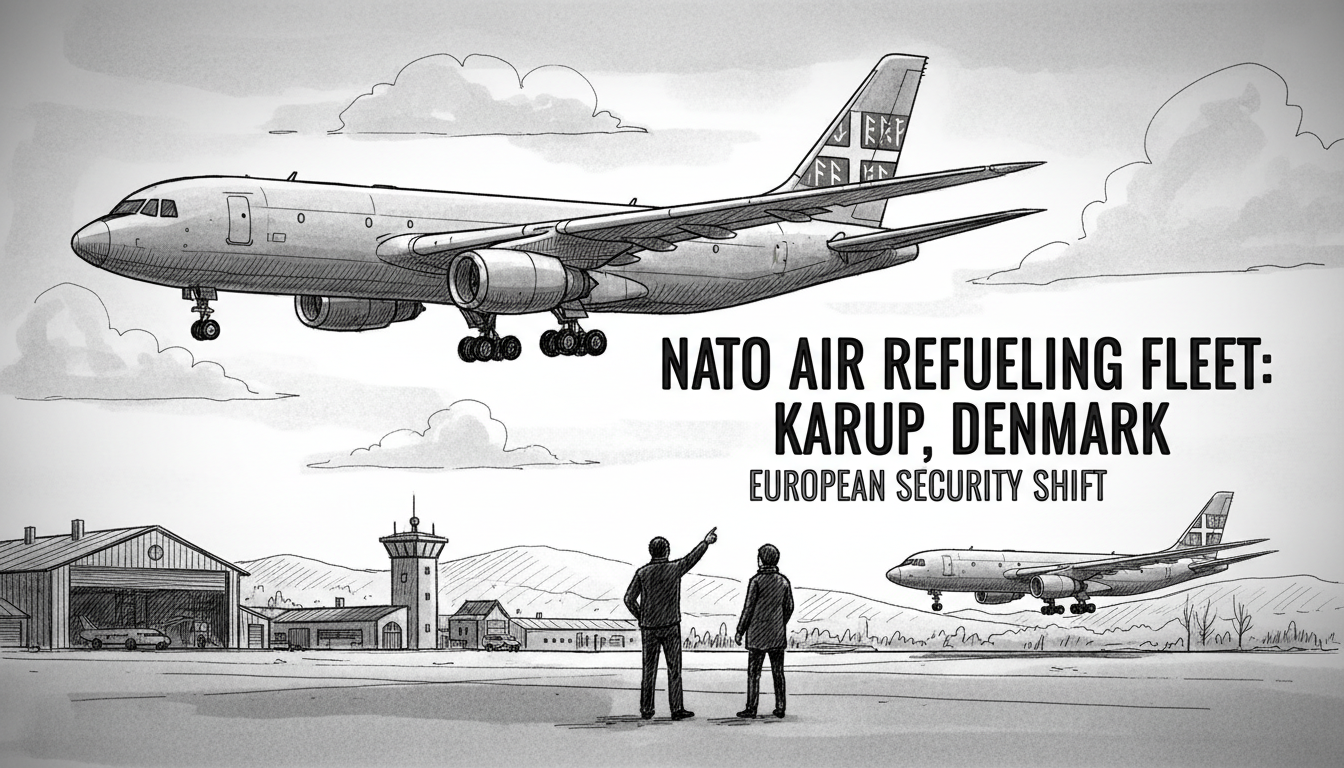
Two new air-to-air refueling and transport aircraft will be permanently stationed at Karup Air Station in central Denmark. This move significantly strengthens Denmark's military capabilities and its role within the NATO alliance. The decision was confirmed by the Danish Minister of Defense following earlier announcements about Denmark joining a key NATO cooperation program.
This placement means Denmark will host critical strategic assets for the first time. An air refueling aircraft can transfer fuel to other military jets mid-flight, dramatically extending their operational range and mission duration. The commander of the Danish Air Force called this a marked enhancement of national defense power. He stated that Karup Air Station already has the necessary infrastructure and supporting units to integrate this new capacity quickly and effectively.
For the local community in Midtjylland, this decision carries substantial implications. Karup is a major employer in the region, and hosting a NATO-level capability could bring increased investment, specialized jobs, and heightened security activity. Municipal leaders often balance the economic benefits of defense installations with local concerns about noise and activity. This development will likely be a topic in ongoing discussions about regional development and national security priorities.
From a broader policy perspective, this investment reflects a clear shift. Denmark is moving to bolster its defense posture in response to a changed European security landscape. The decision to acquire and base these aircraft domestically, rather than relying solely on allied support, signals a commitment to taking on more responsibility within NATO's collective defense framework. It is a tangible, expensive step toward meeting alliance spending targets and capability goals.
The aircraft will not only serve Danish forces. The base will also be available for other allied tanker and transport planes operating under the NATO program. This turns Karup into a potential hub for allied air operations in the Nordic and Baltic regions. Such integration demonstrates how Danish foreign and security policy is increasingly framed through multinational cooperation, even as national capabilities grow.
Analysts note that while the military utility is clear, these decisions also have a domestic political dimension. Defense spending is a recurring debate, especially concerning the allocation of resources within the welfare state. Proponents argue strong defense underpins societal security, while critics question opportunity costs. The placement in Karup, away from the capital, also speaks to a political geography of distributing high-value assets across the country.
What happens next? The physical arrival of the aircraft will be a visible milestone. Their integration into daily training and potential deployments will be the real test. This move makes Denmark a more capable and committed NATO ally, but it also raises the stakes for Danish foreign policy and its alignment with transatlantic security objectives in the years ahead.