
Kari Kivelä, the former editor-in-chief and publisher of a major Finnish tabloid from 2005 to 2018, will begin his term as the Chairman of the Board for Finland's public broadcasting company Yle in the spring. His appointment comes during a period of significant transition for the national broadcaster, which recently underwent substantial workforce reductions. In an interview conducted while he was on vacation in New York, Kivelä outlined his initial priorities and philosophy for leading the publicly funded media giant.
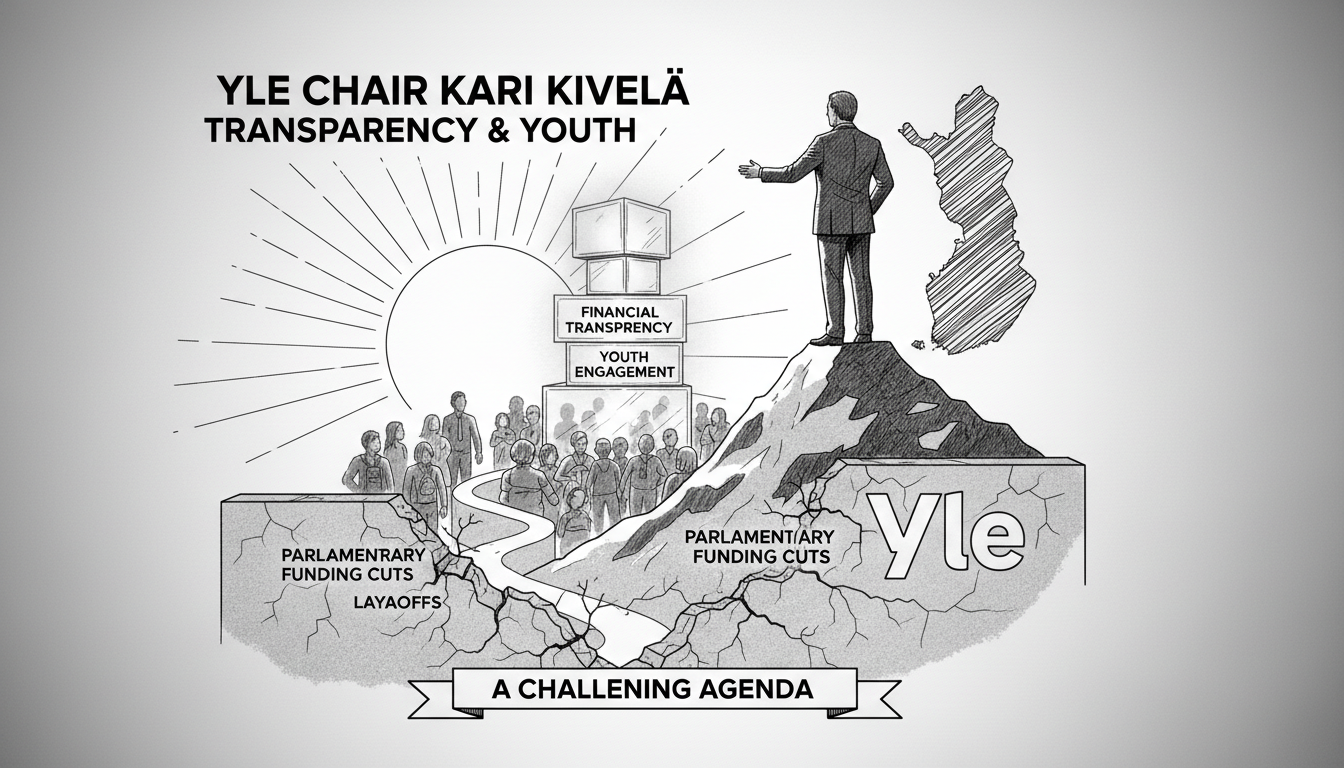
Kivelä stated his primary focus will be on responsible communication and assisting Yle with its core challenges. He identified two major areas for attention. The first is a need for greater openness and transparency regarding how taxpayer euros are spent, a topic that has been publicly debated. The second, a challenge he noted is common to all media, is effectively reaching younger audiences. This dual focus suggests a strategy aimed at both justifying Yle's public funding model and securing its future relevance.
His past role involved frequent criticism of Yle's operations and market position. When asked if his perspective would now shift, Kivelä offered a nuanced view. He affirmed his long-standing support for a healthy balance between public service and commercial media. He emphasized that Yle's responsibility includes being precise in its use of state support to avoid distorting market competition. This indicates he will likely scrutinize Yle's activities to ensure they strictly align with its public service mandate and do not unfairly encroach on private media.
The most concrete change Kivelä anticipates under his leadership is a push for enhanced transparency and openness. He believes this aligns perfectly with the mission of a public service company. He also asserted that operational efficiency is as crucial for Yle as for any commercial media entity. He advocated for learning from best practices, whether from the public or private sector, to improve audience relationships and overall performance.
Kivelä's tenure begins in the shadow of recent parliamentary decisions. A working group led by MP Matias Marttinen of the National Coalition Party decided on funding cuts for Yle last September. These austerity measures resulted in the termination of 170 employees, with a nearly equal number leaving through other means. When questioned about the previous board's decision to continue financial bonuses for management during these layoffs, Kivelä declined to comment, citing insufficient background information.
Regarding Yle's size, Kivelä acknowledged the recent strong political discourse calling for a smaller organization. He conceded the company must adapt to reduced resources. However, he expressed confidence that Yle still possesses excellent opportunities to succeed in its broad, legally mandated mission. He signaled that strategic prioritization will be a key task, determining what Yle must do versus what is less essential, a process he expects to continue.
On a personal note, Kivelä praised Yle's foreign news reporting and its network of correspondents, calling it a cornerstone of the company. His known passion for football led to a direct question about increased sports coverage. He firmly stated that content decisions belong to the editorial leadership and promised to remain silent on the matter, drawing a clear line between governance and journalism.
The interview also touched on the future of the Finnish news agency STT, following its main owner's decision to divest. Yle is both a client and a minor shareholder. Kivelä framed the issue in market terms, suggesting STT's future cannot rely solely on public support without genuine demand. He said it is the responsibility of Yle's editorial management to assess how necessary they find STT's services, a decision he currently finds understandable.
Kivelä's leadership will be tested immediately. He must navigate the political landscape of the Eduskunta, which controls Yle's funding, while managing internal morale after deep cuts. His background in commercial media brings a unique perspective to the public service arena, but it also invites scrutiny from political parties and the public alike. His success may hinge on delivering the transparency he promises while defending Yle's core journalistic mission in an increasingly fragmented and competitive media environment. The balancing act between fiscal responsibility, public accountability, and editorial independence will define his chairmanship.