
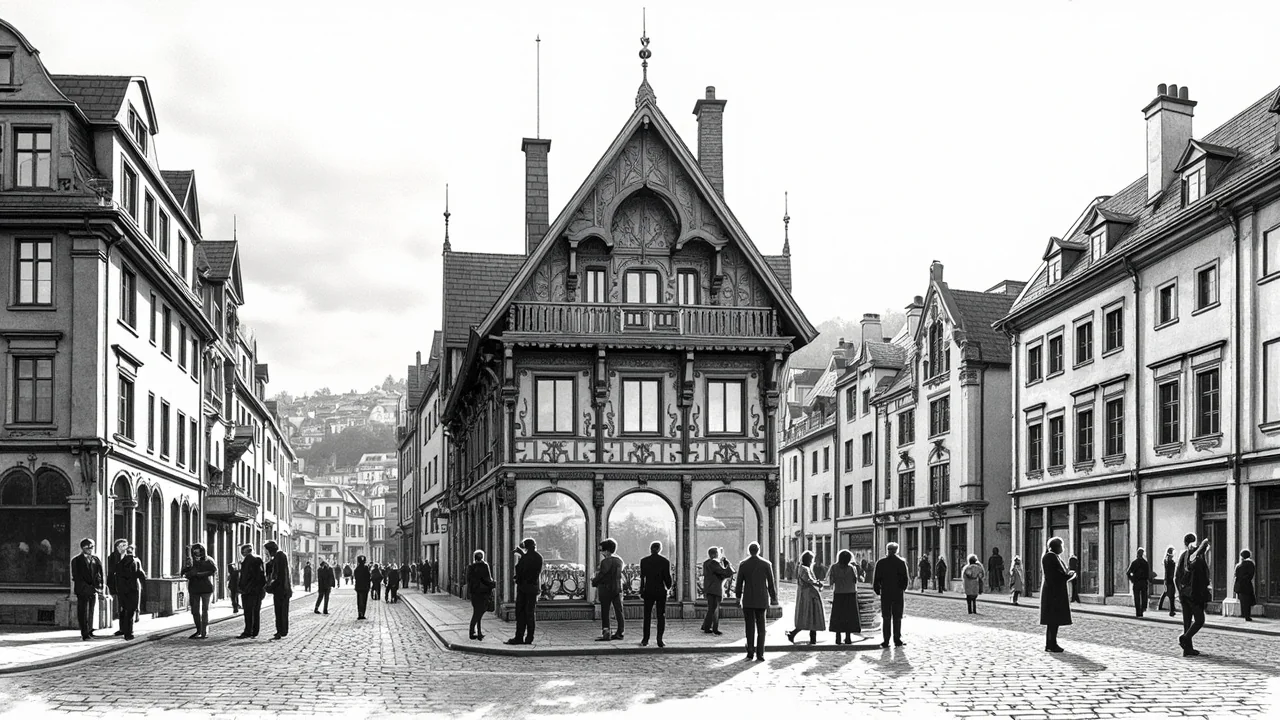
Bergen's city council has opened the door for the reconstruction of a 200-year-old building at the Verftet cultural quarter. The decision on the Ekserserhuset, or Drill House, marks a significant shift for the city's waterfront development and its approach to preserving tangible links to its maritime and military past. This move could see a structure from the 1820s, originally used for military training, rise again on its historic footprint.
A Landmark Decision for Bergen's Future
The city council's vote grants a crucial planning permission exemption. It allows developers behind the Kulturkvartalet Verftet project to bypass certain modern zoning regulations that would typically prevent such a reconstruction. The aim is to recreate the Ekserserhuset's original external appearance. Its historical function as a military drill hall for the Bergen Fortress garrison connects it directly to a period when Norway was in union with Sweden. The building was later used for storage and workshops before being demolished in the 20th century. Its proposed return is not about creating a museum replica but about integrating a historical form into a vibrant, modern cultural and commercial hub.
The Heart of the Verftet Development
The Verftet, or 'The Shipyard', area is a central piece of Bergen's ongoing urban transformation. For decades, this part of the waterfront was dominated by industrial shipyard activities. The shift towards a cultural quarter represents a broader national trend of repurposing Norway's maritime industrial heritage for new public use. The decision on the Ekserserhuset specifically pertains to one plot within this larger area. Other buildings in the Kulturkvartalet Verftet plan include spaces for concerts, dining, and public events. Reinserting a 19th-century structure into this contemporary plan is a deliberate architectural statement. It seeks to create a dialogue between Bergen's past identity as a key fortified port and its current status as a European cultural city.
Navigating Heritage and Modern Needs
The council's decision did not come without debate. It touches on core questions of authenticity versus reconstruction in heritage management. Norway's cultural heritage law, kulturminneloven, generally prioritizes the preservation of original physical material. Constructing a new building that looks old presents a philosophical challenge. Proponents argue the rebuilt Ekserserhuset will serve as an important physical marker and educational anchor, giving the new development a depth of history it would otherwise lack. Critics might question the value of a recreation compared to investing in the preservation of existing, authentic structures elsewhere in the city. The council's vote indicates a pragmatic compromise, valuing the symbolic and urban design contribution of the rebuilt form.
The Practical Path Forward
With the political decision made, the focus now turns to practical execution. The developers must present detailed architectural plans that satisfy the council's condition of an accurate external reconstruction. This will involve historical research into the building's exact dimensions, materials, and architectural features. Sources like old drawings, paintings, and photographs from Bergen's city archives and museums will be essential. The reconstruction will also need to meet modern building standards for safety, accessibility, and energy efficiency on the inside, meaning the exterior shell will be historical, but the interior will be entirely contemporary. The process will be closely watched as a potential model for similar projects in other Norwegian cities with rich historical waterfronts.
A Broader Trend in Norwegian Urbanism
Bergen's move reflects a wider conversation in Norway about urban identity. In cities like Oslo, Trondheim, and Bergen itself, there is increasing public and political interest in preserving the visual character of historical neighborhoods. This sometimes clashes with the demand for new housing and commercial space. The Verftet solution attempts to have both by layering history onto a new development. It follows other projects, such as the careful integration of medieval ruins into modern building foundations, seen in several Norwegian towns. The project also aligns with Norway's national goals for sustainable development, which include the continued use and adaptation of existing cultural environments rather than constant new construction on untouched land.
What the Reconstruction Means for Bergen
Ultimately, the rebuilt Ekserserhuset will be more than a facade. It is intended to act as a gateway and a focal point within the Verftet cultural quarter. Its presence will literally frame views of the surrounding area, connecting the new plaza and buildings to the narrative of the site's past uses. For residents, it adds a layer of recognizability and rootedness to a area that has changed dramatically. For tourists, it provides a visual story about the city's evolution from a fortified naval port to a modern cultural destination. The success of the project will be measured by how seamlessly this historical form is woven into the daily life of the new quarter. Will it feel like a sterile monument or a living part of the city's fabric?
The Bergen city council has set a course, blending historical homage with contemporary urban ambition. The coming years will show whether the ghost of the old drill hall can truly be given new life on the bustling waterfront.