
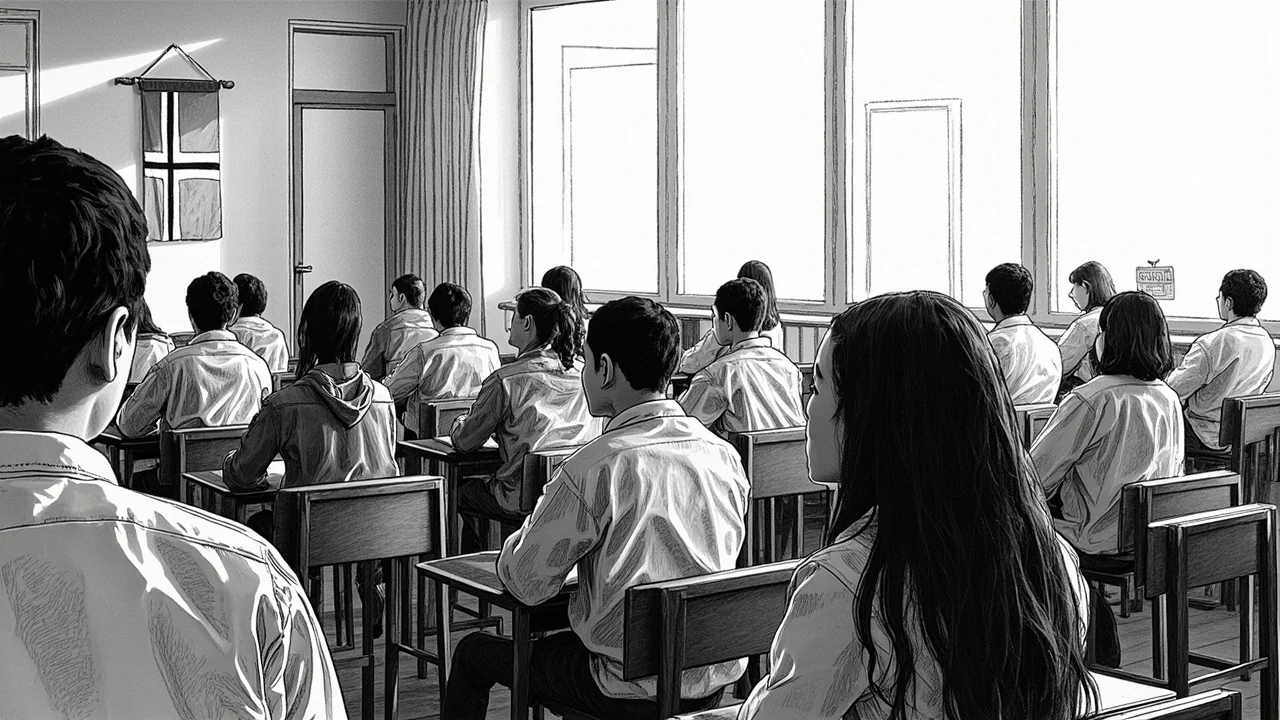
Norwegian universities have seen cases of students caught using artificial intelligence to cheat double in one year, with 190 students formally penalized for AI-assisted fraud in 2025. This sharp rise from 95 cases in 2024 marks a significant challenge for academic institutions, as nearly half of all cheating incidents now involve generative AI tools. The data, compiled from the country's ten largest study locations, has drawn a direct response from the national government, highlighting growing concerns over the integrity of higher education assessments.
A Clear Trend of Increasing AI Fraud
The figures present a unambiguous trend. In 2024, disciplinary boards at major universities dealt with 95 cases where artificial intelligence was the suspected method of cheating. Just one year later, that number surged to 190 identified cases. This 100 percent increase underscores how rapidly AI tools have been adopted for dishonest purposes within student cohorts. The total number of students caught for all forms of cheating across these institutions in 2025 was 406, meaning that suspicions of AI use now account for approximately 47 percent of all academic fraud cases. This shift indicates a transformation in how cheating is conducted, moving from traditional methods toward sophisticated digital assistance.
Minister Aasland's Firm Stance on Integrity
Research and Higher Education Minister Sigrun Aasland reacted strongly to the released statistics. She stated that the development is not positive and emphasized the legal and ethical boundaries that students must respect. "It is not good that the number of students being penalized for AI cheating is increasing," Aasland said. "Cheating is not legal, and it is important that it has consequences." Her comments framed the issue as one of fundamental trust in the national education system. She argued that examinations must accurately measure a student's own knowledge and capabilities. "Exams should test what students actually know. Society must be able to trust that grades reflect students' competence," the minister stated. This link between academic honesty and public confidence in professional qualifications is a core part of her message.
The Context of Cheating in Norwegian Higher Education
While the rise in AI-related cases is striking, the minister was careful to note that most students continue to follow the rules. "It is important to remember that the vast majority of students do not cheat," Aasland said. This perspective places the 190 cases within a broader context of thousands of students who complete their assessments honestly each year. However, the concentration of fraud within the AI domain points to a specific technological challenge. Universities now face the task of detecting work produced by large language models and other AI systems, which can generate plausible essays, code, and problem solutions. The doubling of cases suggests that both student attempts and university detection methods are escalating in tandem, creating a new front in the effort to maintain academic standards.
Consequences for Academic Policy and Practice
The minister's insistence on consequences for cheating aligns with existing university regulations, which can include annulled exams, failing grades, or even suspension. The explicit mention of consequences by a sitting government minister signals that this issue is receiving attention at the highest levels of educational governance. The data does not specify the disciplines most affected, but the pervasive nature of AI tools suggests a wide-ranging impact across humanities, sciences, and professional studies. This situation forces a continual reassessment of examination formats, invigilation procedures, and the very definition of original student work. The national debate now implicitly questions whether traditional take-home exams and assignments remain fit for purpose in an age of easily accessible AI.
Upholding Trust in a Digital Age
The overarching theme from the government's response is the preservation of trust. Minister Aasland's focus on society's ability to rely on academic credentials touches on the broader value of a Norwegian degree in the job market and in further research. If AI cheating undermines this trust, it could have long-term implications for the reputation of national institutions. The figures from 2024 and 2025 serve as a benchmark, and universities will be under pressure to demonstrate whether countermeasures can stem the tide in the coming years. The problem is not uniquely Norwegian, but the national data provides a clear metric for tracking its scale and growth within a defined and reputable higher education system.