
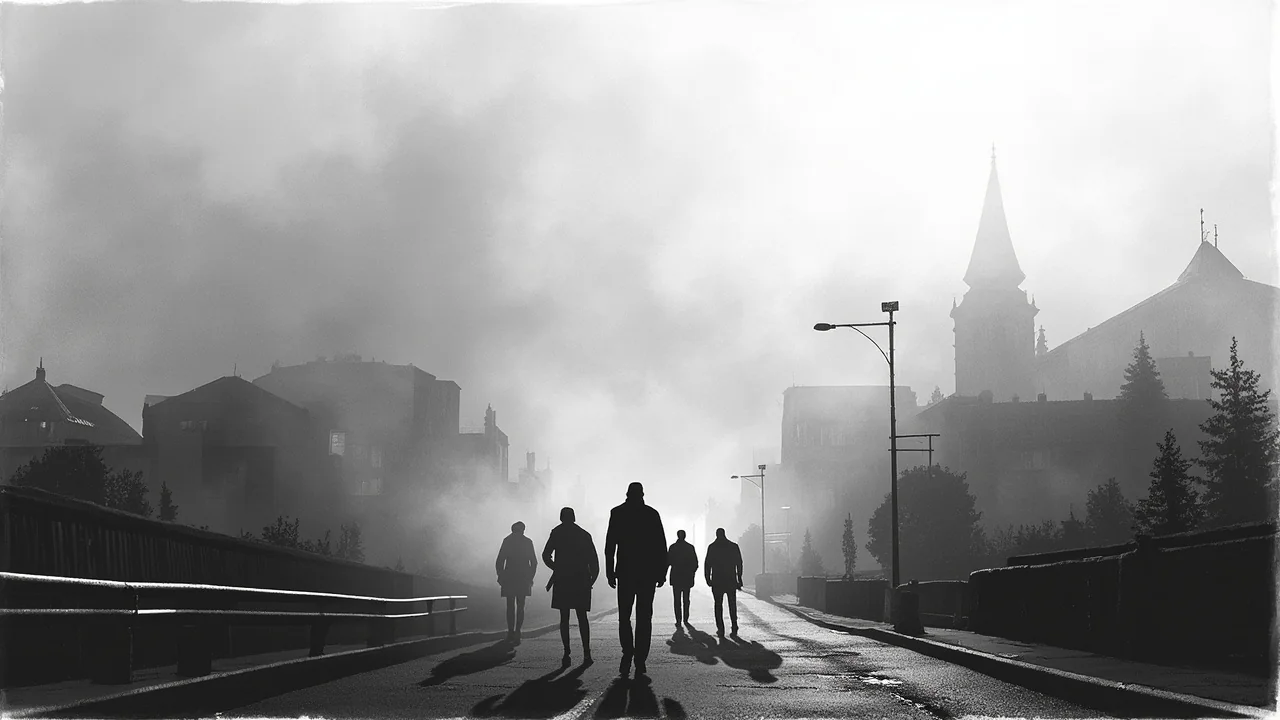
Norway's air pollution levels have reached a red alert status at major urban sites in Oslo and Bergen. High concentrations of particulate matter, specifically PM10, were recorded at Danmarks plass in Oslo and in the Rådal area of Bergen on Sunday. This poses a significant health risk, particularly for vulnerable groups.
A Dangerous Mix of Causes
Kjersti Tørnkvist, a division director at the Norwegian Institute for Air Research (NILU), confirmed the severe readings. She explained that the pollution at Danmarks plass is a result of traffic and road dust combined with emissions from wood burning. "The poor air here is due to road dust," Tørnkvist said. "The weather has been fine and cold today, and that's probably partly why the air is poor, as the roads are dry and the road dust is whipped up into the air." This combination of sources during cold, dry winter conditions creates a persistent and hazardous atmospheric mix. The red level indicates that the concentration of inhalable particles (PM10) has exceeded health protection thresholds set by national authorities.
Immediate Health Advisory Issued
The elevated pollution triggers immediate public health guidance. Authorities specifically warn individuals with pre-existing conditions. "Especially people with asthma and other respiratory diseases, as well as serious heart and vascular diseases, may feel that the air is poor," the advisory states. The official recommendation for these groups is to reduce outdoor activity and physical exertion in the most affected areas. Prolonged exposure to high levels of PM10 can aggravate respiratory conditions, lead to increased hospital admissions, and contribute to cardiovascular stress. For the general population, it is advised to avoid prolonged, intense outdoor exercise while the alert is active.
Understanding the Pollutant: PM10
The primary culprit is PM10, or particulate matter with a diameter of 10 micrometers or smaller. These particles are small enough to be inhaled deep into the lungs. Road dust, a major contributor in this incident, is generated from tire and brake wear, as well as the resuspension of material already on road surfaces. In winter, the use of studded tires accelerates road wear, significantly increasing dust production. When snow and ice melt or conditions are dry, this dust has no binding agent and easily becomes airborne. The contribution from wood burning, especially in residential areas, adds another layer of fine particles, often occurring during evening hours when temperatures drop and heating demand rises.
A Recurring Seasonal Challenge
This incident is not isolated but part of a recurring seasonal pattern in Norwegian cities. Cold, high-pressure weather systems with little wind, known as inversion layers, act like a lid over urban areas. This meteorological phenomenon traps pollutants close to the ground, preventing their dispersion. The problem is particularly pronounced in neighborhoods with high traffic density and areas where wood-burning is common for residential heating. While electric vehicle adoption is rising in Norway, the existing fleet of vehicles, combined with road wear, continues to be a significant source of urban particulate matter during specific weather conditions.
Localized Response and Public Information
Municipal environmental departments in Oslo and Bergen monitor these situations closely. Real-time air quality data is available to the public through official online portals and apps, allowing residents to make informed decisions about their daily activities. During red alerts, city authorities may issue specific warnings through media channels and digital platforms. The response is primarily informational, focusing on public guidance rather than active intervention like traffic restrictions, which are more commonly associated with long-term pollution protocol breaches.
Contrasting Urban Incidents
While authorities addressed the air quality crisis, police in Vest police district responded to a separate disturbance at a Burger King restaurant in the Lagunen area. Operations leader Tatjana Knappen reported a conflict involving up to 25 individuals, aged 15-16. Police deployed multiple patrols and calmed the situation. Knappen stated there were no reported injuries and that officers were speaking with some of the youths involved. This unrelated incident highlights the range of responses public services manage concurrently in major urban centers.
Simultaneous Emergency Call
In a separate event in the Sør-Vest police district, emergency services were dispatched to a residential address following a fire report. Operations leader Rune Tallaksen confirmed the fire brigade's arrival. The fire, located in a basement bathroom, was extinguished by the residents themselves before major damage occurred. One person was taken by ambulance for a check-up at an emergency clinic after inhaling some smoke. Tallaksen later confirmed that it should be possible to continue living at the address, pending a final assessment from the fire department.