
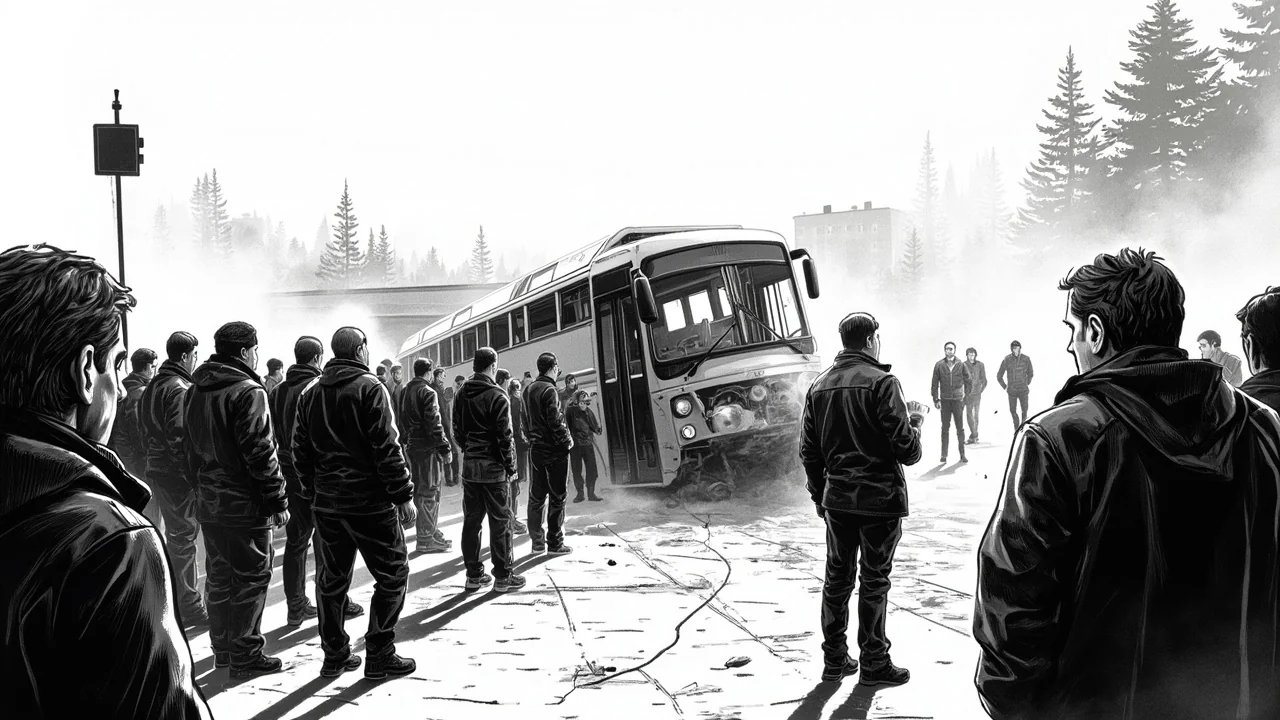
Norway emergency services responded to a late-night traffic accident in Trøndheim that hospitalized one person after a bus collided with two cars, police confirmed. The incident occurred at approximately 10:27 PM on Thursday, bringing traffic to a standstill in the area as authorities worked to clear the scene and investigate the cause.
Details from the Accident Scene
Operational leader Bjørn Rune Sellgren from the Trøndelag Police District provided initial details. He stated that the drivers of the two cars were stationary, waiting at a red light, when one vehicle drove into the rear of the other. This impact involved the bus, though the precise sequence is under review. The force of the collision required the extrication of the driver from one of the cars, who was then transported by ambulance to St. Olavs Hospital for treatment. Sellgren emphasized that there were no reports of additional injuries among other drivers, passengers, or bus occupants, which he noted was fortunate given the potential severity of such multi-vehicle incidents.
Immediate Emergency Response
Police, fire, and medical units were dispatched to the location immediately after the 10:27 PM call. Their first priority was securing the site, assessing injuries, and managing traffic flow. A tow truck was summoned to remove the damaged vehicles, which included the bus and both personal cars. The operational leader confirmed that all emergency protocols were followed efficiently, with a focus on patient care and public safety. The rapid response is standard in Norwegian urban centers, where integrated emergency systems aim to minimize harm after road incidents.
Major Traffic Disruption Resulted
The collision caused a complete stoppage of traffic on the affected road in Trøndheim. Commuters and late-night travelers faced significant delays as authorities cordoned off the area for investigation and cleanup. Police advised motorists to seek alternative routes and expect disruptions for several hours. This kind of congestion highlights the broader impact of traffic accidents on city infrastructure, even when injuries are limited. The tow truck's arrival was crucial to reopening the roadway, but the process required careful coordination to ensure no further risks.
Police Investigation and Statements
Bjørn Rune Sellgren provided a clear account based on preliminary findings. He said the cars were at a red light when the rear-end collision occurred, but the full dynamics involving the bus are still being pieced together. Police are examining factors such as driver attention, road conditions, and vehicle speeds. No suspicion of criminal activity has been raised at this early stage, but a standard traffic investigation is underway. Such probes typically involve witness statements, vehicle inspections, and analysis of any available traffic camera footage from the vicinity.
Context of Trøndheim's Road Network
Trøndheim, as Norway's third-largest city, has a busy and complex road network that handles significant daily traffic, including public transport buses. The city is a hub for the Trøndelag region, with key arteries often susceptible to congestion during peak hours and adverse weather. While Norway boasts one of Europe's lowest rates of traffic fatalities, accidents like this underscore ongoing challenges in urban safety management. The specific intersection where this crash occurred is now under scrutiny for any potential design or signaling issues that could contribute to similar events.
Role of St. Olavs Hospital
St. Olavs Hospital in Trøndheim is the central health institution for the region, equipped with trauma care facilities that handle emergency cases from across Trøndelag. The hospitalized driver was taken here for assessment and treatment, though the extent of injuries has not been disclosed by authorities. The hospital's proximity to major roads allows for quick transfer of accident victims, which can be critical in improving outcomes. Norwegian health services often coordinate closely with police and rescue units to ensure seamless care from scene to hospital.
Broader Implications for Road Safety
This incident brings attention to routine traffic safety in Norwegian cities. While not a major policy story, it reflects the everyday risks on roads despite Norway's stringent safety standards, which include strict drunk-driving laws and extensive public awareness campaigns. The fact that only one injury was reported may point to the effectiveness of vehicle safety features like airbags and crumple zones, which are mandatory in Norway. However, each accident serves as a reminder for drivers to maintain vigilance, especially at intersections and during night-time hours when visibility and reaction times can be compromised.