
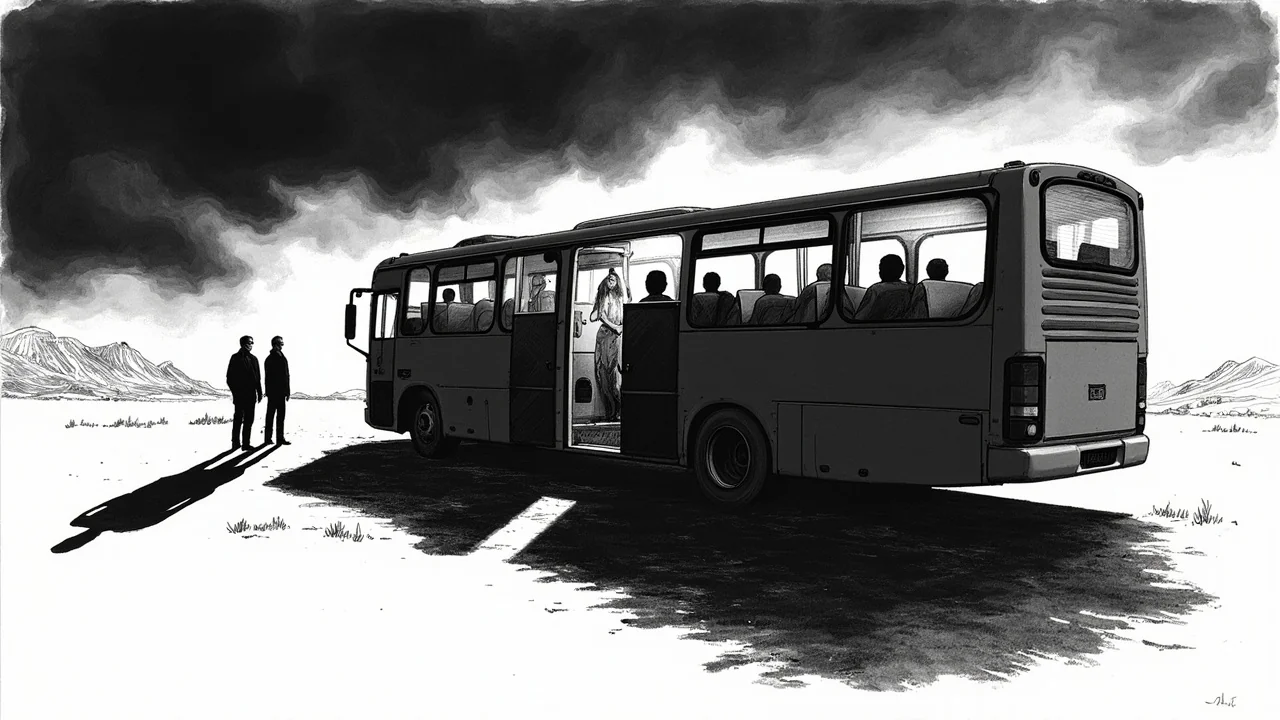
Norway police received a frantic call from a woman trapped inside the luggage compartment of a moving express bus on Saturday. The 26-year-old woman had been accidentally left behind when the bus departed from Bangeløkka in Drammen. Her story, first reported by local media, describes a harrowing twenty-minute ride in complete darkness before she could escape.
A Family Member's Momentary Turn
The incident began when a family member arrived to pick up the woman at the bus stop. He took one of her suitcases from the curb. When he turned around to get another item, the bus and the woman were gone. She had been loading her luggage into the lower storage compartment when the doors were shut and the bus drove off. Left with no other option, she used her phone to call the police immediately. "I spent about ten seconds deciding whether to call my mom or the police or what. But I called the police and quickly explained the situation. I asked them to send a patrol to stop the bus," the woman told reporters. She has chosen to remain anonymous, but her identity is known to the media.
Communication from the Compartment
From the pitch-black luggage hold, the woman stayed on the line with police operators as the bus traveled toward Asker. The Torp Express bus, operated by Unibuss Ekspress, was on its route between Torp Sandefjord Airport and Oslo. She described the experience as terrifying, noting the bus was moving at motorway speeds of around 100 kilometers per hour. Her only source of light was her phone screen. The bus driver, unaware of his extra passenger, had checked his mirrors and the compartment visually before closing the luggage doors electronically from his cockpit. "The bus driver looked in the mirror and in the luggage compartment, but he did not see her. Then he closed the baggage hatches from the driver's seat," said Espen Hveem, the head of Unibuss Ekspress.
Escape at an Asker Bus Stop
The woman's ordeal ended when the bus made a scheduled stop in Asker. Another passenger was getting off at that location, which prompted the driver to open the luggage compartments. Seizing the opportunity, the woman climbed out. She was physically unharmed but shaken by the experience. "I am glad it turned out fine. It could have gone so much worse. No harm was done, but I was under there all the way to Asker, on the motorway at 100 kilometers per hour. It was completely dark under there too," she said to reporters. Police did not need to intercept the bus after all, as the situation resolved itself at the stop.
Invalid License Discovery
Later on Saturday, police disclosed a critical detail that added another layer to the incident. The bus driver involved did not possess a valid driver's license at the time of the event, it had expired. Espen Hveem confirmed that the driver would not be allowed to operate any buses until he renewed his license. The company is treating this as a serious breach of protocol. Hveem stated that the driver was deeply affected by what happened. "He is also thinking about the consequences of what could have happened to the passenger," Hveem said.
Company Response and Procedure Review
Unibuss Ekspress has not yet made direct contact with the woman but intends to do so. Hveem emphasized that this was an unprecedented event for the company. "This is an incident we have never experienced before, but we will go through all our procedures and our regulations and see what we can improve on," he said. The review will likely examine pre-departure checks for luggage compartments and driver licensing verification processes. The company operates several express routes in the region, and this incident has prompted internal scrutiny.
Passenger Safety and Systemic Checks
This event highlights potential vulnerabilities in bus boarding and luggage handling procedures. While no Norwegian regulations specifically mandate a physical check of luggage holds before departure, common practice involves visual inspections. The electronic closure system used on this bus model allows drivers to shut compartments remotely, which may have contributed to the oversight. The woman's ability to use her phone to call for help was a crucial factor in managing the situation, though she was trapped in a confined space without emergency lighting or ventilation.