
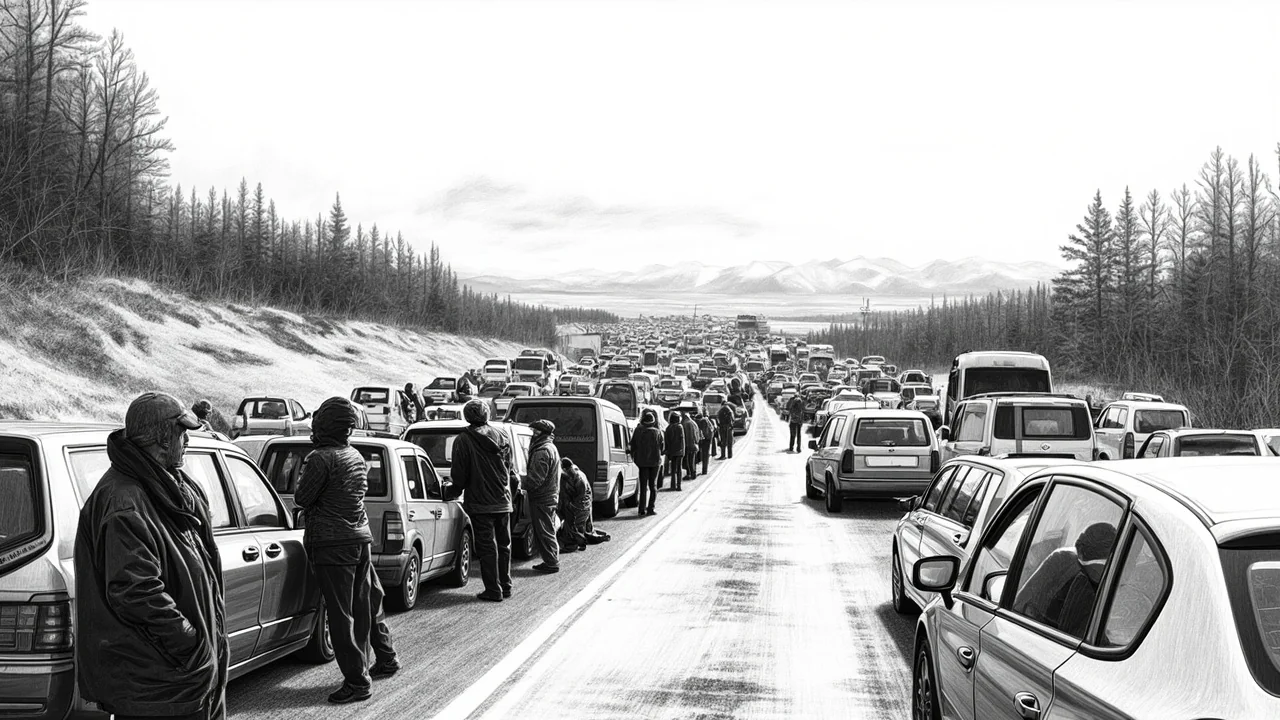
Norway's E18 highway is paralyzed by a multi-kilometer traffic queue after a truck breakdown near Porsgrunn. The incident at the Langangenkrysset interchange has blocked northbound lanes towards Larvik, reducing flow to a single lane. Police report that the truck cannot be moved quickly, with no clear timeline for removal. Drivers face extensive delays and are advised to seek alternative routes independently, while a towing service works on site.
Key Artery Severely Disrupted
E18 serves as a critical transport corridor linking Oslo to southern Norway, including major ports and industrial zones. The standstill traffic stretches for several kilometers, according to officials at the scene. This disruption occurs during a peak travel period, compounding congestion for commuters and commercial vehicles. Police statements emphasize the uncertainty, noting it is hard to specify when normal traffic will resume. The single open lane limits movement, creating a bottleneck that affects regional mobility.
Authorities have not issued formal detour routes, leaving motorists to navigate local alternatives. The Telemark region, where Porsgrunn is located, hosts significant industrial activity, including support services for Norway's oil and gas sector. Delays here can impact supply chains for energy companies, such as those operating fields like Ekofisk in the North Sea. Efficient land transport is vital for moving equipment and personnel, and such incidents highlight infrastructure vulnerabilities.
Response and Immediate Impact
Bilberger, the towing company, is present but faces challenges in clearing the obstruction promptly. Police confirm that the breakdown happened suddenly, with the truck becoming immobilized in a key travel lane. Traffic has ground to a halt, with stationary vehicles reported over a long distance. This situation forces drivers to reconsider their journeys, potentially using secondary roads through nearby municipalities like Skien or Brevik.
The immediate impact extends beyond personal inconvenience. Commercial transporters carrying goods along E18, including components for maritime and energy projects, face costly delays. Norway's economy relies on reliable highway networks to connect its scattered urban and industrial centers. Any prolonged stoppage on E18 can ripple through logistics networks, affecting timelines for projects supported by Storting-funded initiatives.
In the context of Norwegian politics, infrastructure resilience is a recurring topic. Debates in the Storting often center on funding for road maintenance and upgrades under the National Transport Plan. Incidents like this one underscore the need for sustained investment, especially as traffic volumes grow. Politicians from the region have previously called for improved contingency planning to handle such disruptions without major economic fallout.
Broader Infrastructure Challenges
Norway's highway system, while advanced, contends with aging infrastructure and increasing demand. E18, part of the European route network, has experienced similar breakdowns in the past, prompting discussions about modernization. The government's focus on Arctic development adds complexity, as efficient southern corridors are essential for supporting northern operations. Delays on E18 can indirectly affect Arctic policy goals by hindering equipment shipments to ports like Kirkenes.
Energy market implications are also pertinent. Norway's oil industry depends on seamless land transport to facilitate operations from the Norwegian Sea to the Barents Sea. Disruptions on key routes like E18 can strain logistics for companies like Equinor, potentially impacting production schedules. While offshore activities may continue, land-based support functions can face bottlenecks, highlighting the interconnectedness of Norway's transport and energy sectors.
Specific locations along E18, such as the Oslofjord crossing, are already congestion points. This incident near Langangenkrysset adds to existing pressures, raising questions about long-term solutions. The Ministry of Transport and Communications has previously outlined plans for smart highway technologies, but implementation remains gradual. For now, ad-hoc responses like driver-initiated detours dominate, reflecting current limitations in traffic management.
Policy and Future Considerations
As police work to resolve the situation, broader policy questions come to the fore. How will Norway ensure its critical transport corridors remain reliable? Discussions in the Storting often highlight trade-offs between road, rail, and maritime investments. This event may renew calls for accelerated infrastructure projects, such as upgrades to E18 or enhanced alternative routes through the Telemark canal area.
The incident also ties into Norway's climate goals, as transport emissions are a key concern. Efficient traffic flow reduces idle time and fuel consumption, aligning with national targets. Prolonged jams like this one counter those efforts, emphasizing the need for resilient infrastructure that supports both economic and environmental objectives. Government buildings in Oslo, where such policies are crafted, will likely monitor this disruption's aftermath.
Looking ahead, the uncertainty voiced by police about clearance times points to systemic issues. Norway's harsh weather and terrain pose ongoing challenges for road maintenance. Investments in real-time monitoring and rapid response teams could mitigate future incidents. For the energy sector, which relies on just-in-time deliveries for projects in fjords like Hardangerfjord, such improvements are crucial to maintaining operational efficiency.
In conclusion, this multi-kilometer queue on E18 is more than a temporary inconvenience. It reflects deeper infrastructure strains that require political attention and strategic funding. As drivers wait for the truck to be removed, the episode serves as a reminder of Norway's dependence on reliable transport networks for its economic and energy ambitions. What steps will policymakers take to prevent recurrences? The answer may shape Norway's transport landscape for years to come.