
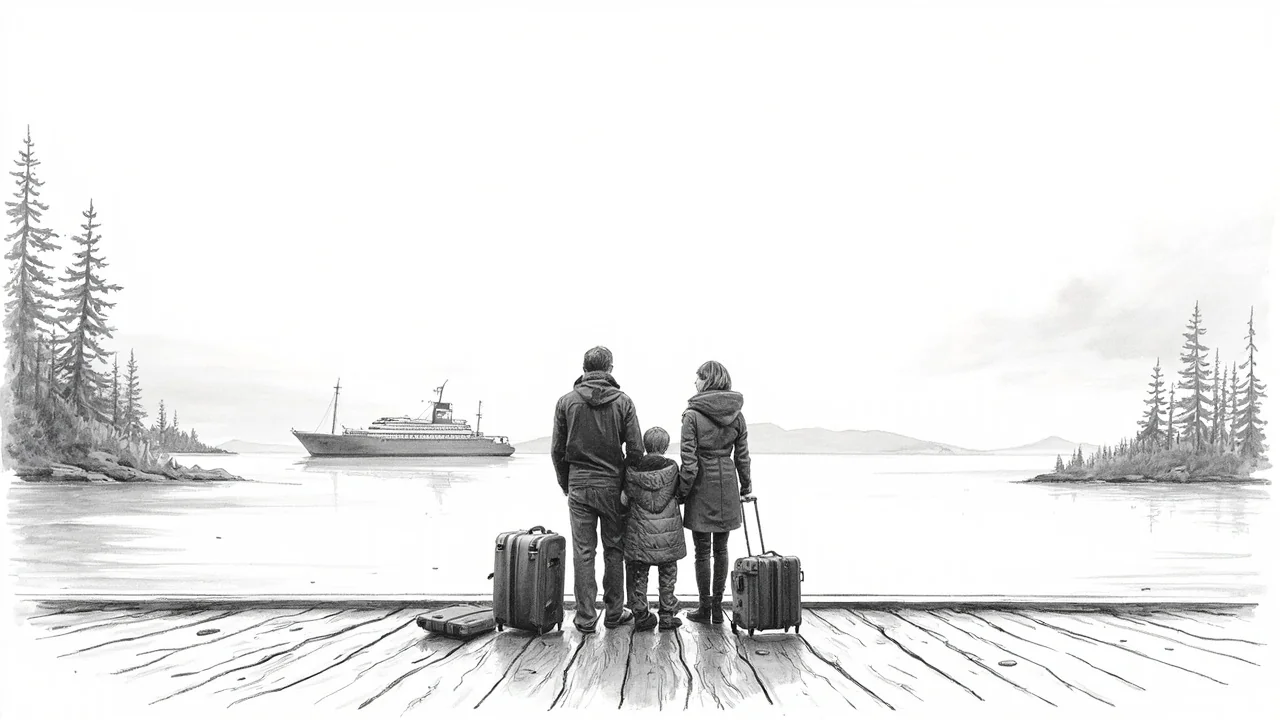
Norway's Jostein Jørgensen has returned home after an eight-month evacuation caused by a container ship that triggered a landslide on his property. The emotional homecoming marks the end of a prolonged ordeal for Jørgensen and his family, who were forced from their home of 38 years. "It is fantastic to come back again," Jørgensen said. "I am very happy for it." The family moved back on Monday, but their return comes after months of uncertainty and a costly security operation that transformed their land.
The Day the Ship Struck
On 22 May last year, the container ship "NCL Salten" ran aground near Byneset, striking land so close it nearly hit the home of Jørgensen's neighbor, Johan Helberg. The impact unleashed a landslide on Jørgensen's property, immediately rendering it unsafe. Jørgensen and his family were evacuated that same day, beginning an eight-month period away from the home they had built over nearly four decades. "We stood there alone and did not know what was going to happen," Jørgensen recalled. The sudden displacement left the family in shock, grappling with the loss of their familiar surroundings and the stability they had known.
Months of Uncertainty and Struggle
For eight months, Jørgensen and his family lived in a state of limbo, unsure if they would ever return. The evacuation proved physically and psychologically taxing. "It has been a very heavy burden, both physically and mentally," Jørgensen explained. "It is the uncertainty about whether one gets to come back at all and, if so, when. We have lived in doubt for a long time." The family clung to hope but faced bureaucratic delays as responsibility for securing the area was disputed. Neither the shipping line, the municipality, the state, nor the insurance company initially wanted to cover the costs of making the property safe. This stalemate prolonged their displacement, adding stress to an already difficult situation.
A Costly and Transformative Security Operation
Over three months after the landslide, an agreement was reached where the state and municipality each would cover half the costs of the security work. Starting in October, extensive measures were undertaken to stabilize the land. Approximately 13,000 tons of clay from the seabed were removed, and 20,000 units of mass were added to fill the landslide scar. The work involved transporting materials via barges and significantly altered the landscape. Jørgensen noted that the landslide edge had crept closer to his house during the incident, and the remediation changed the property fundamentally. "We do not have a beach anymore, to put it that way," he said. While he praised the contractor for doing a very good job with the security work, he added, "But one cannot recreate what nature has made."
Legal Investigations and Accountability
The accident prompted legal scrutiny, with two people suspected of breaches of the ship safety law. The first, a man in his 30s, told police that he had fallen asleep while on watch on the bridge. The Norwegian Maritime Directorate's report concluded that the bridge watch alarm was turned off and that the incident could have been prevented. The investigation is complete, and the case is ongoing, highlighting the human error that led to the grounding. This aspect underscores the broader implications for maritime safety in Norwegian waters, though the immediate focus for the Jørgensen family has been on recovery and return.
Adjusting to a Changed Home
Returning home has been bittersweet for Jørgensen and his family. The property they came back to is different from the one they left, with the natural shoreline replaced by engineered slopes and fill. Despite this, the joy of being home is palpable. "We have always hoped to get to move back again, but we have never been sure," Jørgensen said. The eight-month evacuation was marked by sadness and resilience, as the family navigated the challenges of displacement. "It was very tough. We have lived there for 38 years and built up the place, so to leave our home has been very sad. Extremely sad," he reflected. Now, with the security work complete, they face the task of rebuilding their daily lives in a familiar yet altered setting.
Community Impact and Moving Forward
The incident at Byneset has had ripple effects beyond the Jørgensen family, raising questions about responsibility and preparedness for such accidents in coastal communities. The involvement of multiple authorities in funding the security operation points to the complexities of disaster response in Norway. For Jørgensen, the experience has been a profound test of patience and hope. As he settles back in, he emphasizes the importance of community support and the need for clear protocols to prevent similar ordeals. The family's return offers a glimpse into the long-term impacts of maritime accidents on Norwegian homeowners, where recovery is not just about repairing land but also healing from months of disruption and uncertainty.