
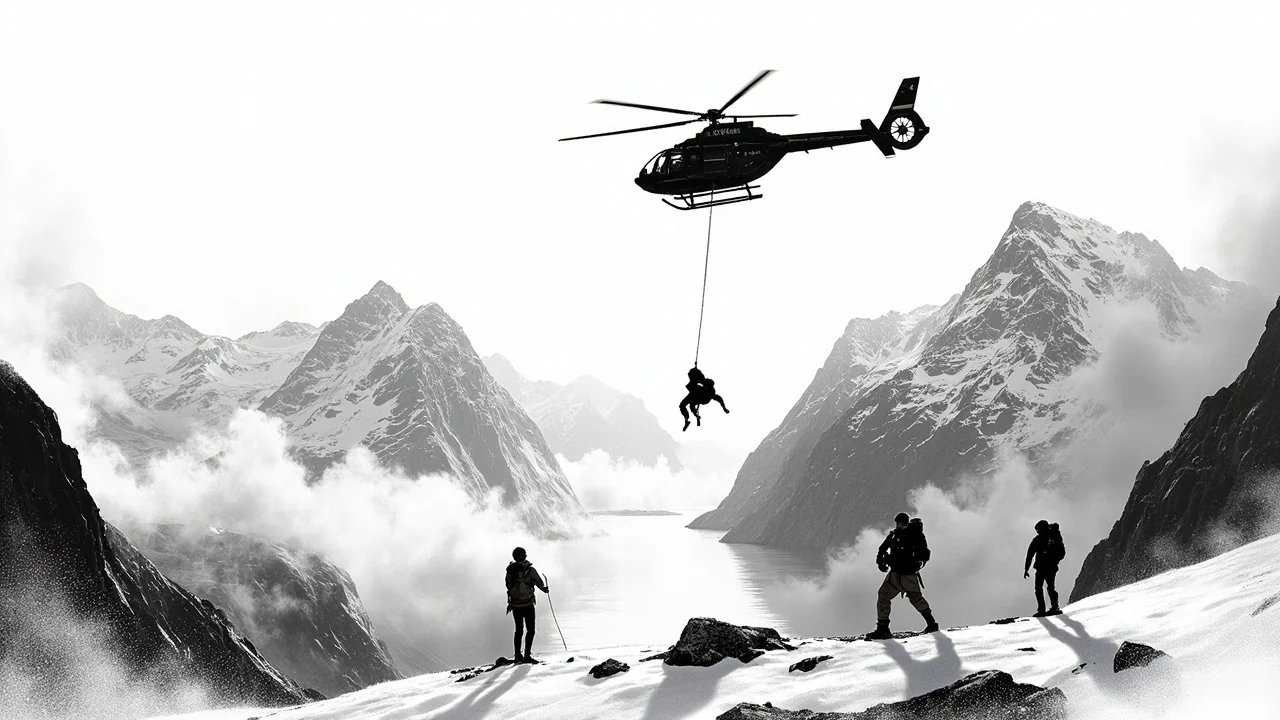
Norway's mountain rescue services launched a major operation in Jotunheimen National Park Tuesday night after a satellite distress call reported a group of 15 hikers, some unconscious and suffering from severe cold. Four people were flown to Førde Hospital, while the remaining eleven did not require immediate medical evacuation. The incident occurred in the Rauddalen area near Lom, triggering a complex response involving five helicopters and local ground teams.
The Distress Signal from Rauddalen
The operation began late Tuesday evening when a satellite-based emergency alert was received from Jotunheimen. Operasjonsleder Haagen Løvseth with the Innlandet Police District logged the initial report. 'The message describes hypothermic and some unconscious persons,' Løvseth wrote in the police log. 'The hiking party reportedly consists of 15 people total.' This type of alert, often from a personal locator beacon or satellite communicator, is a critical tool in Norway's vast and remote mountain regions, where cellular coverage is unreliable. The specific location was pinpointed to Rauddalen, a valley in the heart of the country's highest mountain range.
A Multi-Agency Race Against Time
Response teams mobilized quickly across multiple agencies. According to police communications, local ground rescue resources were dispatched alongside a fleet of five helicopters. This air contingent included aircraft from the health service, the police, and the national rescue service. The coordination of such assets, especially in challenging evening light and mountain weather conditions, is a standard but demanding procedure for Norwegian rescue coordinators. The priority was to reach the group, assess the severity of their condition, and begin evacuating those in critical need. The simultaneous deployment of ground and air units allows for a comprehensive approach, with teams on foot able to reach areas helicopters cannot land and air assets providing rapid transport for the most severely affected.
Evacuation and Hospital Transfer
By 10:30 PM, the first phase of the evacuation was confirmed. 'Air ambulance and rescue helicopters are on site,' Operasjonsleder Haagen Løvseth updated. 'It is reported that four patients are being flown to Førde Hospital. The status of these is not known. The other eleven do not need medical help or evacuation at this time.' The choice of Førde Hospital, located in Vestland county, underscores the operational planning involved, it is a central hospital with the facilities to handle acute hypothermia and related emergencies. The condition of the four evacuated individuals was not disclosed by authorities, pending assessment and notification of families. The eleven remaining members of the hiking party were presumably being assisted by rescue personnel on the ground, possibly sheltered and monitored until they could be walked out or the situation was fully stabilized.
The Challenges of Mountain Safety
This incident highlights the inherent risks of hiking in Norway's high mountains, even as the country promotes friluftsliv, or open-air life. Jotunheimen, meaning 'Home of the Giants,' contains Northern Europe's highest peaks and is prone to rapid weather shifts. Temperatures can plummet, and conditions can change from clear to treacherous within hours, leading to exposure and hypothermia. The successful activation of a satellite distress device in this case was a decisive factor in initiating the rescue. Norwegian authorities consistently advise hikers to be prepared for all conditions, carry necessary safety and communication equipment, and have the experience suitable for their planned route. The size of the group, 15 people, is not unusual for organized touring parties but presents a significant logistical challenge for rescuers when things go wrong.
Aftermath and Standard Procedures
Police will typically follow up on such incidents to understand the sequence of events. This is not necessarily an investigation into wrongdoing but part of standard safety improvement processes. Questions may focus on the group's preparation, route planning, equipment, and their decision-making process leading up to the emergency call. The rescue services also review their own response for efficiency and learning. For the eleven hikers who did not require hospitalization, the experience serves as a stark reminder of the mountain environment's power. The community's reliance on the highly trained volunteers and professionals of the Norwegian Redningstjeneste (rescue service) is once again evident, showcasing a system designed to respond to emergencies in the most inaccessible parts of the country's rugged landscape. The operation in Rauddalen concluded with all individuals accounted for and the most critical receiving urgent care, a testament to the effectiveness of this integrated rescue network.
The Broader Context for Norwegian Outdoors
While this specific rescue had a successful outcome, it feeds into an ongoing national conversation about mountain safety. Each season, rescue services respond to hundreds of calls, many involving visitors who underestimate the terrain. The use of technology, like the satellite messenger that triggered this response, is encouraged but not seen as a replacement for knowledge, experience, and conservative judgment. The incident also underscores the immense cost and resource commitment of mountain rescues, which are free of charge to those in need in Norway, funded by the public. It reinforces the social contract of friluftsliv: the right to roam comes with a responsibility to be self-reliant. As the rescued hikers recover, the details of their ordeal in Rauddalen will likely be analyzed by outdoor groups and safety organizations to help prevent similar situations, ensuring Norway's mountains remain a place of challenge and beauty, not tragedy.