
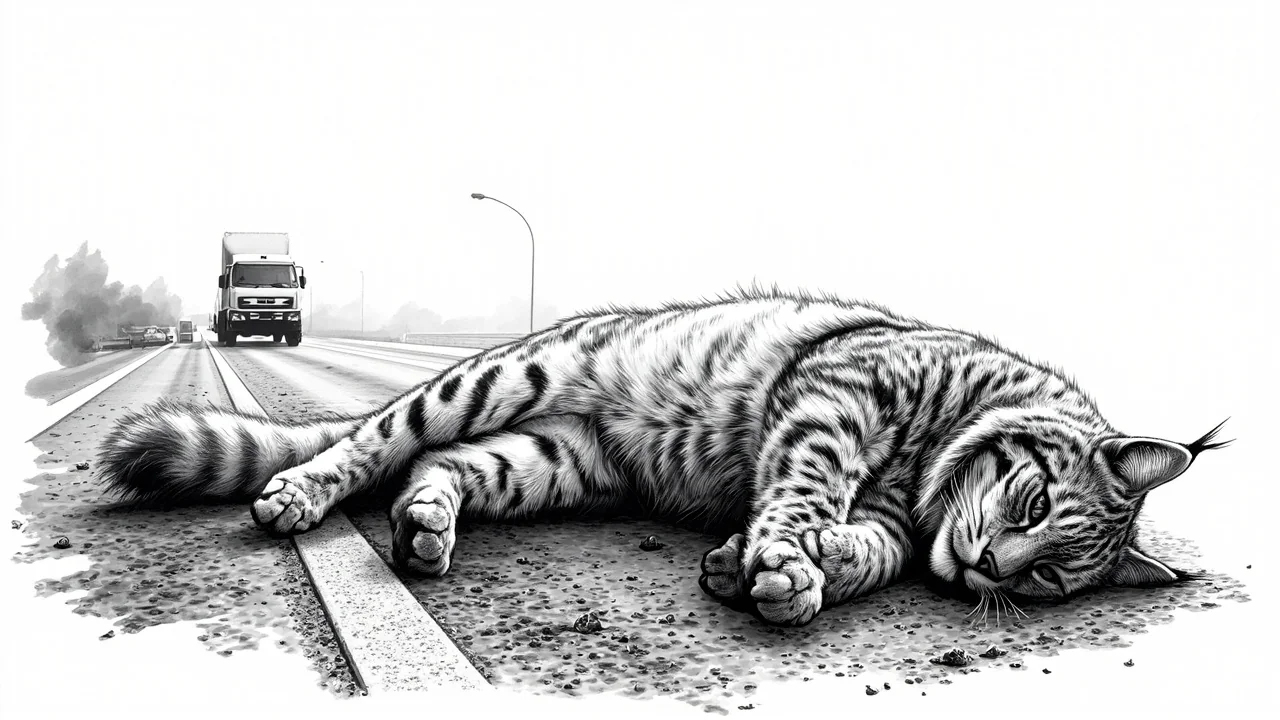
Norway's E6 highway claimed another wildlife victim with a lynx fatally struck in Namsskogan. Police confirmed the animal was dead after a report came in about the collision. Operations leader Bjørnar Gaasvik said the local wildlife board was notified and would alert the County Governor, as required for protected species. This incident highlights the ongoing challenge of wildlife-vehicle collisions in Norway's rugged terrain.
The Scene on E6
Drivers on the E6 in Namsskogan encountered a somber sight this week. The lynx, a mature adult, lay lifeless by the roadside after being hit by a vehicle. Namsskogan, a municipality in Trøndelag, is known for its dense forests and wildlife corridors. The E6, Norway's main north-south artery, cuts through these natural habitats, creating frequent conflict zones between animals and traffic. Police received the call promptly but could only confirm the lynx's death. No details were released about the driver or vehicle involved, as the focus shifted to proper disposal protocols.
Bjørnar Gaasvik outlined the steps taken. 'The animal is dead,' he said in a statement. 'Local viltnemd is notified and he will also inform the Statsforvalteren as it must be done for this type of animal.' This refers to the standard procedure for handling dead protected wildlife in Norway. The local wildlife board, or viltnemd, acts as the first point of contact, ensuring that authorities follow legal and conservation guidelines. The County Governor, or Statsforvalteren, oversees broader environmental regulations and records such incidents for population monitoring.
Protected Species Protocols
Lynx are a protected species in Norway, classified under national wildlife laws. Their handling after death involves strict protocols to prevent disease and ensure data collection for conservation efforts. The local viltnemd in Namsskogan will document the lynx's condition, location, and probable cause of death. This information is passed to the County Governor, who maintains records on lynx mortalities across the region. These records help track trends in roadkill incidents, which can influence future infrastructure planning or wildlife crossing projects.
In cases like this, the lynx's body may be collected for research or disposed of according to health regulations. Norway has seen similar incidents before, with lynx and other large carnivores like wolves and bears falling victim to road traffic. The E6, in particular, is a hotspot due to its length and high traffic volume, especially in rural areas where animal movements are common. Authorities emphasize that drivers should exercise caution in known wildlife zones, but collisions remain a persistent issue.
Broader Context of Wildlife Collisions
Wildlife-vehicle collisions are a significant concern in Norway, affecting both animal populations and human safety. The country's extensive road network traverses fjords, mountains, and forests, intersecting with natural habitats. Lynx, with their elusive nature, are especially vulnerable when crossing roads during hunting or migration. While no specific statistics were provided for this incident, national data often shows hundreds of large mammal deaths on roads annually. This event in Namsskogan adds to that tally, raising questions about mitigation strategies.
Measures such as wildlife fences, underpasses, and warning signs have been implemented in some areas, but coverage is uneven. The E6 highway has seen incremental improvements, but funding and terrain challenges slow progress. For locals in Namsskogan, this lynx's death is a reminder of the fragile balance between development and nature. Community members often report such incidents to authorities, hoping for better protection measures. The quick response from police and wildlife boards reflects Norway's commitment to its environmental duties.
Conservation and Coexistence
Norway's lynx population is managed through careful monitoring and protection laws. These cats play a crucial role in the ecosystem, controlling prey species like roe deer. Each death from human causes, such as road accidents, can impact local biodiversity. The Namsskogan incident underscores the need for continued vigilance. Drivers are urged to reduce speed in marked wildlife areas, especially during dawn and dusk when animals are most active. Public awareness campaigns highlight these risks, but enforcement remains limited.
The procedures followed after this collision show how Norway's system works in practice. From the initial police report to the County Governor's involvement, each step ensures accountability and data integrity. This helps conservationists assess whether roadkill rates are increasing or if specific zones need intervention. For now, the lynx's death is a solitary event, but it fits into a larger pattern of human-wildlife conflict on Norwegian roads. As traffic grows, so does the pressure on species like the lynx.
Moving Forward from Namsskogan
This incident on the E6 may prompt local reviews of road safety measures in Namsskogan. Municipalities often collaborate with national transport agencies to identify high-risk segments. While no immediate changes were announced, the reporting process itself is a tool for long-term planning. Norway's approach blends immediate response with strategic planning, aiming to reduce such fatalities over time. For residents and travelers, the lynx's fate is a poignant moment in the ongoing story of Norway's wilderness.
As authorities complete their protocols, the focus shifts to prevention. Can better technology or infrastructure make roads safer for wildlife? How do communities balance mobility with conservation? These questions linger after every collision. In Namsskogan, the lynx's death is a quiet reminder of the costs of progress, and a call for more harmonious coexistence on Norway's vast and beautiful landscapes.