
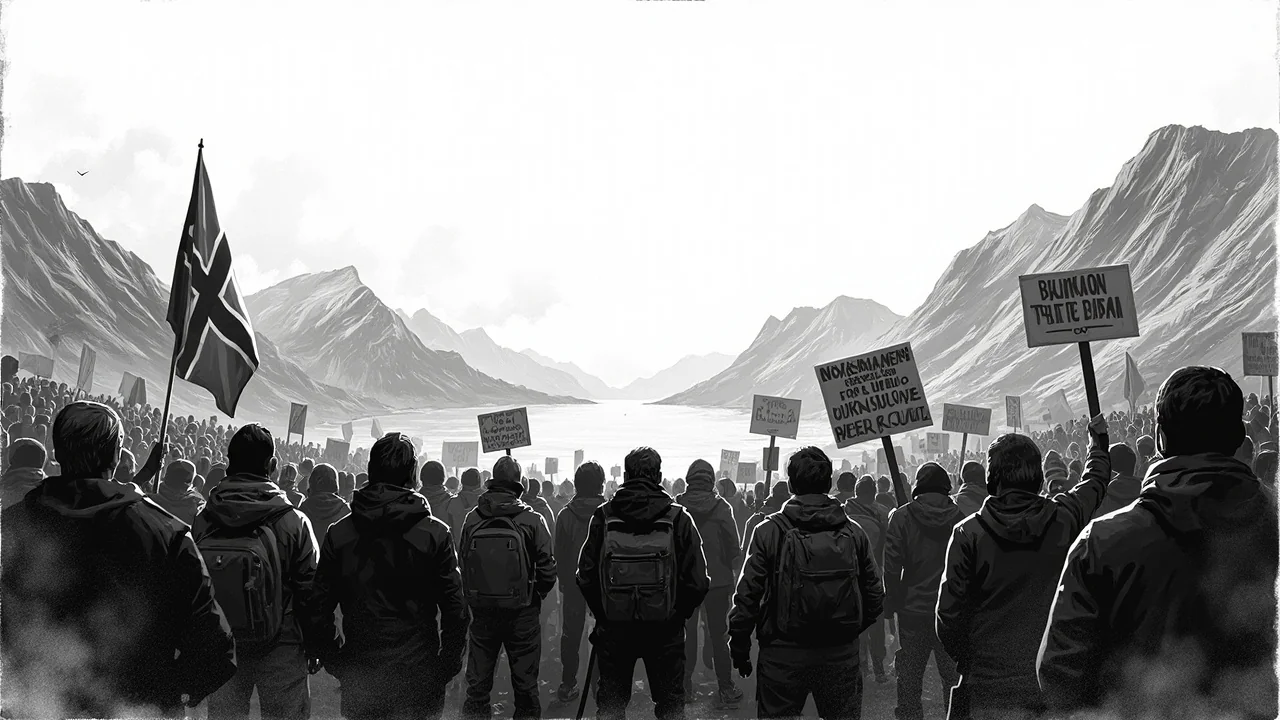
Norway's Nussir copper mine protest has escalated with police intervention in Repparfjorden, Finnmark, after demonstrators entered the site to oppose mining waste disposal. Over 70 activists from across the country gathered at the remote location in Vest-Finnmark, marking what organizers call a historic turnout. Police confirmed their presence, stating they are monitoring the situation and will engage in dialogue with the parties involved. This confrontation highlights ongoing tensions between environmental groups and the mining industry in Norway's Arctic region.
Demonstrators Occupy Mine Site
Aksjonister, including members of Natur og Ungdom, have established a protest camp at the Nussir mine area since June 15, 2025. On Saturday morning, the action intensified as more participants arrived, with some penetrating the mine's premises. Ella Marie Hætta Isaksen, a spokesperson for the demonstrators, emphasized the significance of the gathering. 'Det at vi er over 70 aksjonister som har reist fra hele landet for å aksjonere, viser viktigheten av denne saken,' she said. Hætta Isaksen noted that the fjord's fate is gaining national attention, with increasing awareness that Norway remains one of only two countries globally using fjords for industrial waste disposal. The activists' core message is clear: the Nussir mine, slated for operations in 2026, is not welcome if it involves dumping tailings into Repparfjorden.
Youth and Diversity in Activism
Among the protesters is 15-year-old Rosalind Ghafoor Bjerkeland from Haugesund, the youngest on site, who traveled extensively via planes and buses to join the action. 'Jeg er veldig glad i naturen, så naturinngrep og dyremangfold er to saker som jeg bryr meg om veldig mye,' she explained. Bjerkeland expressed feelings of helplessness when confronting large corporate and governmental powers but found solace in the collective strength. 'Man føler seg litt hjelpeløs når man står her og skriker til den store makten. Det hjelper veldig på å se at vi er mange, at vi står sammen og er en bevegelse,' she said. Her presence underscores the broad demographic appeal of the environmental cause, drawing in younger generations concerned about natural heritage. Bjerkeland also criticized perceived hypocrisy, pointing out how Norway promotes its pristine fjords for tourism while permitting activities that could degrade them.
Police Engagement and Historical Context
Finnmark police have acknowledged the protest and arrived at the scene, with a spokesperson indicating they are following developments and will communicate with all sides. This is not the first encounter between law enforcement and activists at the Nussir site, past actions have resulted in substantial fines for some participants, exceeding 64,000 kroner. The recurring conflicts date back to initial protests against the mine's development, which received government approval for waste disposal in Repparfjorden a decade ago. The police's current approach emphasizes dialogue, but the potential for escalation remains as activists vow to stay until their demands are met. The historical context includes prolonged legal battles and public outcry over the environmental impact assessments that greenlit the project, reflecting deep-seated community divisions in Finnmark.
Demands for Permit Reversal
Natur og Ungdom, a key organizing group, is demanding that the Norwegian government revoke the ten-year-old emission permits granted for the mine. Helene Sofie Smit, a central committee member, argued that circumstances have changed significantly since the permits were issued. 'Nå er det viktigere enn noen gang at vi klarer å sette naturen over kortsiktig profitt,' she stated. The permits, which allow for the deposition of mining waste into the fjord, are now seen as legally vulnerable, with activists claiming they can be withdrawn without legal consequences. This demand taps into broader national debates about sustainable resource extraction, particularly in sensitive Arctic ecosystems where Sámi culture and livelihoods are intertwined with the marine environment. The protest camp serves as a physical manifestation of this pressure, aiming to sway political will in Oslo.
Future Implications and Activist Resolve
The protesters have set a firm timeline, opposing the mine's planned opening in 2026 and advocating for a halt to fjord waste disposal nationwide. Hætta Isaksen reiterated their commitment: 'Fremtidens gruver kan ikke rasere grunnlaget til sjøsamisk kultur og ødelegge levende fjorder. Vi er beredt på å bli her til vi har blitt hørt.' This stance challenges Norway's economic reliance on extractive industries, which include offshore oil and gas as well as terrestrial mining. The Nussir project, owned by Nussir ASA, represents a test case for balancing industrial growth with environmental protection in the High North. As police maintain their watch, the outcome could influence similar disputes across the country, such as those in the Førde fjord or the ongoing discussions about deep-sea mining in Norwegian waters. The activists' resilience, evidenced by their sustained camp and growing numbers, suggests that this issue will remain prominent on Norway's political agenda, potentially affecting upcoming parliamentary discussions in the Storting.
Cultural and Environmental Crossroads
Repparfjorden is not just a site of industrial interest but a cultural heartbeat for the Sámi people, who rely on its waters for fishing and cultural practices. The protest highlights a clash between modern economic policies and indigenous rights, a recurring theme in Norwegian Arctic development. Activists like Hætta Isaksen, who is Sámi herself, frame the struggle as one of cultural survival alongside environmental stewardship. 'Dette er historisk mange som har møtt opp,' she said, pointing to the diverse coalition of supporters. The involvement of individuals from southern Norway, such as Bjerkeland from Haugesund, indicates a nationalization of the issue, transcending local boundaries. This broad base could amplify calls for policy shifts, especially as Norway faces international scrutiny over its environmental record despite ambitions to lead in green technology. The protest in Repparfjorden thus becomes a microcosm of larger dilemmas: how can a nation famed for its natural beauty reconcile it with resource extraction that risks that very identity?