
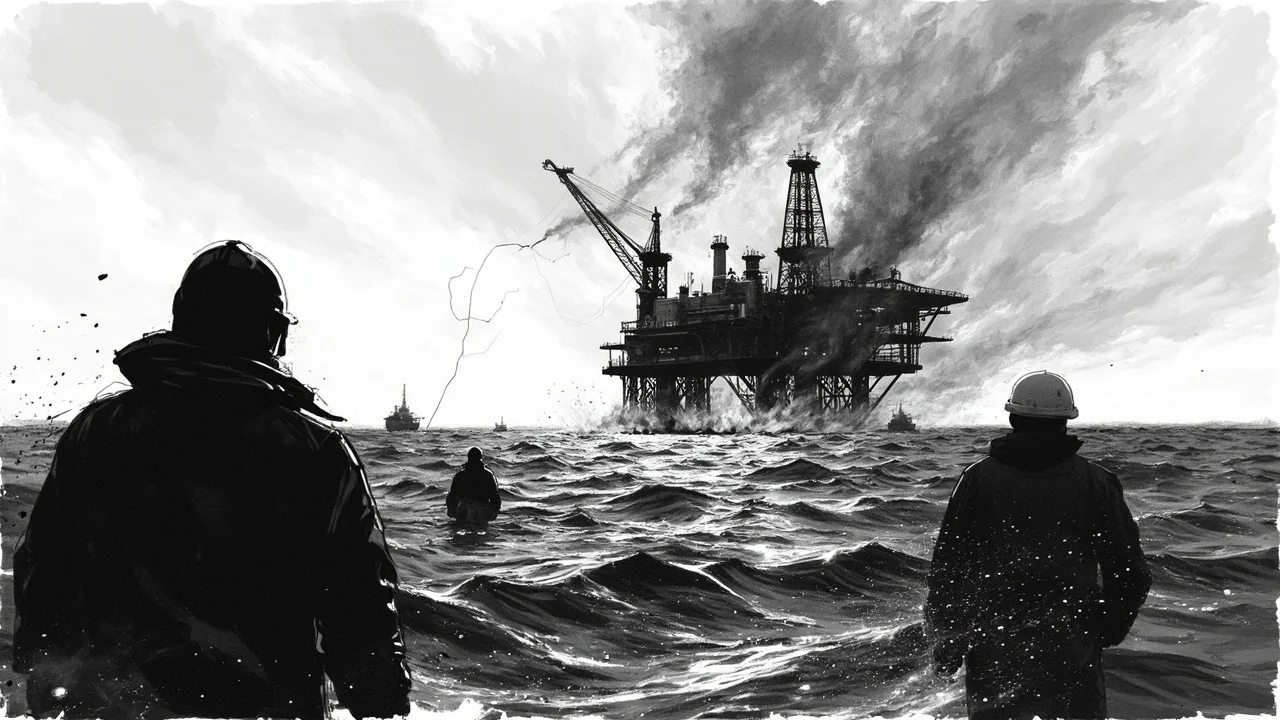
Norway's Oseberg A oil platform sent two workers to Haukeland University Hospital after an electrocution incident during transformer maintenance. The accident occurred between 10 and 11 AM local time, prompting an immediate emergency response from operator Equinor. Press spokesperson Gisle Ledel Johannessen confirmed the two individuals received electrical shocks while working on a transformer. Equinor's on-platform preparedness team was mobilized, and the injured were rapidly transported by helicopter to the hospital in Bergen. The condition of both workers remains unknown, but next of kin have been notified.
Immediate Response and Emergency Protocols
Equinor's standard emergency procedures were activated following the incident on the Oseberg A platform. The company's press statement emphasized the swift mobilization of its dedicated offshore preparedness resources. Helicopter evacuation from offshore installations in the Norwegian North Sea is a well-rehearsed protocol, with Haukeland University Hospital serving as a primary trauma center for such cases. The platform's location in the North Sea, approximately 130 kilometers west of Bergen, necessitates efficient airlift capabilities for medical emergencies. Equinor has not released further details on the specific work being performed on the transformer, citing the ongoing internal response.
The Oseberg Field's Strategic Importance
The Oseberg field is a cornerstone of Norway's petroleum industry, situated in the North Sea's Block 30/9. Operated by Equinor, the field includes several platforms, with Oseberg A serving as a central processing and accommodation unit. Since production began in 1988, Oseberg has been instrumental in Norway's oil and gas exports, contributing significantly to state revenue through Equinor and the Norwegian state's direct financial interest. The field's infrastructure is critical to maintaining Norway's position as a key European energy supplier. Safety on such installations is governed by stringent regulations from Norway's Petroleum Safety Authority, which mandates rigorous risk assessments for all electrical work.
Norwegian Offshore Safety Framework
Norway's offshore industry operates under some of the world's strictest safety regimes, managed by the Petroleum Safety Authority Norway. Incidents like the electrocution on Oseberg A trigger automatic reporting and investigation processes. Historical data shows that electrical accidents on Norwegian platforms are rare but are treated with high priority due to the potential for severe injury. The framework includes mandatory safety training for all personnel, regular audits of equipment, and clear protocols for hazardous work such as transformer maintenance. Equinor, as a state-majority-owned company, often highlights its safety record in public disclosures, making any incident a matter of close scrutiny.
Human Impact and Industry Context
The two injured workers are now under care at Haukeland University Hospital, which specializes in handling offshore medical emergencies. Their identities have not been released, respecting privacy protocols for industrial accidents. Such incidents resonate deeply within Norway's close-knit offshore communities, where many workers are from coastal towns like Stavanger or Bergen. The Storting's standing committee on energy and the environment routinely reviews safety statistics, and this event may prompt questions from members like Ola Borten Moe or Terje Aasland. Norway's oil and gas sector employs tens of thousands directly, and safety performance is a constant topic in political debates about Arctic exploration and energy transition.
Operational and Regulatory Next Steps
Equinor will likely initiate an internal investigation alongside any probe by the Petroleum Safety Authority Norway. Standard practice involves halting similar non-essential electrical work across affected platforms until preliminary findings are in. The Oseberg field's production levels, which average around 100,000 barrels of oil equivalent per day, could see temporary adjustments if safety inspections demand it. However, Equinor has not indicated any immediate production impacts. Past incidents on Norwegian platforms, such as minor leaks or injuries, have led to tightened procedures without long-term operational disruption. The company's next public update will be closely watched by industry stakeholders and policymakers in Oslo.
Broader Implications for Norway's Energy Sector
This accident occurs amid ongoing political discussions about Norway's future oil and gas development, particularly in the Barents Sea. The Labour Party and Centre Party coalition government emphasizes safety as a non-negotiable aspect of continued extraction. Energy Minister Terje Aasland has previously stated that safety lapses are unacceptable as Norway balances fossil fuel revenue with climate goals. While isolated, this incident may fuel arguments from opposition parties like the Greens or Socialist Left, who advocate for a faster phase-out of offshore activities. The Petroleum Safety Authority's annual reports often cite electrical safety as a key area for vigilance, given the high-voltage environments on platforms.
A Look Ahead: Safety and Scrutiny
The coming days will focus on the medical recovery of the two workers and the investigation's initial findings. Equinor's leadership, including CEO Anders Opedal, is expected to address the incident in forthcoming communications. For Norway's offshore workforce, safety reminders will be reinforced across installations from the North Sea to the Norwegian Sea. As the Arctic frontier gains attention, lessons from established fields like Oseberg will inform safety protocols for new projects. This event underscores the inherent risks in maintaining critical energy infrastructure, even in a nation renowned for its operational standards. The priority remains on the well-being of those affected and ensuring such incidents are prevented in the future.