
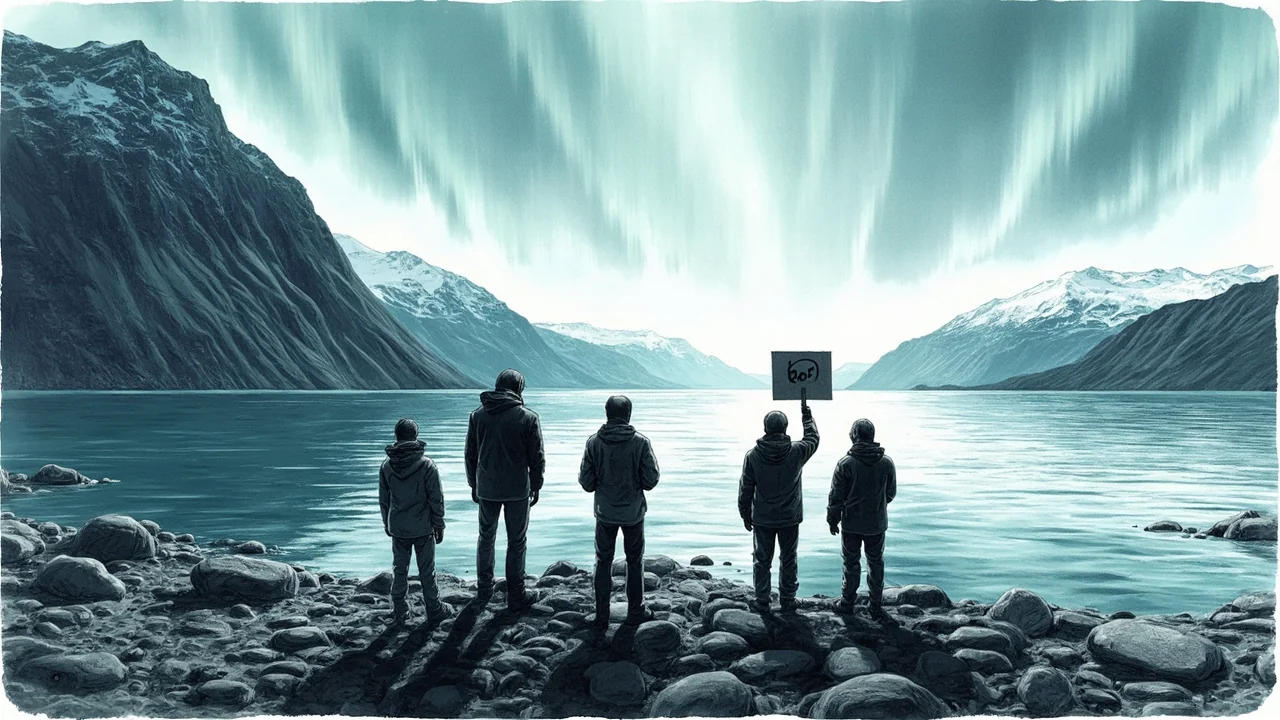
Four Norwegian political parties representing 28 of the Storting's 169 seats are uniting to revoke a critical permit for a controversial Arctic copper mine. The move targets the Nussir ASA project in Repparfjord, Kvalsund Municipality, where mining waste would be deposited directly into the fjord. A parliamentary proposal, set for debate next week, invokes a clause in Norway's Pollution Control Act allowing permits to be withdrawn after ten years. The permit in question was granted on January 15, 2016.
A Decade-Old Permit Under Fire
The coalition, comprising the Socialist Left Party (SV), the Red Party, the Green Party, and the Liberal Party, argues the environmental assessment is outdated. They claim the permit fails to protect the wild Atlantic salmon population and the broader marine ecosystem of the fjord. "We are putting forward a proposal in the Storting that the discharge permit given ten years ago to use Repparfjorden as a garbage dump for the mining industry is withdrawn," said SV representative Lars Haltbrekken. His statement frames the central conflict: whether the fjord is an industrial site or a protected natural habitat.
Frøya Sjursæther of the Green Party issued a blunt condemnation. "Repparfjorden is not a trash can, and it is completely irresponsible towards the wild salmon and biodiversity that politicians have allowed the dumping of gigantic amounts of dangerous waste right into the fjord," she said in a press release. This sentiment is echoed by environmental group Nature and Youth, which has also demanded the permit's revocation.
The Mine's Progress and Indigenous Rights Concerns
While the political battle intensifies, physical work at the Nussir site is already advanced. Crews have drilled approximately 800 meters into the mountain, with expectations of hitting the copper ore body at around 1.7 kilometers. The project represents one of the largest mineral deposits in Norway, with proponents highlighting its economic potential for the Finnmark region. However, opponents stress the cost is too high.
The debate extends beyond environmental science into the realm of indigenous rights. The proposed submarine tailings disposal site is in an area used by Sámi sea reindeer herders and coastal Sámi communities. Sofie Marhaug of the Red Party stated, "The Red Party believes we must seize the chance to stop this natural destruction." Marit Vea of the Liberal Party framed it as a systemic issue: "It is a gross example of nature and Sámi interests being overridden by short-term business interests."
Company and Regulator Confidence Amidst Protest
In contrast to the political opposition, Nussir's leadership and the environmental regulator express confidence the permit will stand. Daily manager Øysten Rushfeldt has said he is not worried about revocation. "The message we have received is that we have everything in order, and that there is no reason to envisage the permit being withdrawn," he stated this week. He emphasized the company follows the permit "to the letter" and sees no systemic failure that would justify its withdrawal.
This position is supported by Harald Sørby, section leader at the Norwegian Environment Agency. "I do not expect it to be withdrawn imminently, and not in the long term either. They have received a permit and it was thoroughly assessed before it was granted," he said. This highlights a key tension: the permit was legally issued after an official process, but opponents argue that process and its conclusions are fundamentally flawed a decade later.
The Legal Mechanism and Political Calculus
The parties' strategy hinges on Section 12 of the Pollution Control Act, which allows for a review and potential withdrawal of a permit ten years after its issuance. The January 15 anniversary provided the formal trigger for this action. The parliamentary proposal itself is a direct request: "The Storting asks the government to withdraw the discharge permit given to Nussir ASA on 15.01.2016."
Despite the united front from the four parties, the mathematics of the Storting pose a significant hurdle. Together, they hold only 28 seats. For the proposal to succeed, it would require support from larger opposition parties, notably the Labour Party and the Centre Party, or from within the governing coalition. The Conservative and Progress Party-led government has historically supported the project as part of its mineral strategy. The upcoming vote will serve as a clear litmus test for the strength of green and indigenous concerns within the broader parliament against traditional industrial and regional development priorities.
The Path Forward and National Implications
The immediate future rests with the Storting's deliberations. A vote to recommend withdrawal would place significant pressure on the government, though it would not be legally binding. The government would then face a choice: heed the parliamentary sentiment or reaffirm its commitment to the project and the original permit. Either outcome is likely to result in continued legal challenges and protests.
The controversy also has implications for Norway's international reputation. It challenges the country's carefully cultivated image as a global leader on ocean management and environmental stewardship. How Norway balances its extractive industries with its conservation promises in the sensitive Arctic environment is being closely watched by environmental groups and industry investors worldwide.
The story of Repparfjorden is far from over. The drills keep boring deeper into the mountain, aiming for the copper ore. Protesters remain camped at the site entrance. Politicians in Oslo are drafting their speeches for next week's debate. The coming weeks will determine whether a decade-old administrative decision can be undone, or if the path into the mountain is now irreversible. The outcome will send a clear signal about which values hold greater weight in modern Norway: the promise of subterranean mineral wealth or the preservation of a living fjord.