
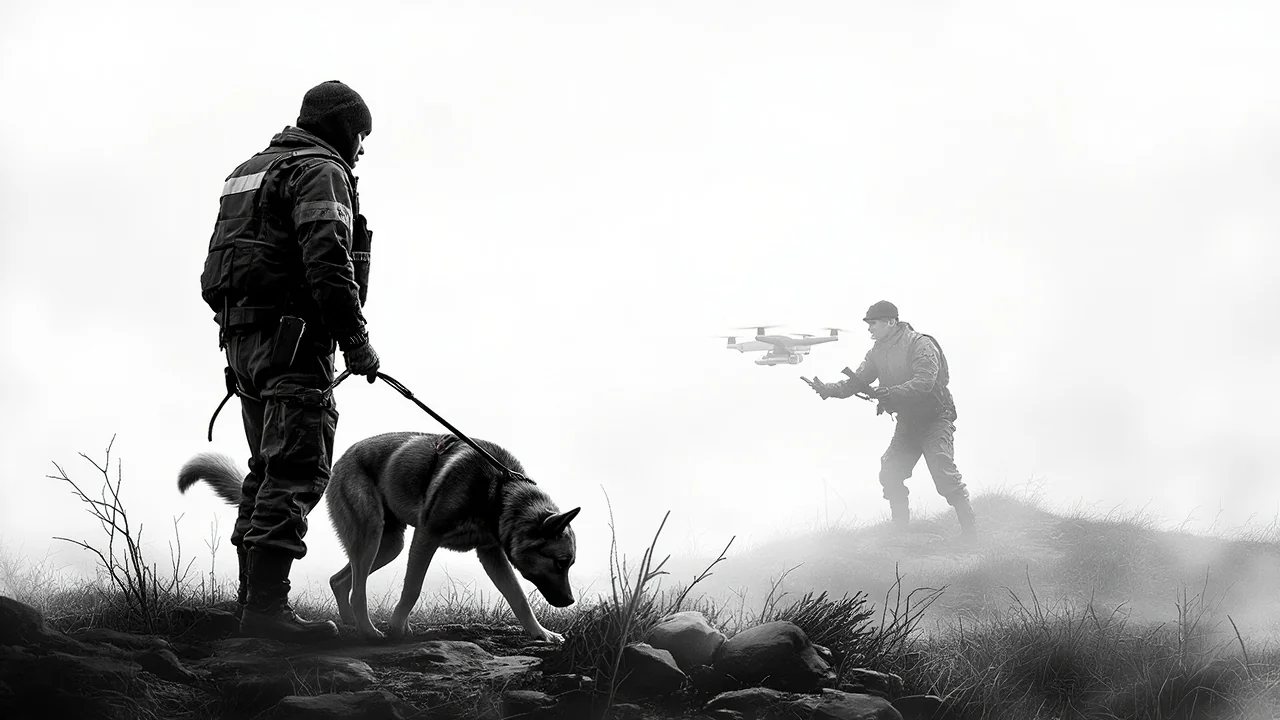
Norway police launched a major operation involving drones, patrol dogs, and multiple checkpoints overnight in the Bergen area following a serious violent incident in the Arna district. Authorities are searching for a suspect believed to be at large, mobilizing significant resources in the hunt.
The operation was initiated after police responded to reports of violence in Arna, a suburb located east of Bergen's city center. Details regarding the nature of the violence or potential injuries have not been disclosed by officials. The central fact driving the response is that the perpetrator has not been apprehended, prompting an escalated search effort across the region.
A Coordinated Search Effort
Police established several control points at key locations throughout the Bergen metropolitan area overnight. These checkpoints are designed to monitor traffic and pedestrian movement in an effort to locate the individual. The use of aerial drones provides police with a broader surveillance capability, particularly useful in the rugged, forested terrain that characterizes parts of the region surrounding Arna. Simultaneously, patrol dogs trained in tracking were deployed, indicating a ground search focused on picking up a scent trail from the scene of the incident.
This type of coordinated response, blending traditional ground forces with technological assets like drones, represents a standard but intensive protocol for Norwegian police when a potentially dangerous individual is believed to be in a specific geographic area. The operation underscores the perceived urgency to locate the person before they can potentially commit further acts or flee the immediate region.
The Focus on Arna and Bergen
The incident specifically triggered activity in and around Arna. As part of Bergen Municipality, Arna is both a residential district and an important transport hub, home to one of Norway's largest railway stations. This logistical significance may have influenced the decision to set up multiple control points, as major roads and rail connections pass through the area. The search parameters likely account for the possibility of the suspect attempting to use these transport links.
Local residents in the affected areas would have witnessed a noticeable increase in police presence throughout the night. The deployment of such visible measures is intended not only to apprehend the suspect but also to provide a sense of security to the public and deter any further criminal activity. Police have not issued a general shelter-in-place order, but the visible activity serves as a clear advisory for heightened community awareness.
Scale and Implications of the Response
The decision to deploy drones and dogs points to a specific operational need. Dogs are typically used to track a scent from a known point, such as the crime scene, suggesting police have a likely path or last known location to work from. Drones offer rapid aerial reconnaissance, useful for scanning large outdoor areas, construction sites, or other difficult terrain where a person could hide. The combination indicates a search that is both targeted and broad, covering the immediate vicinity while also monitoring a larger perimeter.
Setting up multiple control points requires a significant allocation of personnel. It involves officers manning the checkpoints, others conducting mobile patrols between them, and command staff coordinating the overall operation. This scale of response is reserved for situations where there is an assessed ongoing threat to public safety. The police action will continue at its current level until the suspect is located or intelligence suggests the person has evaded the contained area.
Standard Protocol and Public Communication
Norwegian police procedures for a manhunt of this nature are well-defined. The primary goals are containment, methodical search, and apprehension. Containment is achieved through checkpoints and area control. The methodical search employs both technological tools like drones and specialized units like the dog handlers. Apprehension is the final stage, handled by arrest teams once the suspect is pinpointed.
Public communication in such ongoing operations is often deliberately limited. Police avoid releasing details that could compromise the tactical search, tip off the suspect, or unduly alarm the population. Updates are usually provided only when there is a significant development, such as an arrest, a major change in the search area, or a direct appeal for public assistance with a specific piece of information. The absence of detailed public statements overnight is consistent with an active and sensitive operation.
Community Impact and Next Steps
For residents of Arna and the wider Bergen area, the night's events translate to disrupted routines and heightened anxiety. The sight of police checkpoints and the knowledge of an armed search nearby affect the normal rhythm of community life. Local businesses and transportation may experience minor disruptions during the peak of the police activity. The psychological impact of a violent incident followed by a large-scale manhunt lingers even after the immediate police presence scales down.
The next phase of the operation depends entirely on the outcome of the search. If the suspect is apprehended within the contained area, police will shift to investigation and processing. If the search proves unsuccessful, authorities will have to reassess based on any new intelligence, potentially widening the search or altering their tactical approach. The use of drones may provide recorded footage for later review, even if an immediate arrest is not made.
Awaiting a Resolution
The substantial police investment in drones, canine units, and manpower underscores the seriousness with which law enforcement is treating this case. The violent nature of the initial incident triggered a protocol designed to maximize the chances of a swift arrest while minimizing risk to the public. The coming hours will be critical in determining whether the containment and search strategy proves successful. The community now waits, its safety contingent on the silent, systematic work unfolding in the dark, both on the ground and in the air above Bergen's streets. The resolution of this operation will provide answers, but the broader questions about the cause of the initial violence will remain for the subsequent investigation to address.